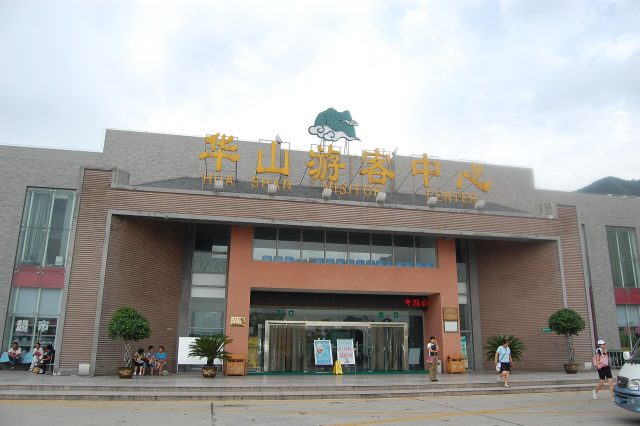
Huayin Museum sits quietly in a town that feels suspended in another era. The streets here carry the weight of centuries, and the temples scattered across the surrounding hills seem to whisper stories of the past. Unlike the grand, bustling museums that dominate tourist itineraries, this one doesn’t demand attention. Its low-slung building blends seamlessly into the landscape, as if it has always been part of the earth itself.
The museum opened in the late 20th century, but its focus stretches back much further—to the Zhou dynasty, one of China’s earliest and most influential periods. The area around Huayin was once the heart of the Western Zhou capital, and the artifacts here are fragments of that world. Bronze vessels, ritual objects, shards of pottery, and oracle bone inscriptions fill the galleries, each piece a silent witness to lives lived over three thousand years ago. They don’t just represent history; they reveal it—the beliefs, daily routines, and even the small concerns of people who walked this land long before us.
Among the most striking exhibits are the bronze pieces, many adorned with intricate patterns and inscriptions. Some were used in sacrificial rites, others for storing wine or grain. The craftsmanship is astonishing, especially when you consider they were made entirely by hand, without the tools we take for granted today. Nearby, jade pendants, beads, and amulets hint at the status of their owners, who believed these objects could ward off misfortune. The way they’re displayed—without flashy explanations—lets the objects speak for themselves.
The museum doesn’t stop at ancient history. Later dynasties, like the Han and Tang, are also represented here. Tang-era clay figurines of warriors and dancers, once buried in tombs, stand frozen in mid-motion, their expressions so vivid they seem almost alive. Fragments of silk, preserved by the dry climate, and coins stamped with characters offer glimpses into trade and daily life. These pieces bridge the gap between the distant past and more familiar eras, showing how traditions evolved over time.
The building itself is a study in balance. Designed in a traditional Chinese style, with curved eaves and wooden beams, it avoids feeling like a relic. Modern touches ensure the space feels open and inviting, with natural light filtering through lattice windows to softly illuminate the exhibits. Inner courtyards, small gardens, and ponds create pockets of calm, encouraging visitors to linger rather than rush. The architecture doesn’t compete with the artifacts; it complements them, framing each piece in a way that feels intentional.
Huayin isn’t a place that draws crowds, and that’s part of its charm. The museum rarely feels crowded, allowing visitors to move at their own pace. Locals sometimes drop by not for a formal tour, but simply to spend time in a place that feels like part of their own story. For them, it’s more than a museum—it’s a connection to the past, a quiet space where history isn’t just observed but felt.
Beyond the museum, the town and its surroundings offer more layers of history. Nearby Mount Huashan, one of China’s five sacred peaks, has drawn pilgrims and adventurers for centuries. Its sheer cliffs and ancient temples create an atmosphere of reverence and awe. In Huayin itself, old neighborhoods with narrow lanes and clay-walled houses still hold the rhythm of life as it was lived generations ago. Walking these streets, you get the sense that time moves differently here.
This museum isn’t about grand narratives or dramatic revelations. It’s about the quiet accumulation of stories, the kind that unfold slowly when you take the time to look. Each artifact, no matter how small, carries a piece of the past, and together they form a mosaic of a civilization that shaped China’s identity. For those who prefer depth over spectacle, Huayin Museum offers something rare: a chance to step into history without fanfare, where the past feels close enough to touch.