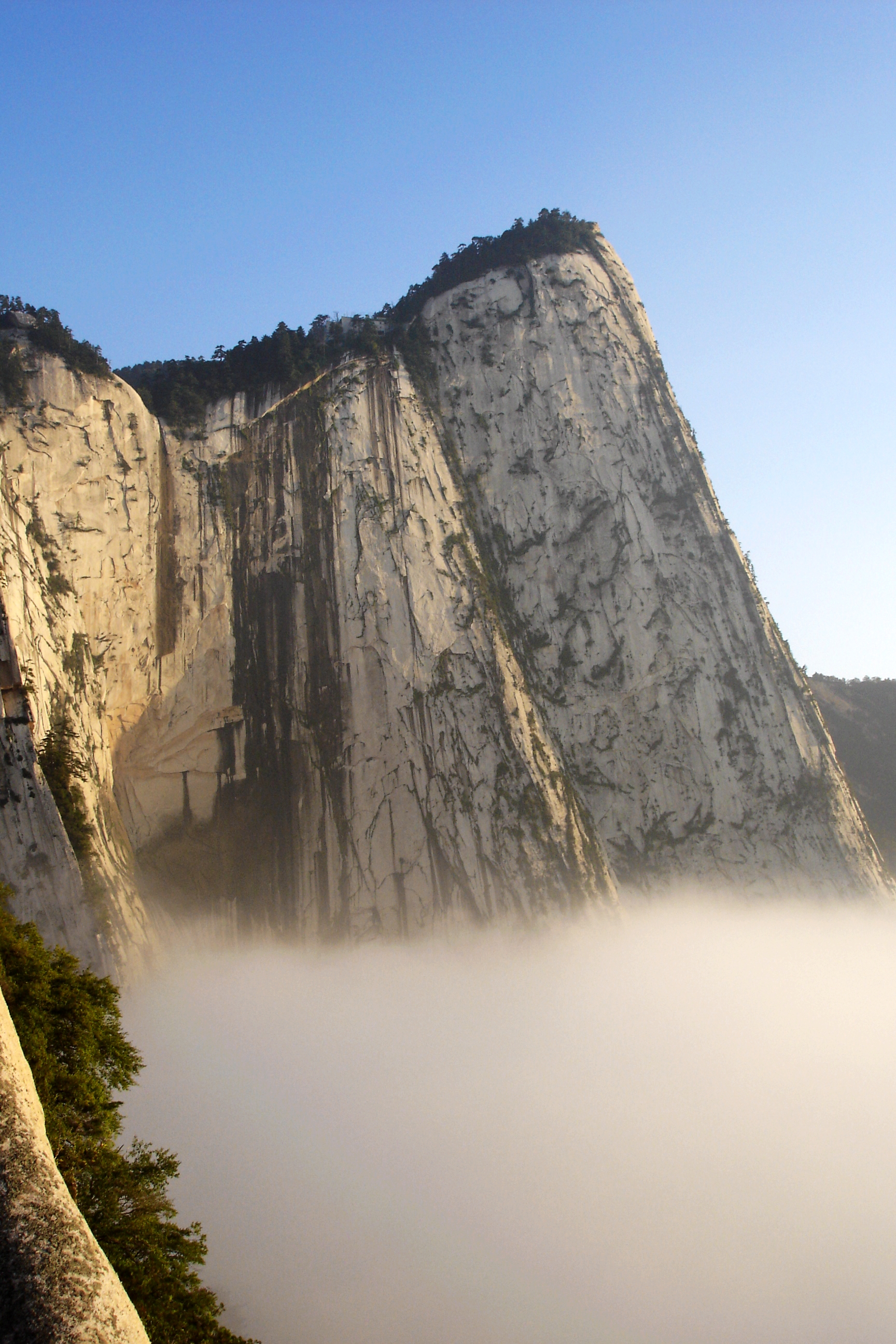
Mount Hua, or Huashan, rises from the earth like a challenge—steep, unyielding, and impossible to ignore. Located near the ancient city of Xi’an in Shaanxi Province, it is one of China’s Five Great Mountains, a place where the boundaries between the physical and the spiritual blur. The cliffs here are not just rock; they are layers of history, worn smooth by the footsteps of pilgrims, monks, and travelers who have sought something beyond the ordinary for over three thousand years. The mountain does not reveal itself easily. It demands patience, effort, and a willingness to confront both the landscape and oneself.
The five peaks of Huashan are like the fingers of a hand reaching toward the sky, each with its own character and legend. The South Peak, also called Lotus Peak, stands tallest at 2,154 meters, offering views that stretch to the horizon where the earth curves into the sky. The East Peak is where the sunrise spills over the ridges, turning the stone golden. The West Peak holds the Temple of the Jade Maiden, its wooden terraces clinging to the cliffside as if defying gravity. The North Peak, the most formidable, tests even the most determined climbers, while the Central Peak serves as a crossroads for those navigating the mountain’s labyrinth of paths. These peaks are connected by narrow trails carved into the rock centuries ago, some so precarious they seem more like a suggestion than a route.
The history of Huashan is as old as Chinese civilization itself. Long before it became a sacred site of Daoism, it was revered as a place of power, where the earth’s energy was said to be strongest. During the Zhou Dynasty, it was already a destination for those seeking communion with the divine. Later, Daoist hermits settled in its caves and crevices, meditating in solitude. Over time, temples and monasteries took root on the slopes, their presence woven into the mountain’s identity. The most famous of these is the Juyuxu Temple, perched on a sheer cliff near the West Peak. Its wooden platforms jut out over the abyss, a reminder of the mountain’s role as a bridge between the human and the sacred.
Climbing Huashan is not a leisurely hike. The most common route begins at the base, where a cable car or a steep footpath leads to the North Peak. From there, the real ascent begins. Stone steps narrow to the width of a foot, chains bolted into the rock offer the only handhold, and the drop below is enough to make even the steadiest climber pause. In the past, pilgrims would ascend barefoot, a ritual of purification. Today, most wear sturdy shoes, but the sense of exposure remains. The mountain does not let you forget where you are—every step is a negotiation between caution and courage.
The path twists upward, past temples where travelers can rest, their walls echoing with centuries of prayers. One of the most infamous sections is the "Plank Walk in the Sky," a narrow ledge bolted to a vertical cliff face. It is not for the faint of heart. Some turn back; others press on, drawn by the promise of what lies beyond. The higher you climb, the more the world below recedes, until all that remains is the wind, the rock, and the sky.
Huashan changes with the light. In the morning, mist clings to the slopes, softening the edges of the cliffs. By midday, the sun burns through, illuminating the stone in sharp relief. As evening falls, shadows stretch long and deep, and the air grows cooler. Those who stay overnight on the peaks do so for the silence, for the way the stars seem to hang just out of reach. The sunrise, when it comes, is a slow revelation—the first light spilling over the ridges, turning the rock from gray to gold.
The seasons transform the mountain in different ways. In spring, peach blossoms dust the lower slopes, their pink petals a fleeting contrast to the harsh stone. Autumn turns the foliage into a blaze of red and gold, a last burst of color before winter’s arrival. When snow comes, the paths become treacherous, and the mountain reveals its most dangerous face. Few attempt the climb in these months, but those who do are rewarded with a solitude that feels almost sacred.
What people find on Huashan depends on what they bring with them. For some, it is a test of endurance, a way to prove something to themselves. For others, it is a pilgrimage, a chance to walk in the footsteps of those who came before. And for a few, it is simply a place to stand still, to listen to the wind and feel the weight of time in the stone beneath their feet. The mountain does not offer answers, but it does not let you leave unchanged. It lingers in the memory long after the descent, a quiet presence that asks more questions than it answers.