Enkaku-ji is one of those rare places in Kamakura where time seems to soften, as if the world beyond its gates moves at a different pace. Tucked at the foot of Mount Komagatake, the temple is sheltered by dense pine groves, their branches filtering the distant hum of the coastal town into something faint and distant, like an echo from another era. Founded in the 13th century, not long after Kamakura became the seat of the shogunate, Enkaku-ji has stood through centuries of change—not just as a religious site, but as a quiet witness to Japan’s shifting fortunes.
The architecture here carries the hallmarks of early Zen temples, yet there’s a distinct lightness to it, a simplicity that never feels stark. The main hall, Butsuden, with its broad eaves and heavy tiled roof, could almost pass for a fortress if not for the way it seems to settle into the landscape rather than dominate it. Inside, the towering statue of Amida Buddha sits in stillness, the air around it thick with a silence that doesn’t press down but rather wraps around you. Outside, the rock garden is arranged with deliberate care—each boulder, each patch of raked gravel guiding the eye in smooth, unbroken lines. It’s not a place meant to be studied so much as inhabited, a space where the shifting light of the day becomes part of the experience.
Enkaku-ji played a pivotal role in the spread of Zen Buddhism in Japan. Its founder, the Chinese monk Lanxi Daolong, was invited to Kamakura to introduce the teachings of the school, and at a time when the city was both a political and spiritual hub, the temple became a cornerstone of the new tradition. Monks trained here, shoguns sought counsel within its walls, and though fires, earthquakes, and wars have tested its resilience, Enkaku-ji has always been rebuilt, its essence preserved. Today, it remains one of Kamakura’s five great Zen temples, and while visitors do come, the temple retains an unshaken sense of tranquility.
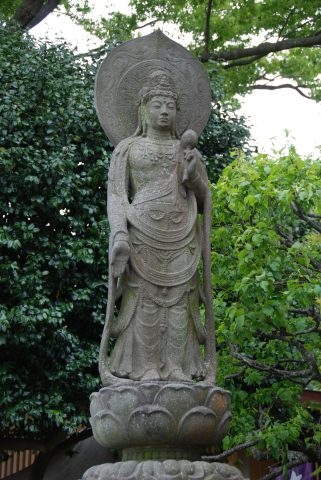
One of its most intriguing features is the temple library, home to ancient scrolls and manuscripts, some of which were brought from China centuries ago. Most of the collection is kept from public view, but even the few displayed pieces carry a weight of history. Among them is the revered Thousand-Armed Kannon, a statue said to hear the prayers of all who suffer. Unlike many Buddhist figures, this Kannon doesn’t feel remote—her posture and gestures suggest compassion, as if she might reach out to those who stand before her.
The temple’s gardens are a world unto themselves. Each is designed with a different purpose in mind. The Hatto-en garden, for instance, is a meditation on impermanence—no vibrant flowers, just moss, stones, and gnarled trees whose twisted trunks seem to whisper of the centuries they’ve endured. Another garden, behind the main hall, is more conventional, with a pond, stone lanterns, and small bridges, but even here, nothing feels excessive. Every element serves the idea of harmony between human presence and the natural world.
Visiting Enkaku-ji isn’t like touring a popular landmark. There are no crowds here, not even in peak season, and it’s easy to find a quiet corner where the only sounds are the wind in the pines or the distant murmur of monks during morning prayers. The temple’s residents move through the grounds with unhurried purpose, their presence felt more than seen. In moments like these, it’s clear that Enkaku-ji exists in its own rhythm, one that runs parallel to the bustle of the world outside its walls.
The temple is especially striking in autumn, when the maples blaze in shades of crimson and gold, their leaves drifting onto the stone paths in patterns that feel random yet perfectly balanced. Winter brings a hush, and if snow falls, it dusts the roofs and branches, turning the temple into something from an old woodblock print. Spring arrives with plum and cherry blossoms, while summer cloaks the grounds in dense greenery, leaving only glimpses of tiled roofs peeking through the foliage. Each season leaves its mark, yet the temple’s core—its sense of quiet—remains unchanged.
If you come here, take your time. Wander the paths, sit on a wooden bench in the garden, listen to the wind in the trees. There’s no rush, no script to follow. Enkaku-ji doesn’t demand anything of its visitors except perhaps a moment of stillness, a pause to notice the way the light falls on the stones or the way the air feels different here. It’s a place that doesn’t offer grand spectacles, but something far more subtle—the chance to step, even briefly, into a different way of being.