Tsuruoka Hachimangu stands in central Kamakura, where the past is heard in the rustle of leaves and seen in the weathered wood of its structures. Founded in 1063, the shrine was relocated here by Minamoto no Yoriyoshi, a warrior linked to the rise of Japan’s first shogunate. By the late 12th century, Kamakura had become the military capital. Yoriyoshi’s grandson, Yoritomo, established the shogunate in 1180, making this shrine the spiritual guardian of the Minamoto clan. Over centuries, it witnessed the rise and fall of samurai, its grounds holding the weight of history.
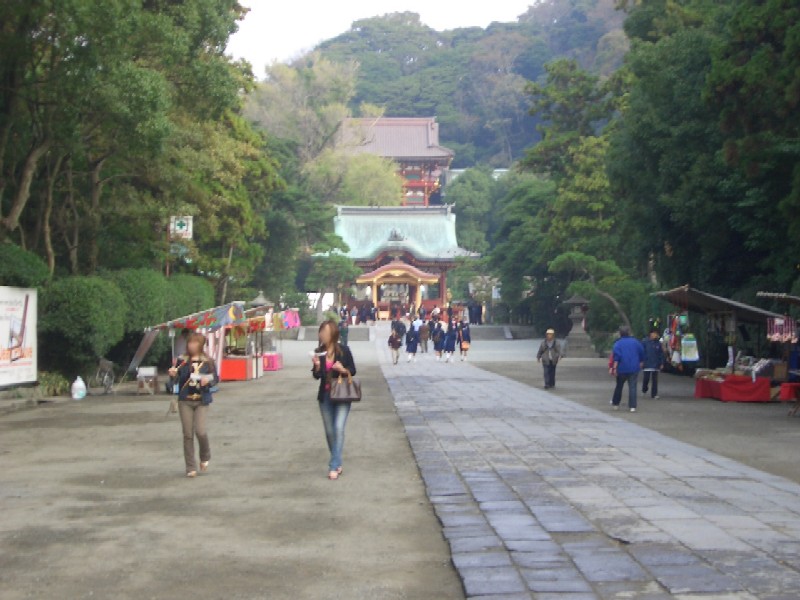
The architecture reflects Kamakura’s era—simple, grounded, designed to harmonize with the land. The towering torii gate marks the entrance, a threshold between the ordinary and the sacred. Beyond it, an avenue lined with centuries-old trees leads the way. Stone lanterns stand along the path, their surfaces smoothed by time. The main buildings, including the honden where the shrine’s sacred object is kept, feature curved roofs and dark, aged wood. These structures feel permanent, as if they’ve always been part of the earth.
For samurai, Tsuruoka Hachimangu was a stage for rituals that shaped their world. Victories were celebrated here, oaths sworn, prayers offered for protection in battle. In 1191, Yoritomo held a festival to mark his triumph over the Taira clan, ending years of civil war and securing the shogunate’s power. Even after Kamakura’s fall in the 14th century, the shrine remained a symbol of samurai honor, a place where warriors connected with ideals of loyalty and discipline. During festivals, the past feels close enough to touch.
The shrine remains active today. Visitors may see a misogi purification ritual or a matsuri festival with music and dance. The Reitaisai in September features yabusame—horseback archery—a display of samurai martial skill. The sound of drums, the scent of incense, and the energy of the crowd blur the line between past and present.
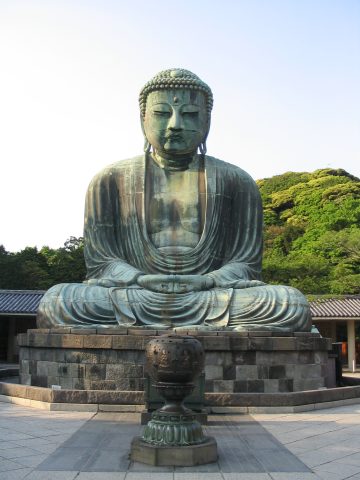
The surroundings add to its appeal. The avenue leading to the main buildings is lined with cherry trees, their blossoms softening the path in spring. In summer, the shade offers relief from the heat. Autumn turns the landscape red and gold. Nearby, Kamakura’s other sites await—the bronze Buddha at Kotoku-in, the ocean views from Hasedera’s gardens, and tea houses where you can sit with matcha and wagashi. The shrine is a starting point for understanding the city’s rhythm, where the sea is always near and the streets carry echoes of the past.
Tsuruoka Hachimangu doesn’t call for attention. It asks you to slow down. Notice the light through the trees, the sound of footsteps on gravel, the quiet prayers. Locals visit for ordinary moments—to leave an offering, to walk the avenue, to sit and reflect. There’s no performance, no pressure. History and the present coexist here, each making the other richer.
For those who want more than a photo, the shrine offers a connection to Japan’s cultural and spiritual roots. It invites reflection on samurai ideals—loyalty, discipline, honor—and how those values endure. It’s also a reminder of Shinto’s reverence for nature, the seasons, and tradition. Kamakura, with its narrow lanes, hillside temples, and proximity to the sea, is the perfect place for this kind of quiet thought. The city feels like a pause, where the modern world hasn’t erased the old.
Visiting Tsuruoka Hachimangu isn’t about checking off a landmark. It’s about stepping into a story that continues. The shrine has seen empires rise and fall, yet it remains unchanged in its essence. Whether you come for history, architecture, or simply to wander, there’s a sense of discovery here. You might leave with questions, but that’s part of the appeal. In a country where so much is fleeting, this place offers continuity—a connection to something larger than yourself. And in that quiet way, it stays with you long after you’ve passed back through the torii gate.