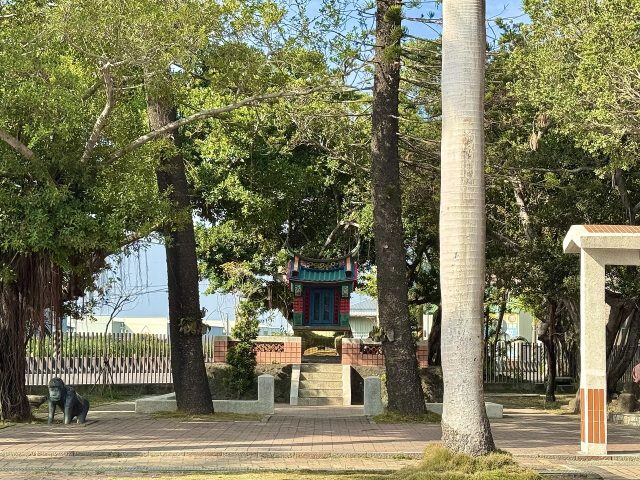
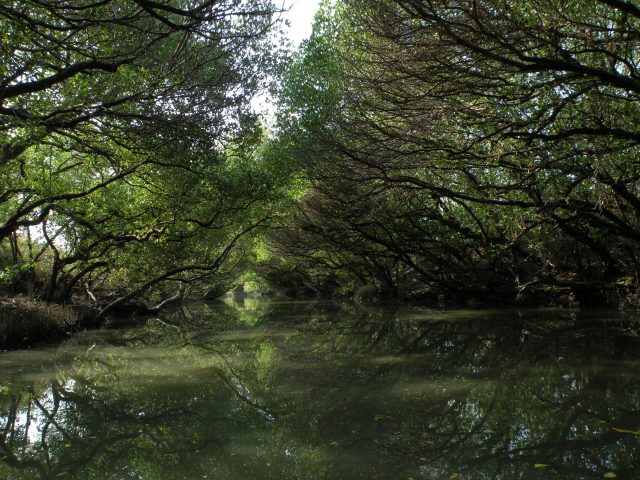
Tianhou Temple in Tainan is one of those places where history isn’t just remembered—it’s alive. The moment you step through its gates, the scent of incense wraps around you, mingling with the faint aroma of aged wood and the earthy dampness of stone worn smooth by centuries of touch. The air hums with quiet activity: the murmur of prayers, the soft rustle of paper lanterns swaying in the breeze, the occasional clink of a coin dropped into an offering box. This isn’t just a temple; it’s a living archive of Taiwan’s past, a place where the island’s transformation from a remote outpost to a cultural crossroads is etched into every beam and pillar.
Built in the late 1600s under Qing rule, Tianhou Temple was more than a place of worship from the beginning. It served as a gathering spot where settlers—many of them migrants from Fujian—exchanged news, settled disputes, and forged the early bonds of community. The temple’s architecture reflects this practical, unpretentious spirit. There are no towering spires or gilded halls here, just low-slung roofs with gently upturned eaves, wooden beams carved with delicate patterns, and stone columns polished by generations of hands. The design feels intimate, almost domestic, as if the temple grew organically from the needs of the people who built it rather than the ambitions of emperors or officials.
The main hall is where the temple’s quiet grandeur reveals itself. Hundreds of red lanterns hang from the ceiling like a constellation of stars, casting a warm glow over the space. The walls are covered in vibrant murals depicting scenes from Chinese mythology—dragons coiled around pillars, phoenixes soaring above waves, gods and immortals frozen in mid-gesture. Every detail carries meaning: the fish-scale pattern of the roof tiles, believed to ward off fire; the plum blossoms carved into the wood, symbols of resilience; the intricate latticework on the windows, designed to let in light while keeping out evil spirits. Even the way the eaves curve upward isn’t just decorative—it’s meant to guide rainwater away from the foundation, a practical touch in a climate where typhoons are a fact of life.
At the heart of the temple is Mazu, the goddess of the sea and one of the most beloved figures in Chinese folk religion. Her story begins in the 10th century on the coast of Fujian, where she is said to have been a young woman with the power to calm storms and guide lost sailors home. When Chinese settlers began arriving in Taiwan, they brought her worship with them, and Mazu became the island’s protector. In Tainan, her significance was especially deep. For centuries, the city was Taiwan’s primary port, and sailors would visit the temple before embarking on voyages, leaving offerings in hopes of safe passage. Some of those offerings remain—old plaques bearing the names of ships and the dates of their journeys, a quiet record of the lives that depended on her favor.
The temple’s history is intertwined with Tainan’s own. When Koxinga (Zheng Chenggong) drove the Dutch out of Taiwan in 1661 and established his capital here, Tianhou Temple was already standing, a symbol of continuity in a time of upheaval. Under Qing rule, it was expanded and renovated multiple times, reflecting the city’s growing importance. In the 19th century, during the Taiping Rebellion, it served as a refuge for locals fleeing violence. Later, during the Japanese occupation, authorities attempted to turn it into a museum, but devotees resisted, insisting it remain a place of worship. After World War II, it regained its role as a spiritual center, and today it stands as one of the few places in Taiwan where traditional religion and daily life still overlap so naturally.
What makes Tianhou Temple feel different from other historic sites is its lack of pretense. There are no rigid rules here, no signs telling visitors where to stand or what to do. People come and go as they please—some lighting incense and bowing their heads in prayer, others sitting on benches, watching the rituals unfold. On ordinary days, the temple has a slow, unhurried rhythm, as if time moves differently within its walls. But during festivals, especially the annual Mazu Festival in spring, the atmosphere changes entirely. The temple overflows with pilgrims, the streets outside fill with vendors selling snacks and souvenirs, and the air thrums with the sound of drums and firecrackers. Even then, though, the temple retains its sense of calm, a steady presence amid the celebration.
The craftsmen who work in the workshops near the temple play a vital role in its life. Many have spent decades here, passing down their skills through generations. In small, cluttered spaces, you can watch as wood is carved into intricate panels, clay is shaped into delicate figurines, and fabric is embroidered with elaborate designs. Some of these creations end up in the temple itself—new lanterns to replace the old, fresh murals to cover faded ones—while others are sold to visitors. But all of them carry the same quiet devotion that fills the sanctuary. There’s something mesmerizing about watching raw materials transform in the hands of a master, whether it’s a block of wood becoming a dragon or a lump of clay taking the shape of a god.
Tianhou Temple isn’t a place frozen in time; it’s a place where the past and present coexist without effort. There are no barriers between the sacred and the everyday here. Locals stop by on their way to work to light a stick of incense, tourists wander through snapping photos, and elderly men gather in the courtyard to chat over tea. The temple doesn’t demand reverence—it simply offers a space where people can pause, reflect, or simply be. That might be why it draws such a mix of visitors: the devout, the curious, those seeking something real in a world that often feels too polished.
If you find yourself in Tainan, it’s worth spending an hour here, even if you’re not particularly religious. Stand in the shade of the old walls, listen to the leaves rustling overhead, and let the weight of history settle around you. There’s no need for grand gestures or dramatic revelations. Some places carry the past with them in a way that doesn’t require explanation—you just have to pay attention. And in a city as layered as Tainan, where every street corner seems to hold a story, Tianhou Temple is one of the best places to start listening.