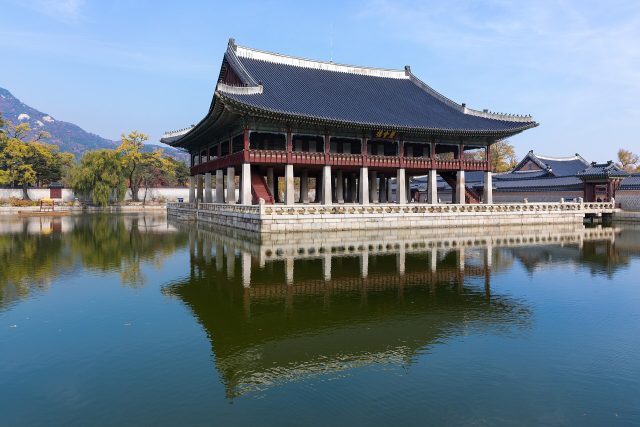
Jogyesa Temple sits quietly in the heart of Seoul, a place where the city’s relentless energy seems to soften just enough to let you breathe. Surrounded by towering buildings and the constant hum of traffic, it remains an unexpected sanctuary, a pocket of stillness where people come not only to pray but to pause, to step away from the rush of modern life and feel the weight of centuries pressing gently against the present.
The temple was founded in the late 14th century, during the Joseon Dynasty, a time when Buddhism in Korea faced significant challenges. Unlike the preceding Goryeo Dynasty, which had embraced Buddhism as its state religion, the Joseon rulers favored Confucianism, leading to the decline of many temples. Yet Jogyesa endured, becoming one of the country’s most important spiritual centers. Today, it serves as the headquarters of the Jogye Order, one of Korea’s largest Buddhist sects, playing a crucial role in preserving and passing down Buddhist traditions.
The architecture of Jogyesa blends classical Korean Buddhist design with subtle modern touches. The main hall, Daeungjeon, houses a statue of Sakyamuni Buddha and stands as a striking example of traditional craftsmanship. Its wooden pillars, intricately painted ceilings, and ornate carvings on the doors create a sense of reverence and calm. Unlike many temples tucked away in remote mountains, Jogyesa sits in the middle of the city, its structures harmonizing with the urban landscape rather than clashing with it. The late Joseon-style pagoda, adorned with delicate carvings and symbolic motifs, adds to the temple’s quiet grandeur.
What makes Jogyesa particularly welcoming is its openness. There are no rigid rules for visitors—anyone can walk in, sit in silence, or wander through the grounds. The temple hums with daily life: monks chanting during services, pilgrims offering prayers, and tourists snapping photos of ancient lanterns and stone statues. The seasons bring their own beauty. In spring, magnolias and cherry blossoms bloom, while autumn turns the maple leaves fiery red. Even in winter, when snow blankets the temple, it takes on a serene, almost otherworldly quality, as if time itself has slowed.
Beyond its spiritual role, Jogyesa is a cultural hub. Throughout the year, it hosts Buddhist festivals, traditional music performances, and art exhibitions. The most famous of these is the Lotus Lantern Festival, celebrated in honor of Buddha’s birthday. During this time, thousands of lanterns illuminate the streets of Seoul, and the temple grounds become a sea of light. Even those who don’t participate in the festivities often come to witness the spectacle, drawn by the sense of unity and warmth it brings.
For many Koreans, Jogyesa is also a place of remembrance. Memorial ceremonies for ancestors are held here, and one of the halls houses tablets inscribed with the names of the deceased. In Buddhist tradition, honoring the dead is an integral part of spiritual practice, and the temple provides a space where this tradition is given tangible form. Visitors can light incense, offer prayers, or simply sit in quiet reflection, connecting with memories of those who have passed.
Despite its central location, Jogyesa feels worlds away from the city’s hustle. Narrow paths wind between buildings, shaded by ancient trees, while the distant sound of a temple bell drifts through the air. Many people come here not just as tourists but to find a moment of solitude, to think, or to escape the noise of urban life. There’s something almost magical about the way the temple manages to hold onto its tranquility amid the chaos of Seoul, offering a rare sense of timelessness without ever leaving the city.
Jogyesa isn’t a museum or a typical tourist attraction. It’s a living place where history, faith, and contemporary life intersect naturally. You might see monks hurrying to a service, children playing on the grounds, or elderly visitors sitting on benches, watching the world go by. This blend of the ordinary and the sacred gives the temple an authenticity that’s hard to find in places overrun by crowds. It doesn’t try to impress—it simply exists, and in doing so, it leaves a lasting impression on those who take the time to visit.