Glory Hill
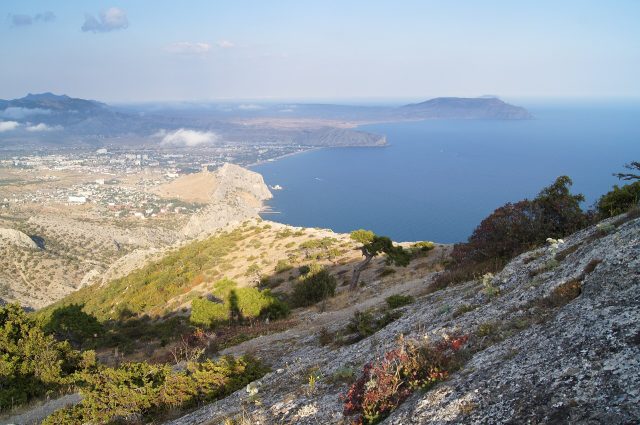
Perched above Yalta, Glory Hill doesn’t announce itself with grand monuments or flashy signs. It’s easy to miss among the greenery and sweeping views of the Crimean coastline. But those who climb are rewarded with a panorama of the Southern Coast and something quieter—history etched into the land itself.
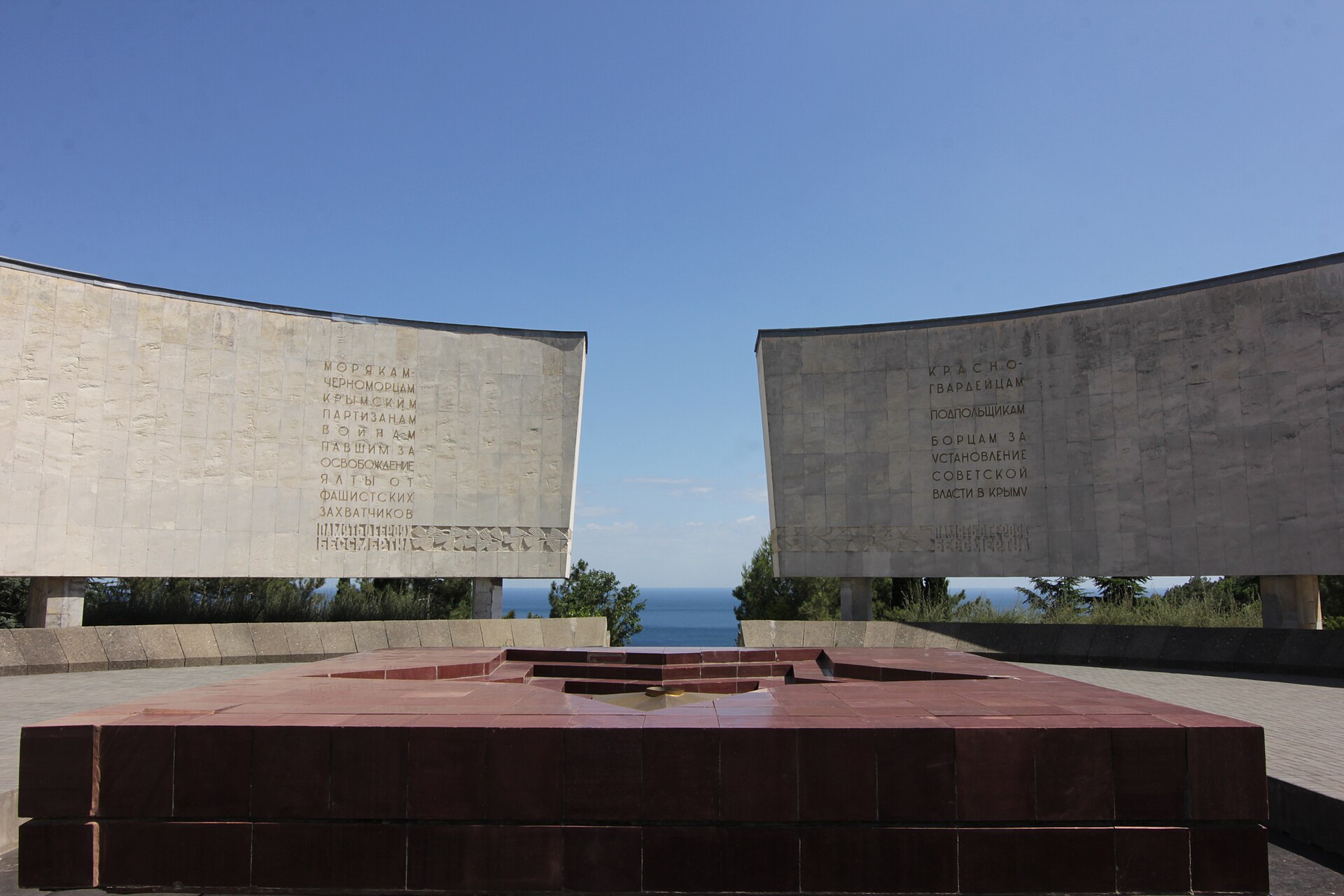
The memorial is understated: a stretch of earth, a cluster of trees, an eternal flame flickering in a simple stone basin, and weathered plaques bearing the names of those who fought and died here. It feels like a place where the past lingers, unspoken.
The hill’s story is tied to the battles for Yalta in April 1944, when Soviet forces pushed to liberate the city from German occupation. The fighting was brutal, particularly for the high ground that offered strategic advantage. Hundreds of soldiers fell here. After the war, the decision was made to honor their memory. In 1967, an obelisk was erected at the summit, and the eternal flame was lit. Later, granite slabs were added, inscribed with the names of the fallen. Over the decades, some letters have faded, worn away by rain and wind, but the place hasn’t lost its weight.
The memorial’s design is straightforward. The central obelisk, carved from pale stone, rises like a bayonet. Nearby, the granite slabs lie flat against the ground, their surfaces rough with age. The eternal flame burns in a modest bowl, sheltered by a low stone border. Around it, trees planted in the postwar years—oaks, pines, cypresses—have grown tall, their branches casting shifting shadows over the paths. There’s no pomp here. Just the rustling of leaves, the murmur of visitors, and the steady flame.
Glory Hill isn’t the kind of place that draws crowds. No guided tours, no souvenir stands. It’s a space for personal reflection, a place to sit with the weight of what was sacrificed. In summer, visitors come—veterans, families of the fallen, school groups. Some lay flowers. Others sit on a bench and gaze at the sea. A few photograph the views of the city below. Everyone finds their own way to engage.
Winter changes Glory Hill. The trees stand bare, their branches stark against the gray sky. The wind off the sea cuts through the air. The eternal flame burns brighter in the muted light. Few people come in the colder months, and the silence feels deeper. It’s a time to wander, to read the names on the slabs, to try and imagine the lives behind them. The name "Glory Hill" isn’t about glorification. It’s about remembrance, raw and unadorned.
Reaching the hill is part of the experience. You can walk up from Yalta’s waterfront, following a winding path through the trees, or drive along the narrow road to the top. From the summit, the view is clear—the city sprawls below, the Black Sea stretches to the horizon. On clear days, Mount Ayu-Dag is visible in the distance. The beauty of the scene is almost disarming, a reminder of how fragile such landscapes are, and how much was lost to protect them.
Over the years, the memorial has become part of Yalta’s daily life. Locals visit year-round. Some jog along the paths in the morning. Others bring their children for a walk. A few seek out the quiet when the city feels too loud. For many, Glory Hill is a familiar space, but that doesn’t lessen its significance. Its integration into everyday life keeps the memory of the war alive in a way that feels natural.
What makes Glory Hill unusual is that it doesn’t tell you its story. There are no guides, no exhaustive explanations. The place doesn’t demand your attention. It simply offers itself, waiting for those willing to listen. If you do, the past makes itself known—the whisper of leaves, the gusts of wind, the quiet crackle of the flame. It asks for nothing more than respect and a moment of your time. That’s why it remains meaningful. It’s a reminder that history shouldn’t feel distant. Sometimes, all it takes is a quiet hill, a flame that never goes out, and the willingness to pause.