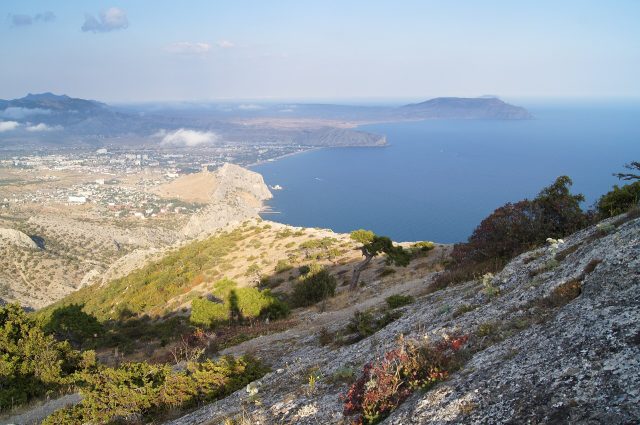
Yalta’s seaside promenade is one of those rare places where a city and the natural world seem to merge effortlessly. The Black Sea laps at the edge of the pavement, while behind you, the low, green-clad mountains rise gently, framing the scene like a living postcard. Stretching from the port to Massandra Park, the embankment carries a quiet, unhurried rhythm—nostalgic yet full of life. It’s the kind of place where you can wander without purpose, linger on a bench with a coffee, or watch the sun dip below the horizon in a blaze of color.
The promenade’s story began in the mid-19th century, when Yalta was transforming from a modest fishing village into a fashionable resort. The first wooden walkways appeared then, later replaced by stone, and the embankment quickly became the heart of the town’s social life. It wasn’t just locals who strolled here—writers like Chekhov, Bunin, and Gorky walked these paths, as did opera singer Feodor Chaliapin. Even Tsar Nicholas II, who frequented the nearby Livadia Palace, was a regular visitor. Over the decades, the promenade witnessed the sweep of history, from imperial Russia to the Soviet era, when it became a destination for mass tourism.
The architecture along the embankment is a patchwork of styles and eras. You’ll find buildings that echo neoclassicism, Art Nouveau, and even Stalinist grandeur. The Tavrida Hotel, with its ornate balconies and intricate stucco, stands out as a fine example of early 20th-century elegance. Nearby, the Yalta Theater resembles a miniature Greek temple, its columns and pediment lending a touch of antiquity. Modern additions, like cafes and restaurants, mostly blend in, though some newer structures feel a bit out of place. Still, the promenade retains much of its historic character, even as it evolves.
What makes the embankment special is its atmosphere. There’s no rush here, even in the height of summer when crowds gather. The pace is leisurely—elderly men play chess on benches, children chase seagulls, and visitors pause to take photos against the sea. As evening falls, the promenade transforms. Lanterns glow, music drifts from open-air cafes, and the air fills with the scent of grilled fish and local wine. In winter, the place is quiet, almost deserted, offering a different kind of beauty—crisp sea breezes, pale sunlight over the mountains, and the sound of waves breaking against the shore.
Beyond being a place to walk, the embankment is a cultural hub. Festivals, concerts, and open-air exhibitions often take place here, especially in the warmer months. You might stumble upon a street musician’s performance or a poetry reading. It’s also where different generations intersect—young people gather in bars, while older visitors reminisce about Soviet-era family outings. In this way, the promenade bridges the past and present, a living space where memories and new experiences coexist.
The natural beauty here is hard to ignore. The sea is clear, though not always calm—sometimes waves crash dramatically against the shore, sending spray into the air. Palm trees, cypresses, and other Mediterranean plants line the walkway, adding to the coastal charm. Spring brings blooming flowers, while autumn paints the trees in warm hues. Even in winter, the promenade has its own stark allure, with the sea turning a steely gray and the mountains shrouded in mist.
For many, Yalta’s embankment is the essence of a seaside escape. You can sit on a bench and watch the water, listening to the cries of gulls and the rhythm of the waves. Or you might step into a café to try local dishes—fresh fish, Crimean wine, or a strong cup of coffee. Some visitors walk all the way to the port, watching boats set sail against the horizon. Time moves differently here, and everyone finds their own reason to linger.
Of course, it’s not perfect. In summer, the crowds can be overwhelming, and some of the cafes and shops feel a bit too touristy. But these minor flaws don’t diminish the promenade’s appeal. It remains a place people return to, whether for a quiet stroll, a gathering with friends, or simply to feel the sea breeze on their skin. The embankment has a life of its own, untouched by fleeting trends, and that’s what makes it enduring.