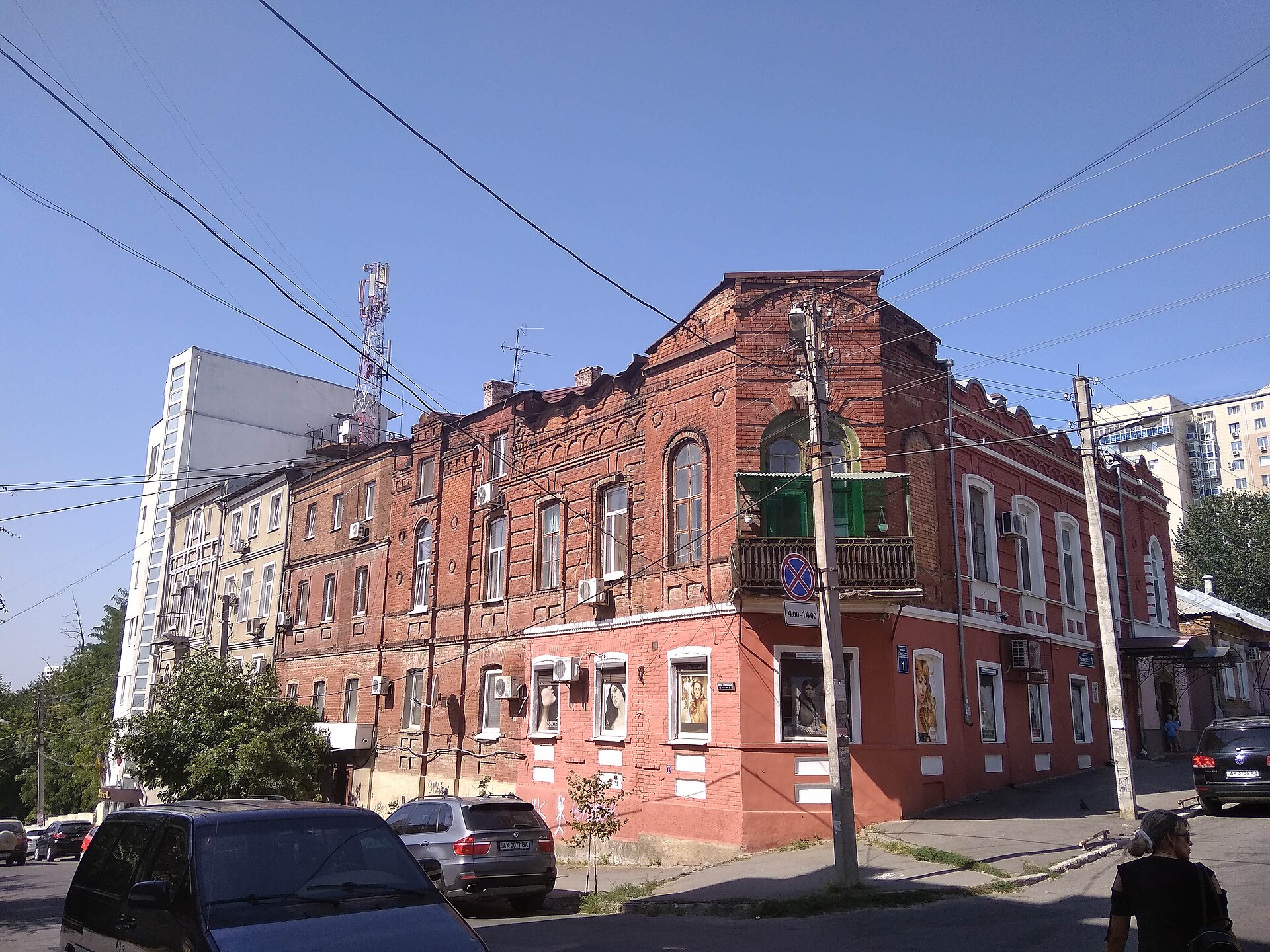
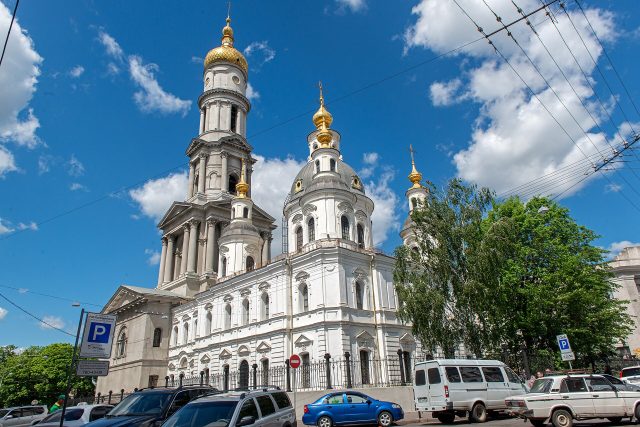
Kharkiv’s Planetarium, named after Yuri Gagarin, sits quietly in the heart of the city, a place where the vastness of the universe feels just a little closer. Opened in 1957, it was one of the first planetariums in Ukraine, built in the wake of the space race, when the world’s eyes turned upward after Sputnik’s launch. The building itself is unassuming—a modest structure tucked between residential blocks—but inside, it holds a dome that has introduced generations of visitors to the stars. Over the decades, it has become more than just a scientific institution; it’s a piece of local memory, a place where schoolchildren first learn about constellations and where adults come to remember the wonder of looking at the night sky without city lights drowning it out.
The planetarium’s history is tied to the optimism of its time. When it was founded, Kharkiv was a city of engineers, factories, and universities, a hub of Soviet scientific ambition. The choice to name it after Gagarin, the first human in space, wasn’t just symbolic—it reflected the era’s belief in progress, in humanity’s ability to reach beyond Earth. The original equipment, a German-made Zeiss projector, was state-of-the-art for its day, casting a precise map of the heavens onto the dome. That projector has since been replaced, but the spirit of discovery it represented remains. Today, the planetarium still uses modern technology to simulate the cosmos, though the core experience—sitting in the dark, watching the stars move overhead—hasn’t changed.
Inside, the main hall is a circular space with tiered seating, designed so that every visitor has a clear view of the dome. The ceiling isn’t just a screen; it’s a window into the universe, capable of showing not just stars but planets, galaxies, and even the movement of celestial bodies over time. The programs vary—some are educational, aimed at school groups, while others are more immersive, blending astronomy with music or storytelling. There’s something almost meditative about watching the night sky unfold in fast motion, seeing how the constellations shift with the seasons. For those who grew up in cities, where light pollution obscures all but the brightest stars, it’s a rare chance to reconnect with the sky as it once was.
Beyond the main hall, the planetarium has a small museum with exhibits on space exploration, astronomy, and the history of the institution itself. The displays are modest but thoughtful, with models of rockets, photographs of early space missions, and interactive panels explaining everything from black holes to the life cycle of stars. One of the most interesting sections is dedicated to Kharkiv’s own contributions to astronomy. The city has long been a center for scientific research, home to observatories and universities that have played a role in studying the cosmos. The planetarium, in a way, bridges the gap between academic research and public curiosity, making complex ideas accessible without oversimplifying them.
What makes the planetarium special isn’t just its technology or its exhibits, but the way it fosters a sense of perspective. In a world that often feels overwhelmingly immediate, where problems and distractions are constant, the planetarium offers a reminder of scale. Standing under its dome, watching the Earth rotate or seeing the Milky Way stretch across the sky, it’s hard not to feel both insignificant and connected—small in the grand scheme of things, yet part of something vast. This duality is what draws people back, whether they’re parents bringing their children for the first time or adults revisiting a place that sparked their imagination years ago.
The planetarium isn’t just for astronomers or science enthusiasts. It’s a place for anyone who has ever looked up at the night sky and wondered. The programs are designed to be engaging for all ages, from simple introductions to the solar system for young children to more detailed explorations of cosmic phenomena for older visitors. Some shows are accompanied by live narration, while others use recorded soundtracks to create a more cinematic experience. There are even special events, like meteor shower viewings or lectures by local scientists, that turn the planetarium into a gathering place for the community.
Over the years, the planetarium has adapted to changing times. When it first opened, space was a frontier reserved for superpowers; today, it’s a field of international collaboration, private enterprise, and new discoveries. The planetarium has kept pace, updating its equipment and programs to reflect the latest in astronomical research. Yet it hasn’t lost its original purpose—to inspire. In an age where information is at our fingertips, the planetarium offers something different: an experience. It’s not just about learning facts but about feeling the awe that comes from understanding, even just a little, how vast the universe truly is.
For locals, the planetarium is a familiar landmark, a place that has been part of the city’s fabric for decades. For visitors, it’s a quiet surprise, a detour from the usual tourist spots that offers something unexpected. It doesn’t have the grandeur of a cathedral or the buzz of a market, but it has its own kind of magic. There’s a humility to it, a recognition that no matter how much we learn, the universe will always hold mysteries. And perhaps that’s why people keep coming back—not just to see the stars, but to remember that there’s still so much left to explore.