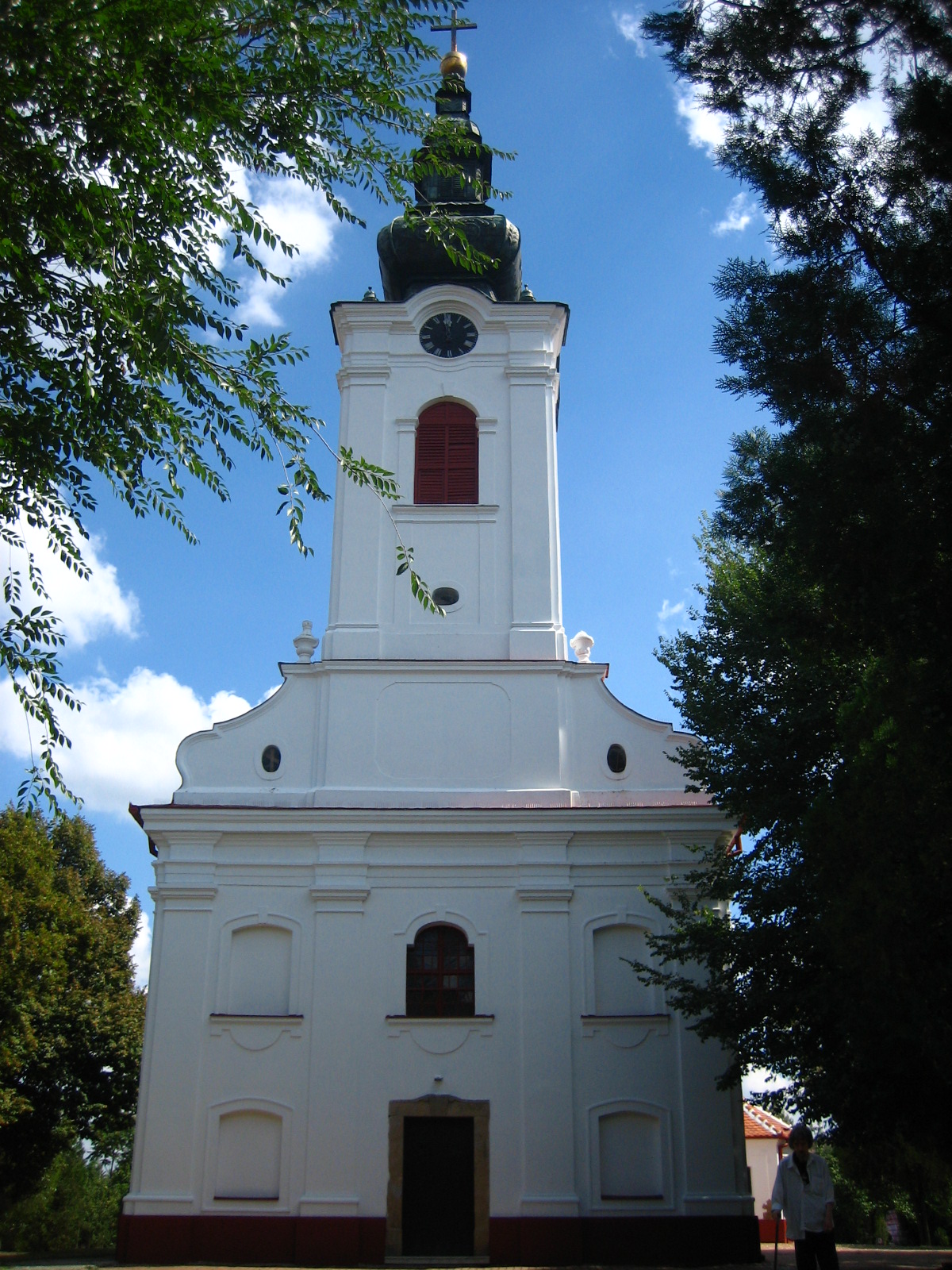
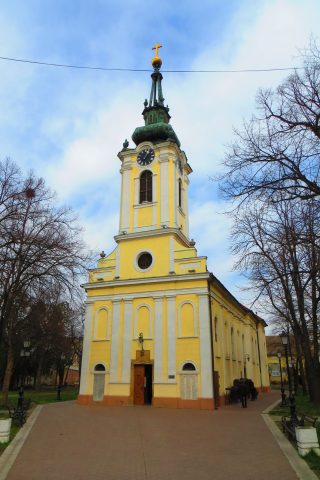
The Church of the Presentation in Zrenjanin doesn’t demand attention at first glance. It stands on a quiet square, surrounded by low, weathered buildings where time moves slowly. The church doesn’t overwhelm with scale or decoration. Its quiet strength comes from history and the lives of those who have gathered here for centuries.
Built in the mid-18th century, when Zrenjanin was called Veliki Bečkerek and part of the Austro-Hungarian Empire, the church has seen many changes. The region was a mix of cultures and religions, and Orthodox Serbs lived among a Catholic majority. The architecture shows this: the exterior has a tall bell tower, clean lines, and arched windows—Baroque and neoclassical styles favored by the Habsburgs. Inside, it’s a different world. The iconostasis, frescoes, and design follow Orthodox tradition, creating a contrast between the building’s outside and its spiritual heart.
The 19th-century iconostasis is one of the church’s key features. It’s a masterpiece of Serbian ecclesiastical art, blending Orthodox iconography with Western influences. The saints on the panels look lifelike, their expressions soft. The gilded frames add solemnity. Unlike many churches where iconostases have been restored, this one remains largely original, preserving its beauty and history.
The Church of the Presentation has seen history unfold. During the 19th-century revolutions, when Serbs fought for independence, it was both a place of worship and a symbol of resilience. In the 20th century, as Zrenjanin endured wars and political shifts, the church stayed open. Even when religion was suppressed, it remained a constant. Today, it’s still an active parish, with prayers echoing as they have for over two hundred years.
The church’s architecture reflects adaptation. Outside, it looks like Catholic churches from the Austro-Hungarian Empire. Inside, it’s unmistakably Orthodox. This wasn’t accidental. For Serbs under Habsburg rule, the church was a way to preserve their faith without defiance. That tension remains. Walking through the doors feels like stepping into another time.
The square in front changes with the seasons. In summer, elderly men talk on benches, children play under trees, and the scent of fresh bread lingers. In winter, snow settles on the roof, and warm light spills onto the cobblestones.
The Church of the Presentation isn’t a place for crowds or guided tours. It offers quiet authenticity. It doesn’t try to impress. It simply exists, as much a part of Zrenjanin as the people who live here. Visitors often notice the stillness inside, the way light filters through the windows, or how the icons seem to watch over the space.
Zrenjanin is a city where cultures have mixed for centuries. The Church of the Presentation is one of its clearest examples. It doesn’t fit the mold of traditional Serbian Orthodox churches. There’s no pomp here. Instead, there’s a sense of history and daily life. It feels alive, not just like a relic. In a world that values spectacle, this church reminds us that some places endure without shouting for attention.