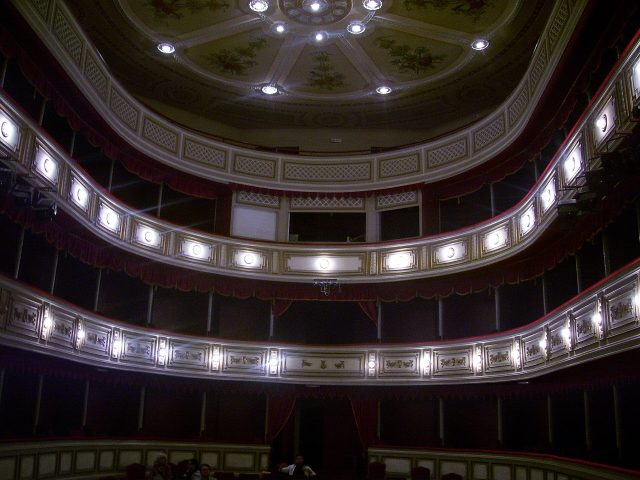
The Serbian National Theatre "Toša Dragović" stands as one of Zrenjanin’s most enduring cultural landmarks, a place where the city’s artistic soul has taken shape for over a century. Built in the late 19th century, the theatre reflects the architectural tastes of its time, blending neoclassical elements with the kind of grandeur that was meant to signal Zrenjanin’s growing importance as a regional hub. The façade, with its symmetrical columns and ornate detailing, hints at the civic pride that went into its construction, while the interior—though renovated over the years—still carries traces of the original design, from the curved balconies to the intricate ceiling work. It’s a building that has witnessed countless performances, from classical plays to modern experimental works, each leaving its mark on the space in ways both visible and intangible.
The theatre’s history is closely tied to the broader cultural currents of Vojvodina, a region where Serbian, Hungarian, German, and other influences have long intersected. Zrenjanin, known in Hungarian as Nagybecskerek, was part of the Austro-Hungarian Empire when the theatre first opened its doors in 1884. Back then, it was a symbol of the city’s cosmopolitan aspirations, hosting performances in multiple languages and catering to a diverse audience. Over the decades, as political borders shifted and wars reshaped the region, the theatre adapted, becoming a space where Serbian language and culture could take center stage. The name "Toša Dragović" was added later, honoring a local actor and director who played a key role in shaping the institution’s identity during the 20th century.
Walking into the theatre today, you’re struck by the sense of continuity. The auditorium, with its plush red seats and golden accents, feels like a time capsule, preserving the atmosphere of an era when attending the theatre was a major social event. The stage has seen everything from Shakespearean tragedies to contemporary Serbian dramas, as well as operas, ballets, and concerts. The theatre’s programming has always been ambitious, reflecting both local talent and the broader trends of European theatre. Even during periods of economic hardship or political upheaval, it has remained a place where art could thrive, offering a respite from the outside world.
Beyond its role as a performance space, the theatre has been a gathering point for the community. In a city where public life has often revolved around cafés, squares, and cultural institutions, it has provided a focal point for debate, celebration, and shared experience. The foyer, with its high ceilings and old photographs lining the walls, tells its own story—of actors who became legends, of premieres that caused a stir, of audiences who came not just to watch but to be part of something larger. Even the building’s occasional renovations have become part of its narrative, with each update balancing the need to modernize with the desire to preserve the past.
For visitors, the theatre offers more than just a chance to see a show. It’s a place where the layers of Zrenjanin’s history become tangible. The architecture alone is worth studying, with its blend of styles that speak to the city’s multicultural past. The theatre’s location in the heart of Zrenjanin, near the main square and the old town, makes it easy to incorporate into a broader exploration of the city. Whether you’re attending a performance or simply passing by, the building’s presence is a reminder of how deeply culture is woven into the fabric of this part of Serbia.
The Serbian National Theatre "Toša Dragović" is also a testament to the resilience of the arts in a region that has seen its share of upheavals. During the Yugoslav Wars of the 1990s, when many cultural institutions struggled to survive, the theatre continued to operate, albeit under difficult conditions. It became a symbol of normalcy in a time of chaos, a place where people could still come together to experience something beautiful. Today, it remains a vital part of Zrenjanin’s cultural life, hosting festivals, workshops, and collaborations with other theatres across Serbia and beyond.
What makes the theatre special, though, is not just its history or its architecture, but the way it feels alive. Even on days when there’s no performance, the building hums with the energy of past shows and future possibilities. The staff, many of whom have worked there for decades, carry stories of the theatre’s golden moments and its quieter days. For locals, it’s a source of pride; for visitors, it’s a window into the soul of a city that has always valued art as much as industry or commerce.
If you’re in Zrenjanin, taking the time to visit the theatre—whether to see a play, attend a concert, or simply admire the building—is a way to connect with the city on a deeper level. It’s a place where the past and present coexist, where the echoes of old performances mingle with the anticipation of new ones. And in a world where so much is fleeting, that sense of continuity is something rare and precious.