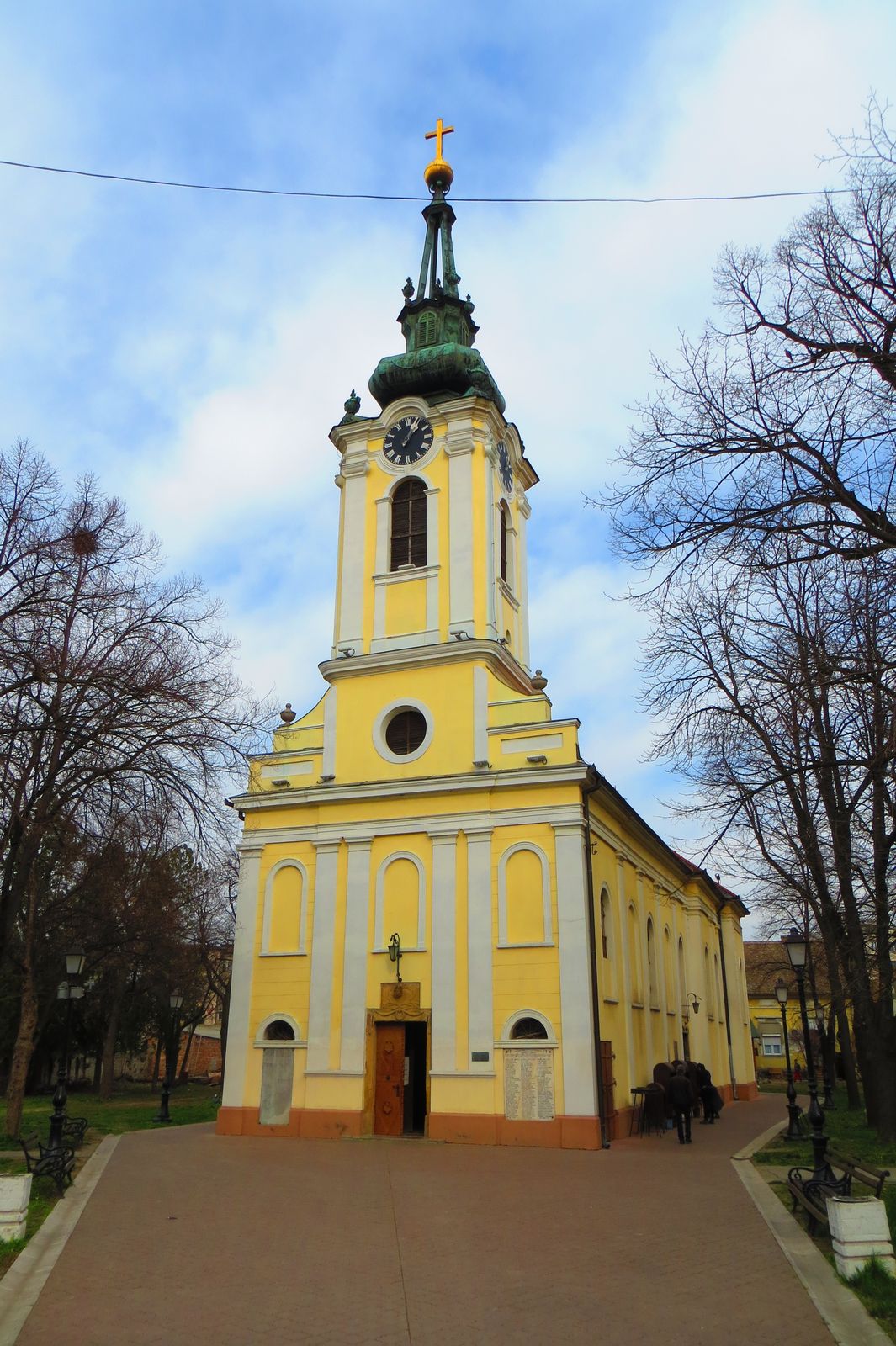
The Church of the Dormition in Zrenjanin is one of those places that doesn’t immediately demand attention but lingers in the memory long after you’ve left. Tucked away in the heart of the city, it sits on a quiet square surrounded by the low, pastel-colored houses typical of Vojvodina. Unlike the grand cathedrals of Belgrade or Novi Sad, this church carries a quieter kind of beauty—unassuming, warm, and distinctly Serbian. It’s the kind of place that reveals itself slowly, the longer you stay.
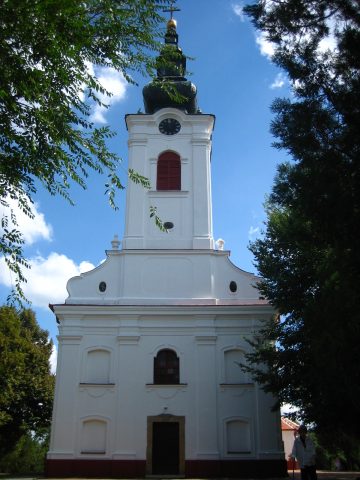
Built in the mid-18th century, when Zrenjanin was still known as Veliki Bečkerek and part of the Habsburg Monarchy, the church reflects the city’s history as a thriving trade and craft hub. The Orthodox community here grew alongside the town, and the church was constructed by local artisans who blended Serbian ecclesiastical traditions with the Baroque influences dominant in the Austro-Hungarian Empire. From the outside, it appears modest: whitewashed walls, a low bell tower, and narrow windows. But step inside, and the careful craftsmanship becomes immediately apparent.
The interior is where the church truly comes to life. The iconostasis, crafted in the 19th century, is considered one of the finest examples of religious art in Vojvodina. Local artists worked on it, though some names have been lost to time. The wooden panels are intricately carved and gilded, while the icons follow traditional styles with subtle European touches. At the center of the iconostasis is the image of the Dormition of the Mother of God, the icon that gives the church its name. The colors are soft, almost lifelike, drawing the eye with a quiet intensity.
Like much of Serbia, the church has witnessed its share of upheaval. In the 19th century, as Serbia fought for independence, it remained a spiritual anchor for the local Orthodox community. During World War II, the building suffered damage but was restored in the postwar years. In the 1990s, amid the breakup of Yugoslavia, it once again found itself at the center of turbulent times, though this time it emerged unscathed. Today, it stands not just as an active place of worship but as a living connection to the past.
Zrenjanin is a city where cultures and traditions have long intertwined—Serbian, Hungarian, German, Romanian. The Church of the Dormition embodies this diversity. Services are held in Church Slavonic, but prayers in other languages are not uncommon, as the congregation includes not only Serbs but also members of other nationalities who have made this church their own. It’s this inclusivity that gives the place its unique charm, a quiet reminder of how faith can bridge differences.
Life around the church moves at an unhurried pace. In the mornings, elderly women with prayer beads make their way inside. During the day, a few visitors might wander in, but by evening, the square empties, and only the soft glow from the church windows lights the cobblestones. If you’re lucky enough to attend a service, the atmosphere becomes even more moving. The choir sings softly, their voices filling the space in a way that feels both intimate and profound. It’s moments like these that make the church so meaningful to locals.
This isn’t the kind of landmark that dazzles from the first glance. Its beauty is subtle, something you have to experience rather than simply see. That might be why people return to it again and again. There are no crowds here, no tourist chatter, no guided tours rushing through. Just silence, the scent of incense, and the sense that time moves differently within these walls. For some, it’s just an old church. For others, it’s a piece of the real Serbia—unhurried, genuine, and quietly enduring.