Nestled in the Sava River valley, just a short distance from Radovljica, the village of Vrba feels like a place where time has gently paused. It’s a quiet corner of Slovenia, where rolling green hills meet the slow rhythm of rural life, and where the past lingers in the air like the scent of wildflowers after rain. For most visitors, Vrba is inseparable from the legacy of France Prešeren, the poet whose words shaped Slovenian literature and whose childhood home still stands here. But beyond its literary fame, the village offers something simpler: a chance to step into a world where life moves at the pace of the seasons, and where the landscape itself seems to whisper stories of the past.
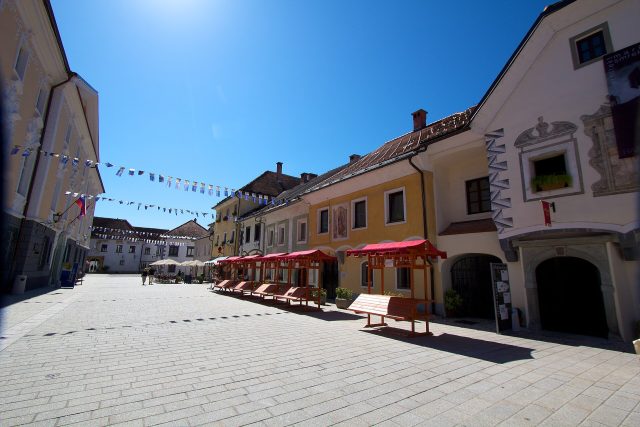
The architecture of Vrba is unassuming yet deeply rooted in the traditions of the Alpine region. The houses, built from wood and stone, have steeply pitched roofs designed to shrug off heavy snowfall—a practical feature that also gives the village its distinctive charm. Many of these buildings date back to the 19th century, when the area was part of the Austro-Hungarian Empire, and their weathered facades tell stories of generations who lived, worked, and dreamed within their walls. Narrow cobblestone lanes wind through the village, leading to the small Church of St. Mark, perched on a slight rise. The church is modest, its whitewashed walls and simple bell tower blending seamlessly into the surrounding countryside, as if it grew from the earth rather than being built upon it.
At the heart of Vrba is the house where Prešeren spent his childhood, now a museum dedicated to his life and work. The building itself is unpretentious, much like the village around it, but stepping inside feels like entering a different era. The rooms have been carefully restored to reflect the early 1800s, with wooden furniture, handwoven textiles, and personal belongings that once belonged to the poet. His writing desk still stands by the window, as if he might return at any moment to pen another verse. The museum doesn’t overwhelm with grandeur; instead, it invites visitors to imagine how the ordinary rhythms of village life—farm work, family gatherings, the changing light through the seasons—could inspire lines that would one day become part of Slovenia’s national identity.
The landscape around Vrba has changed little since Prešeren’s time. The Sava River flows lazily at the edge of the village, its banks lined with willows and wild grasses. In summer, the fields burst with color, and the air hums with the sound of bees and crickets. Fishermen cast their lines into the water, while hikers follow the trails that wind through the surrounding hills, where forests of beech and pine give way to open meadows. Winter transforms the village into something out of a fairy tale, with snow blanketing the rooftops and frost tracing delicate patterns on the windows. The silence is profound, broken only by the occasional crunch of footsteps on a frozen path or the distant call of a bird.
Despite its connection to one of Slovenia’s most beloved figures, Vrba has resisted the trappings of mass tourism. There are no souvenir shops or crowded cafes here, just a handful of locals who go about their daily routines with quiet hospitality. On Sundays, the church bells ring out across the valley, their sound mingling with the rustle of leaves and the murmur of the river. A stone bridge, worn smooth by time, arches over the Sava, connecting Vrba to neighboring villages where life moves just as slowly. It’s a place where visitors are encouraged to linger, to sit on a bench by the river or wander the quiet lanes without a fixed agenda.
For Slovenians, Vrba is more than just a village—it’s a symbol of cultural pride. Prešeren’s poem *Zdravljica* (A Toast) became the basis for the Slovenian national anthem, and his words are known by heart across the country. The village embodies the idea of home, of roots that run deep into the soil of history. Every stone, every tree seems to carry a memory, and that sense of continuity is palpable. It’s not just the poet’s legacy that draws people here, but the feeling that this small, unassuming place holds something essential about what it means to be Slovenian.
A visit to Vrba isn’t about ticking off sights or rushing from one landmark to the next. It’s about slowing down, about letting the quiet seep into your bones. You might spend an afternoon reading under a tree by the river, or follow a forest path that leads to a hidden viewpoint over the valley. The village doesn’t demand attention; it simply offers itself, in all its understated beauty. There’s no need to fill the silence with chatter—here, the landscape speaks for itself, in the rustle of leaves, the flow of the river, the way the light slants across the hills at dusk.
In a world that often feels hurried and disconnected, Vrba is a reminder of what it means to belong—to a place, to a history, to a way of life. It’s a village that doesn’t just preserve the past but lives alongside it, where the present and the memory of Prešeren’s words exist in harmony. Whether you come for the poetry, the scenery, or simply the chance to step off the beaten path, Vrba leaves an impression that lingers long after you’ve left its cobblestone streets behind.