Radovljica’s Parish Church of St. Peter stands quietly at the heart of this small Slovenian town, its presence as much a part of the landscape as the Julian Alps that rise in the distance. The church has watched over the lives of locals for centuries, its stone walls holding stories of faith, resilience, and the slow passage of time. Though it may not draw the same crowds as Ljubljana’s grand cathedral or the pilgrimage sites of the coast, it carries a different kind of significance—one rooted in the everyday rhythms of a community that has gathered here for generations.
The building itself is a blend of architectural styles, a testament to the many hands that have shaped it over the years. The earliest records mention a church on this site as far back as the 12th century, though little remains of that original structure. What visitors see today is largely the result of a 15th-century Gothic reconstruction, with later Baroque additions softening its lines. The most striking feature is the tall, slender bell tower, which rises above the town’s rooftops like a silent sentinel. Inside, the nave is bright and airy, with whitewashed walls and simple vaulted ceilings that draw the eye upward. The altarpieces, though not as ornate as those in larger churches, carry a quiet dignity, their gilded details catching the light in a way that feels almost accidental.
One of the church’s most interesting details is the fresco fragment preserved on the exterior wall near the entrance. Dating back to the 15th century, it depicts St. Christopher carrying the Christ Child across a river—a common motif in medieval art, but one that feels particularly fitting here. The image is faded now, its colors muted by centuries of wind and rain, yet it still holds a certain power. It’s a reminder that this church was once part of a broader visual language, a way for the illiterate to understand the stories that shaped their world. The fresco also hints at the church’s role as a place of protection, a spiritual anchor in a region that has seen its share of upheaval.
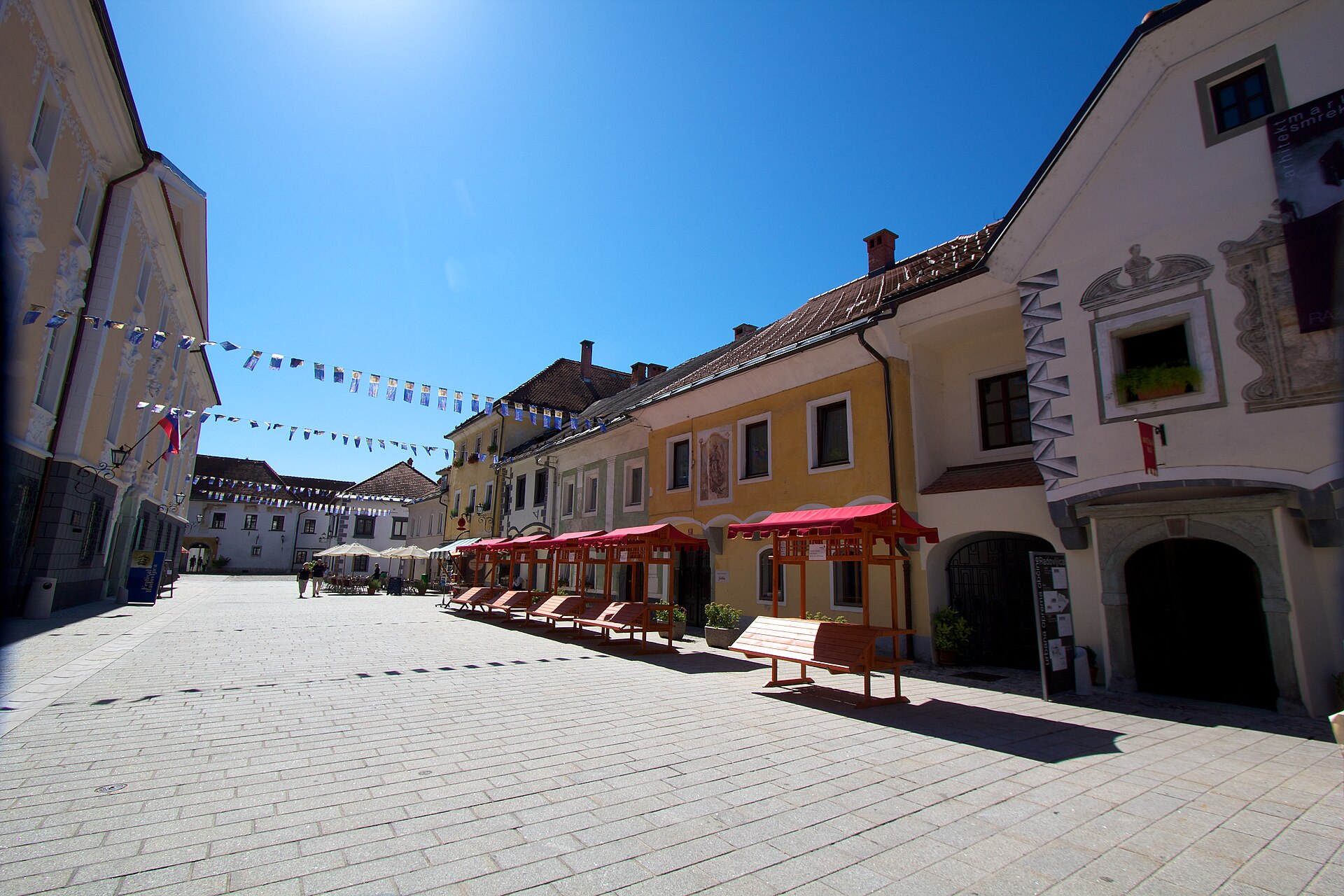
Radovljica itself is a town that wears its history lightly. Unlike some of Slovenia’s more tourist-heavy destinations, it doesn’t feel like a stage set for visitors. The church sits at the edge of the old town, where narrow streets wind past pastel-colored houses and small shops selling honey, handmade crafts, and local produce. On a quiet morning, the sound of the church bells mingles with the clatter of bicycles and the occasional bark of a dog. There’s a sense of continuity here, as if the town has simply carried on, adapting to each new era without losing sight of what came before.
The church’s interior is equally unassuming. The pews are worn smooth by generations of worshippers, their wood darkened by time and use. The organ, though not particularly grand, fills the space with music during services, its notes echoing off the stone walls. On Sundays, the church comes alive with the voices of the congregation, a mix of older locals and younger families who still find meaning in this place. Even on weekdays, when the doors are open to visitors, there’s a sense of stillness—a pause in the day where one can sit and listen to the silence.
What makes the Parish Church of St. Peter special isn’t just its age or its architecture, but the way it fits into the life of Radovljica. It’s not a museum piece, frozen in time, but a living part of the town. The churchyard, with its weathered gravestones, tells its own story of the people who have lived and died here. Some of the names on the stones are the same as those found in the town’s records from centuries past, a quiet testament to the families who have called this place home for generations. In a country where history is often layered like sediment, this church is one of those rare places where the past feels tangible, yet not distant.
For those who take the time to visit, the church offers more than just a glimpse into Slovenia’s religious heritage. It’s a place to slow down, to step out of the rush of modern travel and into a rhythm that feels older, more deliberate. The view from the churchyard, looking out over the rooftops toward the mountains, is one of those quiet moments that lingers long after you’ve left. It’s the kind of place that doesn’t demand attention but rewards those who give it. And perhaps that’s the real measure of its significance—not in grand gestures or dramatic history, but in the way it has quietly endured, a steady presence in a town that has changed around it.