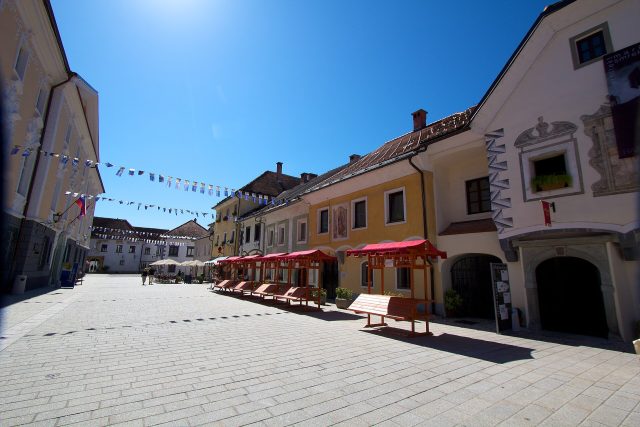
Bohinjska Bistrica sits where the Julian Alps meet a glacial lake. The town is quiet, with mountain air, forests, and peaks that change with the seasons—snow in winter, reflections in Lake Bohinj in summer. It’s the gateway to Triglav National Park, but the town itself feels like a pause. You can sit in the square, drink coffee, and step into a rhythm that hasn’t changed in generations.
The Bohinj Valley has drawn people since the Middle Ages. The first villages here appeared in the 13th century, built by shepherds and traders who crossed mountain passes. For centuries, the region belonged to the Habsburg Empire. You can still see that history in the stone houses with wooden balconies, narrow lanes, and alpine Baroque churches. By the 19th century, travelers began arriving, seeking solitude and natural beauty—just as they do now.
The town is small. You can walk through it in under an hour.
Its center is a square lined with low buildings, cafés, and shops. The Church of St. Nicholas stands here, its 17th-century bell tower rising above the rooftops. Inside, the church has original frescoes and a wooden altar. Nearby, the Sava Bohinjka River rushes past. Its waters come from the Savica Waterfall, one of Slovenia’s most famous cascades. The river is narrow but fast, its sound a constant backdrop to walks along the bank.
From Bohinjska Bistrica, you can reach Lake Bohinj, the largest permanent lake in Slovenia. The lake is surrounded by forested slopes and rocky cliffs. In summer, people swim, kayak, and fish. In winter, the frozen surface becomes an ice rink. Trails lead to waterfalls, viewpoints, and mountain huts where you can rest and eat local food. One path takes you to the Savica Waterfall, which drops 78 meters in two tiers. The route winds through beech forests, cool even on warm days.
In winter, the town becomes a ski destination. A few lifts serve slopes of different difficulty. There are no crowded runs—just quiet skiing or snowboarding with views of snow-covered peaks. Beginners can practice on gentle slopes. More experienced skiers might head to Kobla Mountain for panoramic views. After skiing, you can warm up in an inn with mulled wine or štruklji, a rolled dumpling, or potato stew.
Summer brings hikers and cyclists. One famous route leads toward Mount Triglav, Slovenia’s highest peak. Climbing it requires experience, but you don’t have to summit to see its grandeur. Cyclists will find routes for all levels, from easy rides along the lake to steep mountain passes. Bike rentals are available in town, and cafés pack lunches for longer trips.
The town blends alpine scenery with Slovenian hospitality. There are no luxury hotels, just family-run guesthouses serving breakfast with local ingredients. Small cafés offer homemade wine or plum brandy. Evenings are quiet, with voices from returning hikers or the sound of church bells.
In summer, the square sometimes hosts concerts or markets. Artisans sell woolen socks, wooden toys, and honey from mountain beehives.
Bohinjska Bistrica is also a living community. Festivals celebrate farming and craftsmanship. In nearby villages, you can see old wooden houses with carved balconies or visit farms where cheese is made using traditional methods.
People come here for stillness. There are no crowds, no noisy bars—just mountain air, scenery, and the chance to slow down. It’s a place to step away from city life, spend time outdoors, and experience the rhythm of alpine living.