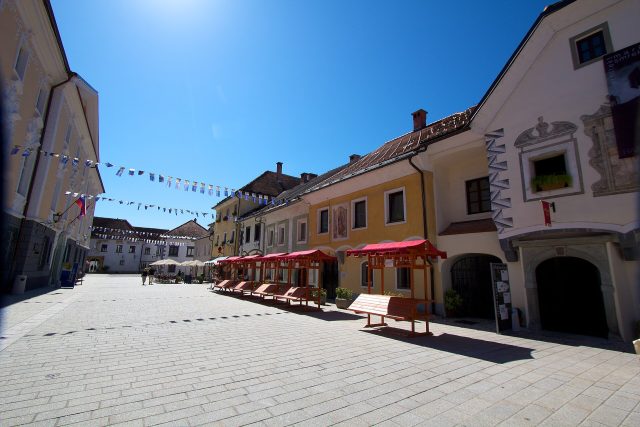
Nestled in the heart of Radovljica, a town that feels like it’s been lifted straight from a storybook, the Museum of Apothecary is a quiet treasure that whispers tales of a time when medicine was as much about art as it was about science. Housed in a building that has stood here for centuries, the museum occupies a space that was once part of the town’s old hospital, a place where the sick came seeking remedies long before modern pharmacies existed. The architecture itself is a gentle reminder of the past—thick stone walls, arched doorways, and wooden beams that have borne witness to generations of healers and patients. It’s not just a museum; it’s a fragment of history preserved with care, where every corner seems to hold a story waiting to be discovered.
The collection inside is a fascinating journey through the evolution of pharmacy, from the days when apothecaries were alchemists and herbalists rolled into one. The most striking part of the exhibit is the recreation of an 18th-century apothecary shop, complete with wooden cabinets lined with glass jars, each labeled in elegant script with the names of herbs, powders, and tinctures. Some of these jars still contain remnants of their original contents—dried lavender, crushed roots, or mysterious powders that hint at the remedies of the past. The air carries a faint, earthy scent, as if the herbs themselves have lingered through the centuries. Nearby, a large mortar and pestle sits on a counter, a tool that was once the heart of every apothecary, used to grind ingredients into medicines that were as much about hope as they were about healing.
One of the most intriguing aspects of the museum is how it reveals the blurred line between medicine and superstition in earlier times. Some of the exhibits show how apothecaries relied on a mix of empirical knowledge and folklore, blending science with beliefs that today might seem strange. There are displays of old medical texts, their pages filled with handwritten notes and sketches of plants, some of which were thought to cure everything from melancholy to plague. A particularly fascinating section is dedicated to the use of leeches and bloodletting, practices that were once considered cutting-edge but now serve as a reminder of how much medical understanding has changed. It’s a humbling experience, walking through these rooms and realizing how much trial and error went into the treatments we now take for granted.
The museum doesn’t just focus on the tools and medicines of the past; it also sheds light on the people behind them. Apothecaries were often among the most educated members of their communities, respected for their knowledge of botany, chemistry, and even astrology. Some of the exhibits include personal items—glasses, quills, and ledgers filled with prescriptions—that belonged to the apothecaries who once worked here. There’s a sense of intimacy in these displays, as if you’re glimpsing the daily lives of those who dedicated themselves to healing. One of the most touching artifacts is a small notebook where an apothecary meticulously recorded the ailments of his patients and the remedies he prescribed. It’s a reminder that behind every jar of medicine was a person, often working in difficult conditions, trying to make a difference in their community.
Beyond the historical artifacts, the museum also offers a glimpse into the cultural significance of apothecaries in Slovenian life. In a country where nature has always played a central role, herbal medicine was deeply intertwined with local traditions. Many of the plants used in these old remedies still grow in the surrounding countryside, and the museum does a beautiful job of connecting the past to the present. There’s a small garden just outside, where some of the same herbs that were once used in the apothecary’s medicines continue to thrive. It’s a quiet spot, perfect for reflecting on how much of our modern medicine still has roots in these ancient practices. The garden also serves as a gentle reminder of the cyclical nature of knowledge—what was once forgotten is sometimes rediscovered, and what was once commonplace can become extraordinary again.
What makes the Museum of Apothecary in Radovljica so special is its ability to transport visitors not just to another time, but to another way of thinking. It’s not a grand museum with flashy exhibits or interactive displays, but that’s part of its charm. Instead, it feels like stepping into a living history book, where every object has a purpose and every story is told with care. The museum doesn’t overwhelm with information; it invites curiosity, allowing visitors to linger over the details that interest them most. Whether it’s the delicate handwriting on an old prescription, the intricate carvings on a wooden cabinet, or the faint scent of herbs in the air, there’s a sense of discovery in every corner.
For those who take the time to explore, the museum offers more than just a lesson in history—it’s a meditation on the human desire to heal and be healed. It’s a place where you can stand in front of a display of old surgical tools and feel a mix of fascination and gratitude for how far medicine has come. It’s also a place where you can appreciate the quiet dedication of those who came before us, working with what they had to ease suffering in a world that was often harsh and uncertain. In a town like Radovljica, where the past feels very much alive, the Museum of Apothecary is a perfect example of how history can be both preserved and experienced. It’s not just about looking at artifacts; it’s about feeling the weight of time and the continuity of human effort. And in that, it’s a small but profound reminder of how much we owe to those who came before us.