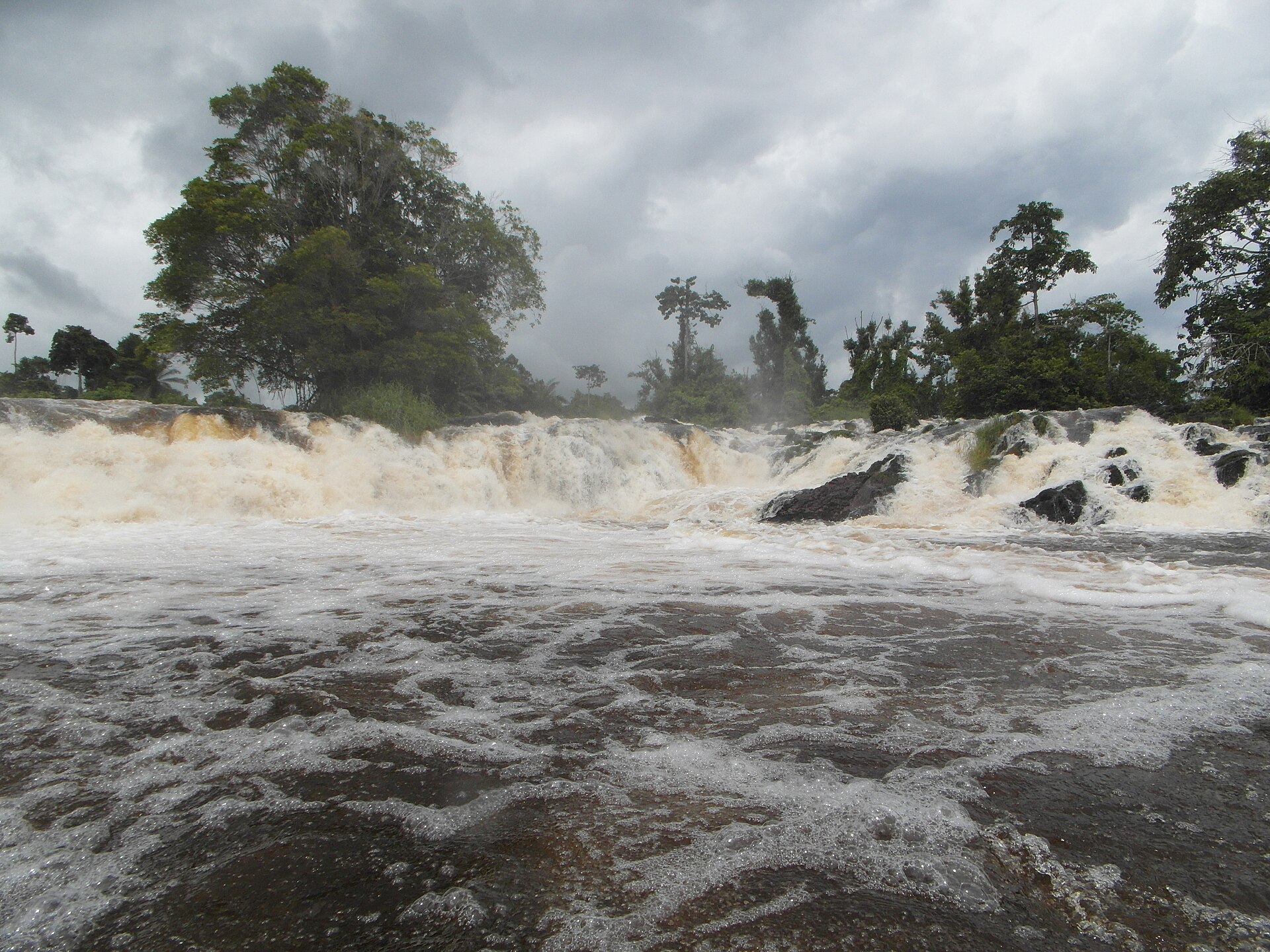
The Lobé Waterfalls are one of Cameroon’s most unusual natural wonders, where the Lobé River meets the Atlantic Ocean in a way that feels almost impossible. Unlike traditional waterfalls, there are no towering cliffs or thunderous cascades here. Instead, the river spills directly into the sea, its fresh water tumbling over low ledges before merging with the saltwater waves. The effect is mesmerizing—a seamless transition between land and ocean, where the boundaries between elements blur. The falls are more of a gentle surrender than a dramatic plunge, with water flowing in shifting curtains rather than crashing down with force.
The Lobé River begins its journey deep in the southern jungles of Cameroon, winding through dense forests before reaching the coast. Along the way, its current slows, spreading wide across the landscape, only to narrow again just before the ocean. The drop itself is modest—just a few meters—but that’s what makes it so striking. There’s no deafening roar, no mist rising in great clouds. Instead, the water glides over the rocks, creating a living veil that, at the right tide, you can even walk behind. It’s a rare sight, one that feels more like a secret than a spectacle.
The area around the falls is wild and largely untouched. Mangroves line the riverbanks, their tangled roots gripping the earth, while beyond them stretch black sand beaches, a reminder of the region’s volcanic past. The landscape shifts with the seasons. During the rainy months, the river swells, turning the falls into a powerful surge that reshapes the shore. In drier times, the water recedes, revealing rocky ledges and shallow pools where the brave might take a dip. But the currents here are unpredictable, and even strong swimmers are warned to stay cautious. The ocean doesn’t forgive mistakes.
For the Bakole people, who have lived along this coast for generations, the Lobé Waterfalls are sacred. Their stories speak of river spirits who watch over fishermen and hunters, granting luck or protection to those who show respect. Elders say that rituals once took place here, offerings made to ensure safe voyages or bountiful catches. Today, visitors are few, but those who make the journey often notice the quiet reverence of the locals. There’s no shouting, no littering, no attempt to tame the place. It’s as if the land itself demands a certain humility.
Reaching the falls isn’t easy. From Kribi, the nearest town of any size, the road south is little more than a dirt track, often impassable after rain. It winds through villages where life moves at its own pace—women selling pineapples and bananas by the roadside, children kicking up dust in the streets, men mending fishing nets in the shade. When the river floods, the last stretch of the journey must be made by pirogue, narrow wooden canoes piloted by local fishermen. They know the water’s moods, the hidden channels, the safest way to approach the falls. As the boat glides closer, the ocean comes into view, and the sound of rushing water grows louder, until suddenly, there it is—the river pouring into the sea.
There’s no grand architecture here, no man-made viewpoints or souvenir stalls. The only structures are the remnants of old wooden bridges, half-swallowed by the jungle, or the rough-hewn steps carved into the rock, leading to caves behind the falls. At high tide, the caves vanish beneath the rising water, becoming inaccessible even to the most adventurous. It’s a place that resists permanence, where the landscape is always shifting, always reclaiming what little humans have tried to leave behind.
This isn’t a destination for those seeking comfort or entertainment. There are no paved paths, no cafes, no signs pointing the way. What you’ll find instead is silence, broken only by the rush of water and the cries of seabirds. The air smells of salt and damp earth, of decaying leaves and the faint tang of the ocean. It’s the kind of place that makes you feel like you’ve stumbled upon something rare—something untouched, unspoiled, existing exactly as it always has. Those who come here often leave with the sense that they’ve witnessed something real, something that hasn’t been packaged or polished for tourists.
If you’re lucky, you might arrive at sunset, when the light turns the water to liquid gold and pink. In those moments, the falls seem almost fragile, as if nature has briefly lifted a curtain to reveal one of its secrets. But the illusion doesn’t last. Soon, the light fades, and the only things left are the sound of the waves and the distant glimmer of stars over the ocean. It’s a reminder that some places aren’t meant to be conquered or understood—just experienced, and then left as they were.