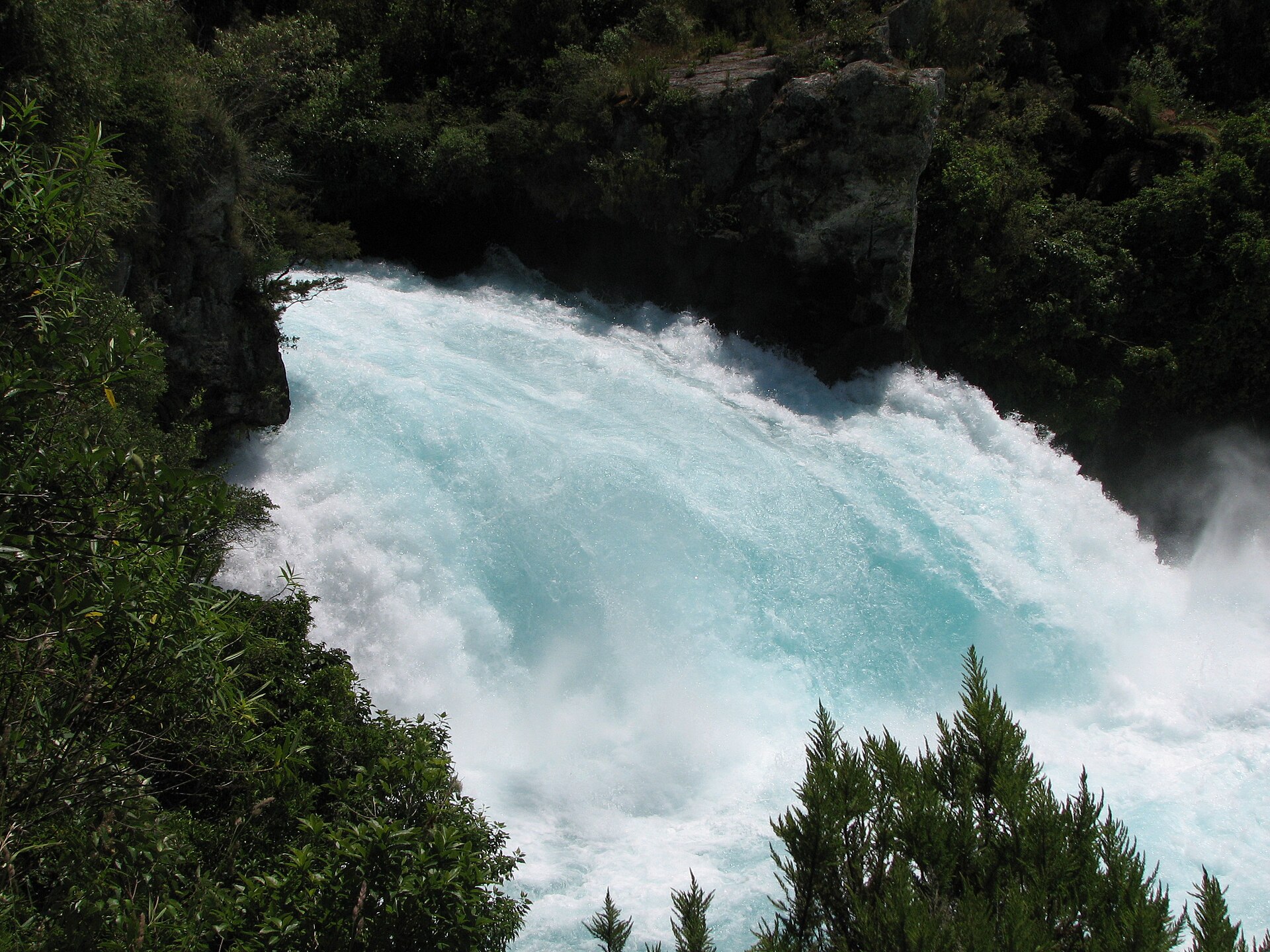
Lake Taupo’s Huka Falls is one of those rare places where nature seems to gather all its strength just to remind you of its raw, untamed beauty. The Waikato River, New Zealand’s longest, narrows here into a tight gorge before plunging over a ten-metre drop, sending up a frothing, churning mass of water that looks almost like it’s boiling. The name *Huka* comes from the Māori word for foam or swirling water, and it’s an accurate description—this isn’t a gentle cascade but a forceful, roaring display of power. The sound alone is enough to make you pause, a deep, constant rumble that vibrates through the air and the ground beneath your feet.
For the Māori, the Waikato River has always been sacred, a lifeline woven into their history and traditions. Huka Falls was more than just a landmark; it was a gathering place, a site for rituals, and a symbol of the river’s spiritual significance. Even now, standing near the falls, you can sense that connection—the way the mist hangs in the air, the way the light catches the spray, the way the water seems to carry stories of the land. It’s not hard to imagine why this place held such importance for generations.
The falls themselves are a striking example of how geology shapes the landscape. The gorge is carved from volcanic rock, its walls lined with dense native bush that clings to the edges. When the sun breaks through, the mist rising from the water often creates rainbows, adding a fleeting splash of colour to the scene. There are walking tracks that lead you close enough to feel the spray on your face, the most popular one taking you to a viewing platform where the full force of the falls is on display. From there, the river stretches out in both directions, wide and calm upstream, then suddenly compressed into that furious rush before it tumbles over the edge.
What makes Huka Falls different from many other tourist spots is how unspoiled it feels. Despite its popularity, it doesn’t have the crowded, commercialised atmosphere you might expect. Early mornings and late afternoons are especially quiet, the kind of quiet that lets you hear the birds in the trees and the wind moving through the leaves. The water is so clear you can see the rocks beneath the surface, and the air carries the scent of damp earth and green foliage. It’s the kind of place where you can sit for a while, watching the water rush by, and feel like you’ve stepped outside of time.
Beyond its beauty, Huka Falls plays a practical role in the region. The Waikato River feeds into Lake Taupo, the largest freshwater lake in Oceania, and the falls help regulate the flow of water through the system. The mineral-rich waters and strong currents create ideal conditions for trout and other fish, making this a prime spot for anglers. There’s also a hydroelectric power station nearby, though its presence is subtle—you’d hardly notice it unless you knew to look. The infrastructure blends into the landscape rather than dominating it, a rare balance between human needs and natural preservation.
If you’re looking for more than just a view, there are ways to experience the falls up close. Jet boat rides take you right into the heart of the action, skimming across the water just metres from where the river narrows. For those who prefer something even more exhilarating, white-water rafting offers a chance to ride the rapids just above the falls, feeling the full force of the current. But you don’t have to seek out adrenaline to enjoy the place. The surrounding area is perfect for a quiet walk, with trails winding through native forest and along the riverbank. Some paths lead to secluded spots where you can sit and listen to the water, or watch the light change over the gorge as the day goes on.
Huka Falls isn’t the kind of attraction that tries to impress you with man-made spectacle. There are no grand viewpoints engineered for the perfect photo, no gift shops or cafes clamouring for your attention. Instead, it’s a place where nature sets the rules, and you’re just a visitor lucky enough to witness it. That might be why it leaves such a lasting impression—it’s a reminder of how small we are in the face of something so powerful, and how rare it is to find a place that hasn’t been tamed or packaged for convenience.
If you find yourself in the Taupo region, it’s worth making the trip. Whether you come for the thrill of the rapids, the quiet of the walking tracks, or just to stand and watch the water crash over the edge, Huka Falls has a way of staying with you. It’s not just about the view; it’s about the feeling of being part of something bigger, even if only for a little while.