Cheonjiyeon Waterfall
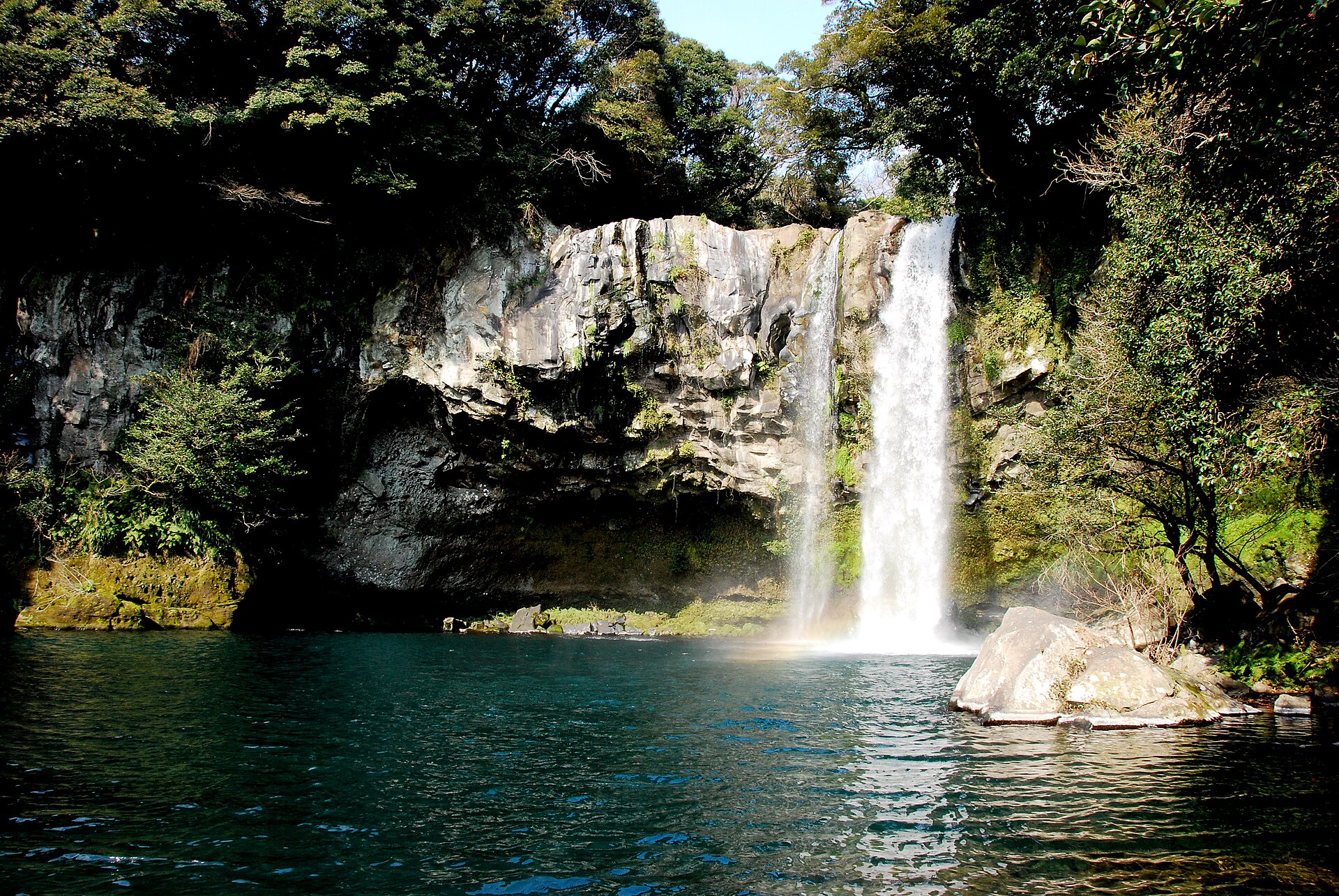
Cheonjiyeon is where the experience matters more than the spectacle. The waterfall doesn’t roar—it whispers. Water glides over dark basalt steps, barely disturbing the forest around it. At seven meters high, it’s modest, but its beauty is in how it fits into the landscape, as if nature shaped it deliberately.
The waterfall is on Jeju’s western coast, near Seogwipo, tucked into a valley of volcanic rock. The path winds through subtropical greenery, where evergreen trees and shrubs form a canopy. Small wooden bridges and viewpoints offer glimpses of the sea. At the end, a pool of clear water waits, faintly blue even on warm days. The air smells of damp earth and salt.
Locals call it the "Waterfall of the Seven Nymphs." A legend says seven daughters of a heavenly ruler bathed here and never left. Their spirits are said to linger in the mist. The place feels timeless, as if the world moves slower here. Even in peak season, you can find quiet spots on the rocks. The only sounds are leaves rustling and water murmuring.
Cheonjiyeon has no grand structures. Wooden walkways and railings guide visitors without disrupting the scene. Ferns and moss cling to the basalt. After heavy rains, the waterfall swells, becoming stronger but losing some of its delicate charm. It shifts with the seasons.
Jeju’s nature sets the rhythm, and Cheonjiyeon follows. Old records mention rituals here, where people honored the water’s supposed healing powers. Some still fill bottles with it. The idea that water holds something more than moisture lingers.
Nearby, Jeongbang Waterfall is taller and louder. Hyeopjae Cave invites exploration. The coastline is rugged, with cliffs plunging into the sea. Seaside cafés serve fresh fish. Seogwipo has more to see, but Cheonjiyeon stands out for its quiet beauty—no crowds, no fanfare, just water over stone.
Spring or autumn is best for visiting. Summer brings heat and humidity, and rain can make the path slippery. Winter transforms the waterfall—ice forms on the rocks, turning the scene stark. Even on overcast days, it retains its allure.
This isn’t for thrill-seekers. There are no souvenir stalls or guided tours. It offers something else: a chance to step away from noise. Some come at dawn, when light touches the rocks. Others prefer sunset, when the water glows. Either way, it leaves you calmer, as if the world has faded, leaving only water and leaves.