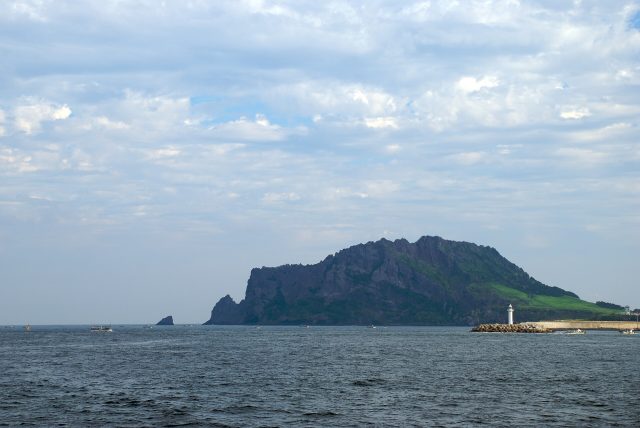
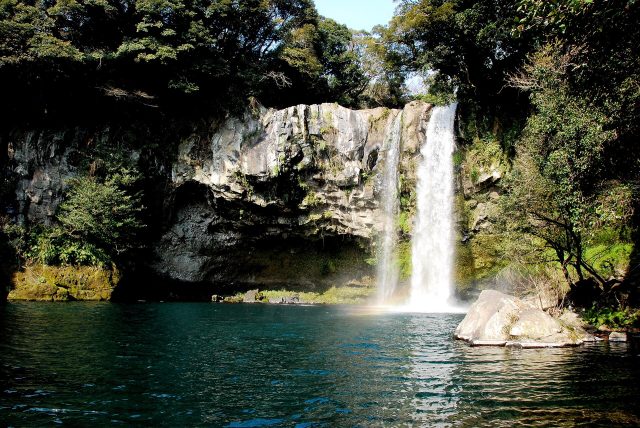
Jeju Island has a way of surprising you—not with grand gestures, but with quiet corners where the land and sea settle into something timeless. Jeongbang Beach is one of those places. Tucked away on the island’s southern coast, far from the well-trodden paths of tourists, it feels like a secret kept just for those who wander off the main roads. There are no crowds here, no neon signs or beachfront bars, just a long stretch of black volcanic sand meeting the water in a slow, deliberate curve. The rocks along the shore are worn smooth by time, their surfaces covered in patches of lichen, as if they’ve been standing guard since the island first took shape.
The sand is what makes Jeongbang distinct. It’s not the golden kind you find on postcards, but something darker, almost charcoal in places, formed from ancient lava flows that cooled and shattered into fine grains over millions of years. Unlike regular sand, it doesn’t scorch your feet under the sun—it stays cool, even on the hottest days, making it perfect for barefoot walks. The water is clear but chilly, even in summer, and you’ll mostly see locals swimming here, used to the sea’s temperament. The real magic happens at dusk, when the sky turns shades of amber and violet, and the horizon seems to stretch endlessly.
There’s almost no infrastructure here—no cafes, no sunbeds, no souvenir stalls. It’s a place for those who want to be alone with the elements or pack a picnic with family. On weekends, you might see locals spreading out mats on the sand, bringing food and drinks, and spending hours in quiet conversation. During the rainy season, the beach takes on a different mood. The sea turns murky with sediment, waves crash against the rocks with a raw, untamed energy, and the whole scene feels like a glimpse into the island’s primal past.
Jeongbang hasn’t always been this quiet. Decades ago, the sand was mined for construction, and you can still spot small, water-filled pits left behind from that time. But as Jeju developed into a tourist destination, places like this gained new meaning—not as resources to exploit, but as reminders of the island’s wild, untamed side. Today, the beach is protected as part of Jeju’s natural heritage, which has helped keep it largely untouched. It’s a rare thing these days, a place where you can still feel the weight of history in the land beneath your feet.
There’s no grand architecture here, just the occasional weathered fishing boat pulled up on the shore. But if you walk east along the coast, you’ll stumble upon a small temple hidden among the rocks. It’s easy to miss from the road, but locals consider it special. Dedicated to the spirits of the sea, it’s a place where fishermen come to pray for safe voyages or good catches. Inside, the air is thick with the scent of incense, and through the open doors, the sea is always visible, as if the temple and the water exist in the same breath.
Jeongbang isn’t for those looking for convenience or entertainment. There are no seafood restaurants with ocean views, no shops selling trinkets, not even a proper parking lot—just a narrow, winding road leading to a small patch of gravel by the side. But that’s part of its charm. Coming here, you realize Jeju isn’t just about bustling markets and luxury resorts. It’s also an island where you can sit on the shore, listen to the waves, and feel like you’re part of something older and bigger than yourself.
The beach changes with the seasons. In summer, it’s the busiest time, though still far quieter than the crowded shores of Hyeopjae or Jungmun. Spring and autumn bring near-solitude, with rougher seas and stronger winds, the sky often overcast. Winter is when Jeongbang feels most dramatic—black sand dusted with snow, waves crashing against the rocks with such force that spray flies meters into the air. Few people come here then, but those who do are rewarded with a landscape that feels almost elemental.
For photographers, Jeongbang is a gift. There are no man-made backdrops, just natural contrasts—the black sand against white foam, gray rocks against blue water, the occasional red seaweed washed ashore. At low tide, the exposed stones reveal shells and starfish, and shallow pools teem with small fish and crabs. Local children often come to explore, their laughter carrying across the empty beach, adding a touch of life to the quiet.
Jeongbang won’t be featured in guidebooks as Jeju’s must-see attraction. It doesn’t dazzle with size or spectacle, and it doesn’t offer much in the way of activities. But that’s exactly why it matters. It’s a place to pause, to breathe, to remember that travel isn’t always about ticking off sights. Sometimes, it’s enough to sit on the shore, watch the horizon, and let the rhythm of the waves slow your thoughts down. In a world that moves too fast, Jeongbang offers something rare—a moment of stillness.