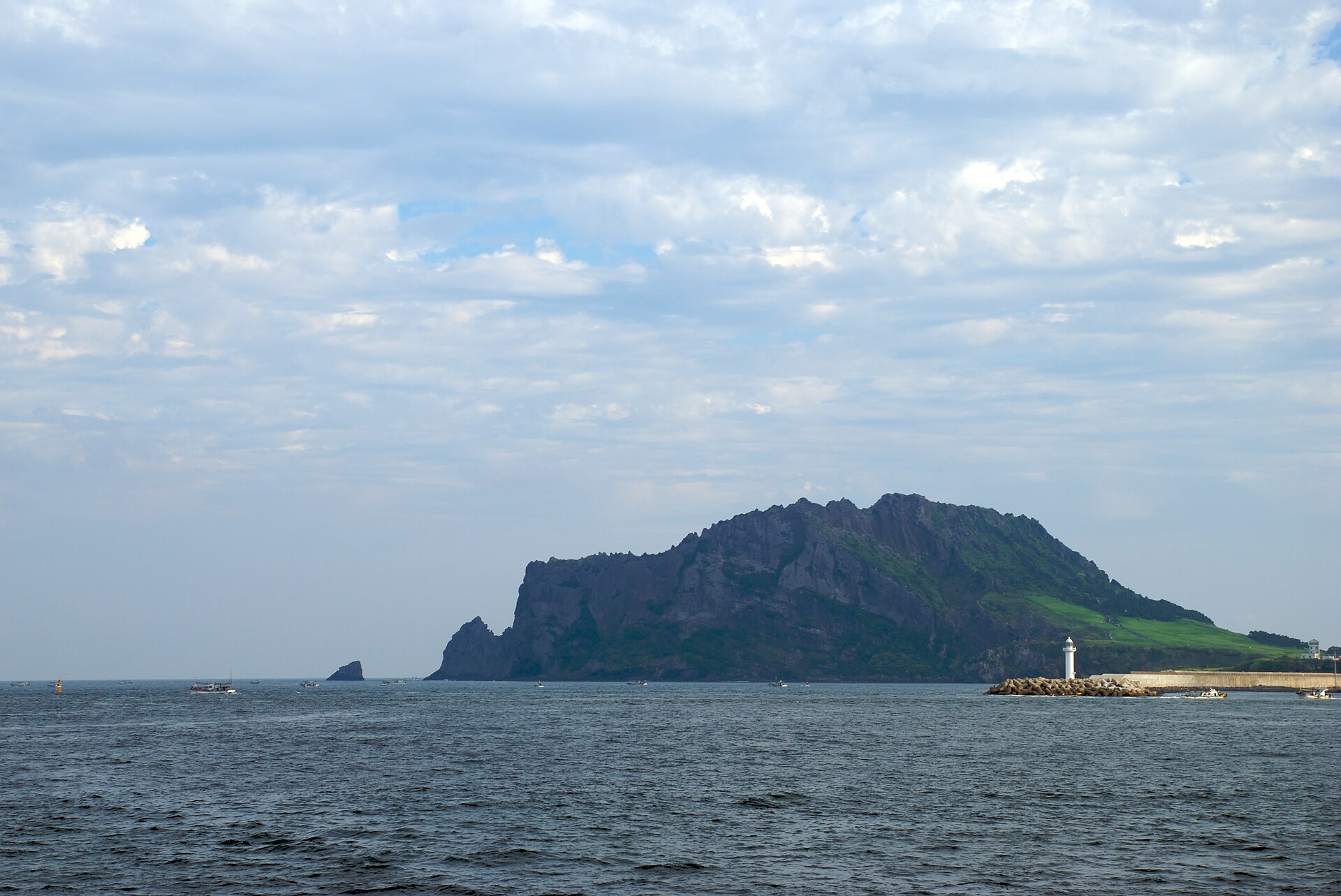
Sunrise Peak, or Seongsan Ilchulbong, rises from the eastern shore of Jeju Island like a natural monument carved by time and fire. Its silhouette is unmistakable—a broad, bowl-shaped crater rimmed by jagged cliffs, standing alone against the horizon. From the sea, it looks like a fortress of stone; from land, a vast green amphitheater open to the sky. The name itself means "peak where the sun rises first," and on clear mornings, the view from the top justifies the title. The first light of day spills over the edge of the crater, turning the rocks gold and the sea below into a shimmering mirror.
The mountain took shape around five thousand years ago, born from an underwater volcanic eruption. Unlike other volcanic formations on Jeju, Seongsan Ilchulbong has no central cone or lava field. Instead, its summit is a wide, grassy plateau encircled by steep walls of basalt, a remnant of the violent forces that once shaped this coastline. Geologists believe the volcano was active for a brief but intense period before falling silent, leaving behind this striking geological oddity. Over time, wind and rain softened its edges, but the core of the crater remains remarkably intact, a silent witness to the island’s fiery past.
The climb to the top is straightforward but rewarding. A well-trodden path winds upward from the base, its stone steps worn smooth by generations of visitors. The trail cuts through low shrubs and clusters of wildflowers, their colors shifting with the seasons—pale pink azaleas in spring, deep green grasses in summer, fiery maple leaves in autumn, and a dusting of frost in winter. The ascent takes about an hour, depending on pace, but the real payoff comes at the summit. From there, the view stretches across the East China Sea, with the small island of Udo visible in the distance and the rolling hills of Jeju unfolding to the west. On a clear day, the horizon seems endless, the line between sea and sky blurred by haze.
There’s little at the top except space and silence. No viewing platforms, no souvenir stands—just the wind rushing over the crater’s edge and the occasional cry of a seabird. Many visitors arrive before dawn, wrapped in jackets against the morning chill, carrying thermoses of tea or coffee. They sit on the rocks, waiting for the sun to appear, its first rays painting the clouds in shades of rose and amber. The moment feels almost ceremonial, as if the mountain itself is holding its breath before the day begins. Locals sometimes leave small offerings—colored ribbons tied to branches, coins placed on flat stones—as a quiet acknowledgment of the place’s spiritual weight.
Seongsan Ilchulbong holds a special place in Jeju’s cultural imagination. For centuries, it has been more than just a landmark; it’s a site of myth and reverence. One legend tells of the goddess Seonmu, who descended from the heavens to shield the island from evil spirits. To this day, some visitors whisper prayers as they climb, asking for protection or good fortune. The mountain’s name, "first sunrise," reinforces its symbolic role as a threshold between night and day, darkness and light. Even the way the crater faces east, as if reaching toward the dawn, feels deliberate, as though the land itself is oriented toward renewal.
The mountain’s beauty lies in its simplicity. There are no grand structures here, no manicured gardens or interpretive signs—just the raw, unfiltered presence of nature. The only human touch is the stone staircase, built to make the climb easier, but even that feels unobtrusive, blending into the landscape rather than dominating it. The rest is untamed: weathered rocks, tufts of grass clinging to the cliffs, the occasional wildflower pushing through a crack in the stone. It’s a place that resists domestication, where the only rules are those set by the wind and the tides.
Artists and photographers have long been drawn to Seongsan Ilchulbong, captivated by its ever-changing moods. The play of light on the crater’s walls creates a different scene with each passing hour—soft and muted at dawn, stark and dramatic under the midday sun, mysterious and shadowed as clouds drift overhead. Stormy days bring their own kind of magic, with waves crashing against the cliffs below and mist curling around the summit like smoke. Even in the rain, the mountain has a quiet dignity, its slopes glistening as if freshly polished.
For those who want to linger, the area around the base offers a few small cafés and restaurants serving Jeju’s signature dishes. The island is known for its seafood—grilled cuttlefish, raw abalone, spicy sea urchin stew—and its black pork, a local delicacy with a rich, slightly sweet flavor. A meal here feels like a natural extension of the visit, a way to ground the experience in the island’s rhythms. After the climb, a bowl of warm noodles or a plate of grilled fish can taste like a reward, simple but deeply satisfying.
What makes Seongsan Ilchulbong unforgettable isn’t any single feature, but the way it makes you feel. There’s no agenda here, no script to follow. You come, you walk, you look, and for a little while, the rest of the world fades. The wind carries away thoughts of schedules and obligations, leaving only the sound of waves and the vastness of the sky. It’s a place that doesn’t demand admiration so much as invite it, offering a quiet space to stand still and remember what it’s like to be small in the face of something vast. That’s why people return—not for the view alone, but for the way the mountain seems to hold time in its hands, letting you step outside of it, if only for a moment.