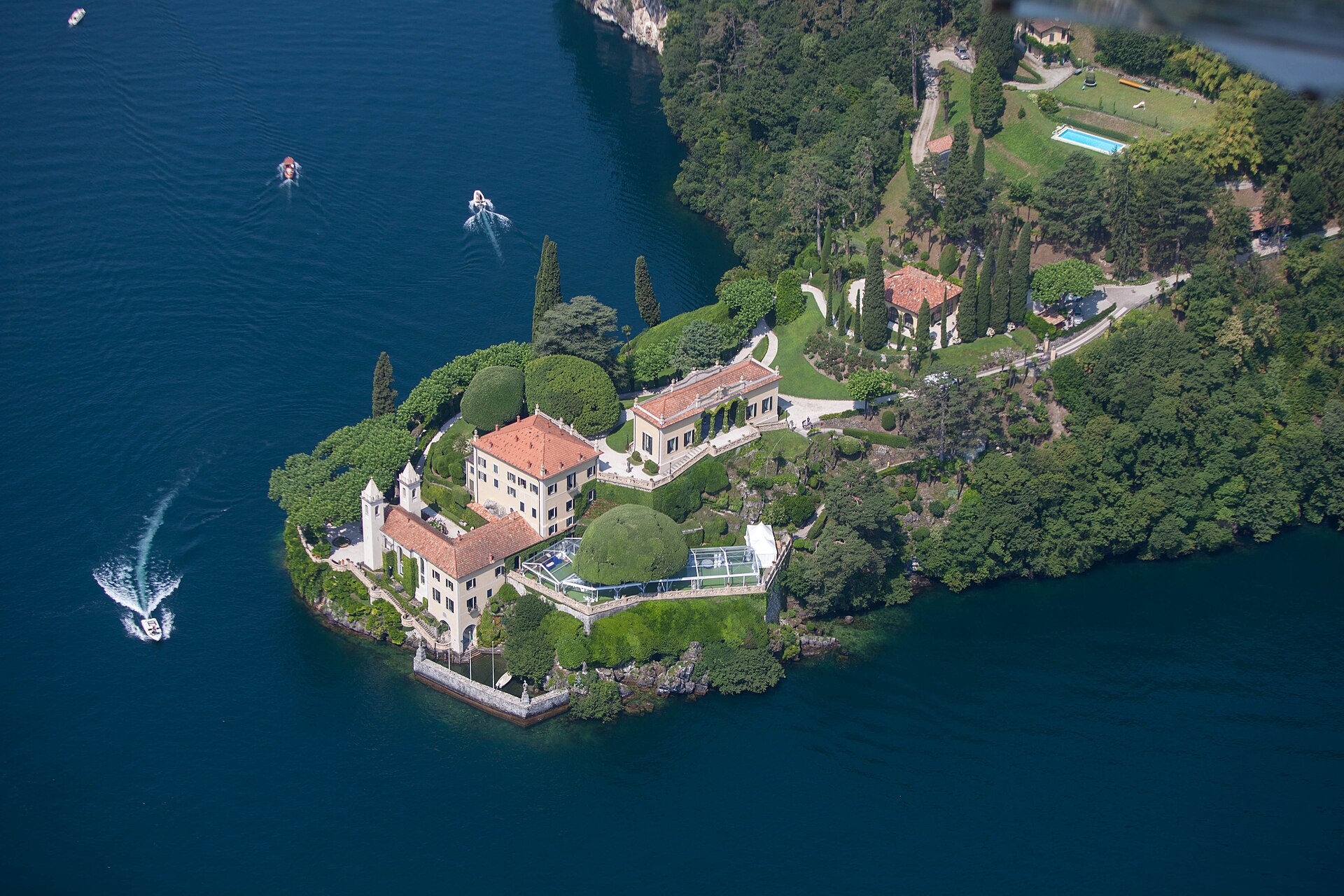
Perched on a rocky promontory along the shores of Lake Como, Villa del Balbianello feels like a place where time has paused, allowing the elegance of Italy’s aristocratic past to linger just a little longer. Its terraces cascade toward the water, framed by slender cypress trees and gardens so lush they seem to breathe with history. Built in the late 18th century by Cardinal Angelo Maria Durini, the villa was never meant to be a stage for grand receptions but rather a retreat for quiet reflection and intellectual exchange. Durini, a passionate collector of antiquities and a devoted botanist, shaped the estate into a living museum, filling it with ancient statues, rare plants, and an atmosphere of stillness broken only by the gentle lapping of waves against the shore.
The architecture of Balbianello plays with light and space in a way that feels almost effortless. Its neoclassical facades, adorned with columns and bas-reliefs, give way to large windows that dissolve the boundary between indoors and out, making the lake itself part of the villa’s design. Inside, the original frescoed ceilings, intricate moldings, and period furnishings transport visitors to the Age of Enlightenment. The library, once a gathering place for scholars and writers, still holds rare manuscripts and books, a quiet testament to the villa’s role as a hub of ideas that shaped Europe. It’s easy to imagine the debates that once filled this room, where philosophy and art collided in hushed, urgent conversations.
The gardens are a world unto themselves, where nature is tamed into something both wild and precise. Terraces step down toward the lake in perfect geometric order, their flowerbeds and manicured hedges punctuated by statues that seem to watch over the water. The boathouse, a small but iconic feature, offers one of the most photographed views of Lake Como—its deep blue waters framed by mountains and the pastel hues of lakeside villages. In warmer months, the gardens hum with life, though never with the frenetic energy of more crowded tourist spots. Instead, there’s a sense of timelessness, as if the footsteps of poets and philosophers still echo along the gravel paths.
The villa’s modern chapter began in the 20th century when it was acquired by Guido Monzino, an entrepreneur and explorer who restored its former grandeur. Monzino, a man of eclectic tastes, filled the villa with artifacts from his travels—African masks, Tibetan textiles, and Native American weapons—creating a striking contrast with the classical European decor. These pieces don’t just decorate the space; they tell stories of distant lands and cultures, reinforcing the villa’s role as a meeting point of worlds. It’s this layering of history, where the refined and the exotic coexist, that makes Balbianello feel so alive.
Visiting the villa isn’t as simple as showing up at its gates. The only way to reach it is by boat or a steep hike along a narrow path, a journey that adds to its allure. The approach by water is particularly magical, the villa emerging from the shoreline like a mirage, its terraces and loggias reflected in the lake’s surface. Once inside, the experience is less about ticking off sights and more about wandering through rooms where every object seems to hold a memory. The view from the upper terrace is unforgettable—a sweeping panorama of Lake Como, its waters shimmering under the Italian sun, the surrounding mountains standing guard over the quiet villages below.
Balbianello’s fame extends far beyond Italy, thanks in part to its appearances in films like *Star Wars* and *James Bond*. Yet even without these cinematic connections, the villa would still be one of the most captivating places on Lake Como. It doesn’t demand attention; instead, it invites you to slow down, to step into a world where beauty isn’t just seen but felt. The villa’s true magic lies in its ability to make the past feel present, as if the conversations of its former inhabitants might resume at any moment.
What makes Balbianello special isn’t just its history or its architecture, but the way it makes you feel. There’s no rush here, no crowds jostling for the perfect photo. Instead, there’s a quiet rhythm—the rustle of leaves, the distant chime of church bells from across the lake, the occasional call of a boatman on the water. It’s a place that encourages you to linger, to sit on a stone bench and watch the light change over the mountains, or to wander through the gardens and imagine the lives that have unfolded here over centuries.
For those who visit, Balbianello becomes more than a destination. It’s a pause in the relentless pace of modern life, a reminder that some places are meant to be savored rather than hurried through. The villa doesn’t just preserve history; it lets you touch it, if only for a little while. And perhaps that’s why it stays with you long after you’ve left—the sense that you’ve glimpsed something rare, a corner of the world where time moves differently, and beauty is measured not in grandeur, but in moments of quiet connection.