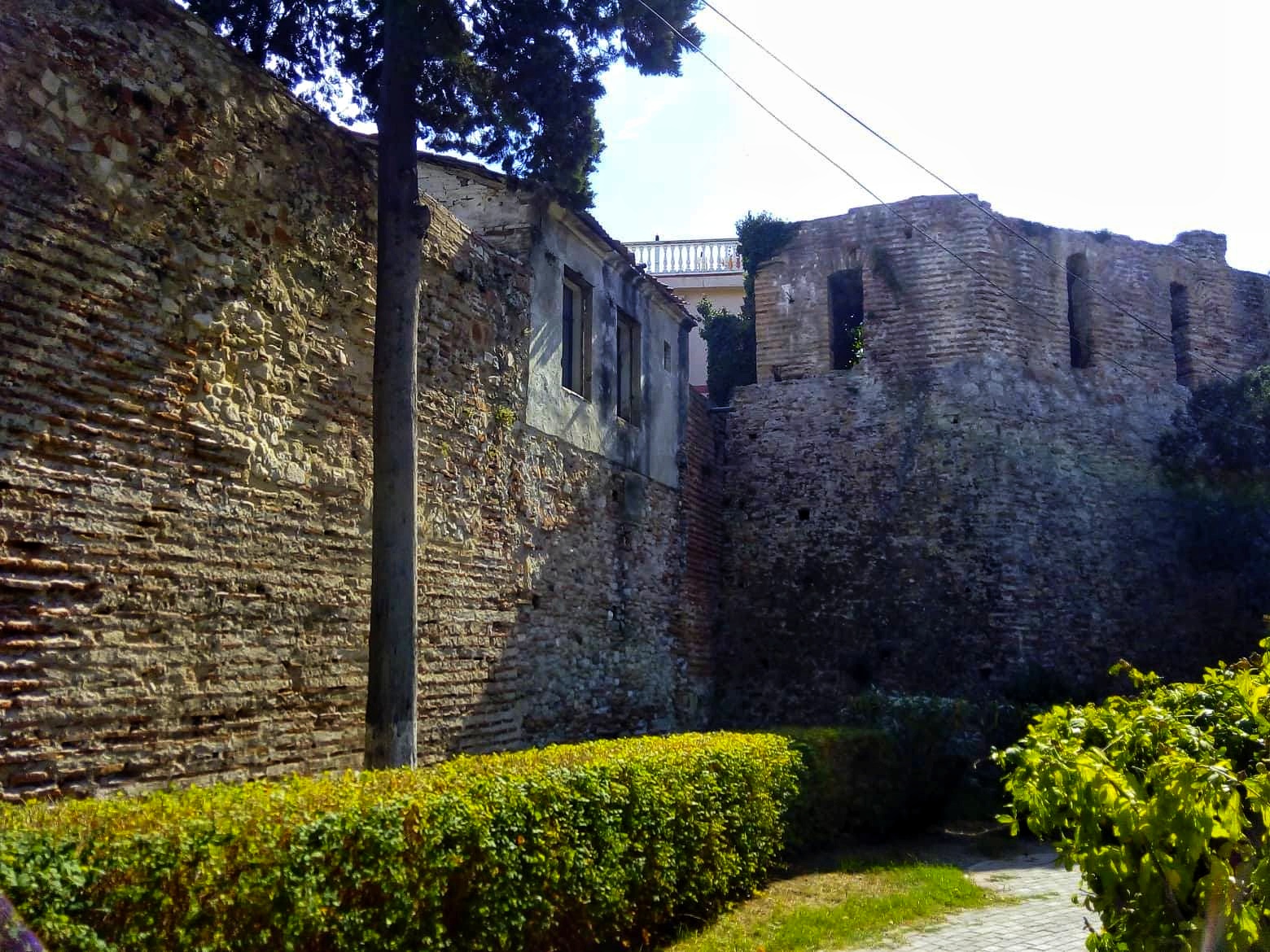
The Venetian Tower stands quietly at the edge of Durrës’ old harbor, a solitary reminder of the city’s layered past. Built in the fifteenth century, it was part of a larger defensive system constructed by the Republic of Venice, which controlled much of Albania’s coastline during that era. The tower’s cylindrical form and sturdy stone walls were designed to withstand both naval attacks and the passage of time, and though much of the original fortifications have since disappeared, this structure remains, offering a glimpse into the region’s strategic importance centuries ago.
Durrës itself is one of the oldest continuously inhabited cities in Europe, founded by Greek colonists in the seventh century BC. Over the centuries, it has been ruled by Romans, Byzantines, Venetians, and Ottomans, each leaving their mark on its streets and architecture. The Venetian Tower, however, is one of the few surviving elements from the city’s time under Venetian rule, a period when Durrës served as a crucial link between the Adriatic and the broader Mediterranean trade networks. The tower’s location near the port underscores its original purpose: to protect the harbor and the goods that passed through it, from spices and silk to salt and timber.
The architecture of the tower is unassuming yet effective. Its thick walls, narrow windows, and lack of ornate decoration reflect its military function rather than aesthetic ambition. Inside, the space is compact, with a spiral staircase leading to the upper levels, though access is often restricted. The tower’s exterior, weathered by centuries of salt air and coastal winds, has taken on a muted, almost melancholic appearance, blending into the modern cityscape that now surrounds it. Unlike the grand fortresses of other Venetian strongholds, this tower feels more like a silent witness than a monument to power.
Today, the Venetian Tower is overshadowed by Durrës’ more famous landmarks, such as the Roman amphitheater or the Byzantine-era forum. Yet its understated presence adds a different kind of value to the city. It doesn’t demand attention like the ruins of antiquity or the bustling markets nearby, but for those who notice it, the tower offers a tangible connection to a time when Durrës was a contested prize among empires. The harbor it once guarded is now lined with cafes and fishing boats, and the sounds of the city—car horns, laughter, the occasional call to prayer—drift past its walls, a contrast to the quiet it must have known in its early days.
Visiting the tower is less about grand revelations and more about small observations. The way the light hits the stone in the late afternoon, the salt stains creeping up the base, the way the modern port hums just beyond its shadow. There are no plaques or exhibits here, no guided tours or souvenir stands. It’s simply a place to pause, to consider how much has changed and how much has stayed the same. The tower has survived wars, earthquakes, and the slow erosion of time, and in its endurance, it tells a story not just of Venice or Albania, but of the countless hands that have shaped this corner of the Adriatic.
For those interested in history, the Venetian Tower is a reminder that empires rise and fall, but their traces linger in unexpected places. For everyone else, it’s a quiet spot to sit and watch the boats come and go, just as they have for hundreds of years. The city of Durrës moves around it, modern and lively, but the tower remains, a fixed point in a landscape of constant change. It may not be the most dramatic or well-preserved relic in Albania, but that’s part of its charm—it doesn’t need to be. It’s enough that it’s still here, still standing, still watching over the water.