Wat Si Saket is one of those rare places in Vientiane that feels untouched by time, as if the past lingers just beneath the surface. Built in the early 19th century under the reign of King Anouvong, it stands as the last major temple constructed in Laos before the country fell under French colonial rule. Unlike many of the city’s other religious sites, it survived the Siamese invasion of 1828, when much of Vientiane was reduced to ruins. Today, its weathered walls carry the weight of that history, offering a quiet counterpoint to the more ornate temples that dominate the city’s skyline.
The architecture of Wat Si Saket blends Lao and Thai influences, a reflection of King Anouvong’s education in Bangkok and his desire to bring elements of Siamese design to his capital. The main structure is encircled by a low-roofed gallery supported by slender columns, creating a sense of enclosure and intimacy. Inside, the walls are lined with thousands of small niches, each housing a Buddha statue. There are over six thousand of them—some cast in bronze, others carved from wood or stone, each varying in size and style. Many bear the marks of time, their features softened by centuries of wear, while others remain remarkably preserved. Together, they create an almost hypnotic effect, as if the temple itself is whispering stories from the past.
One of the most striking features of Wat Si Saket is its library, a modest building where sacred texts were once stored on palm leaves. Though it no longer serves its original purpose in the same way, it remains a quiet reminder of the temple’s role in the intellectual and spiritual life of the city. In Laos, temples have always been more than places of worship—they’ve been centers of learning, community gatherings, and even civic life. Wat Si Saket was no exception. Monks once held teachings here, ceremonies were conducted, and villagers sought guidance. Even now, the temple is home to a small monastic community, and if you visit at the right time, you might see them sweeping the courtyard, tending to the gardens, or reading sutras beneath the shade of the trees.
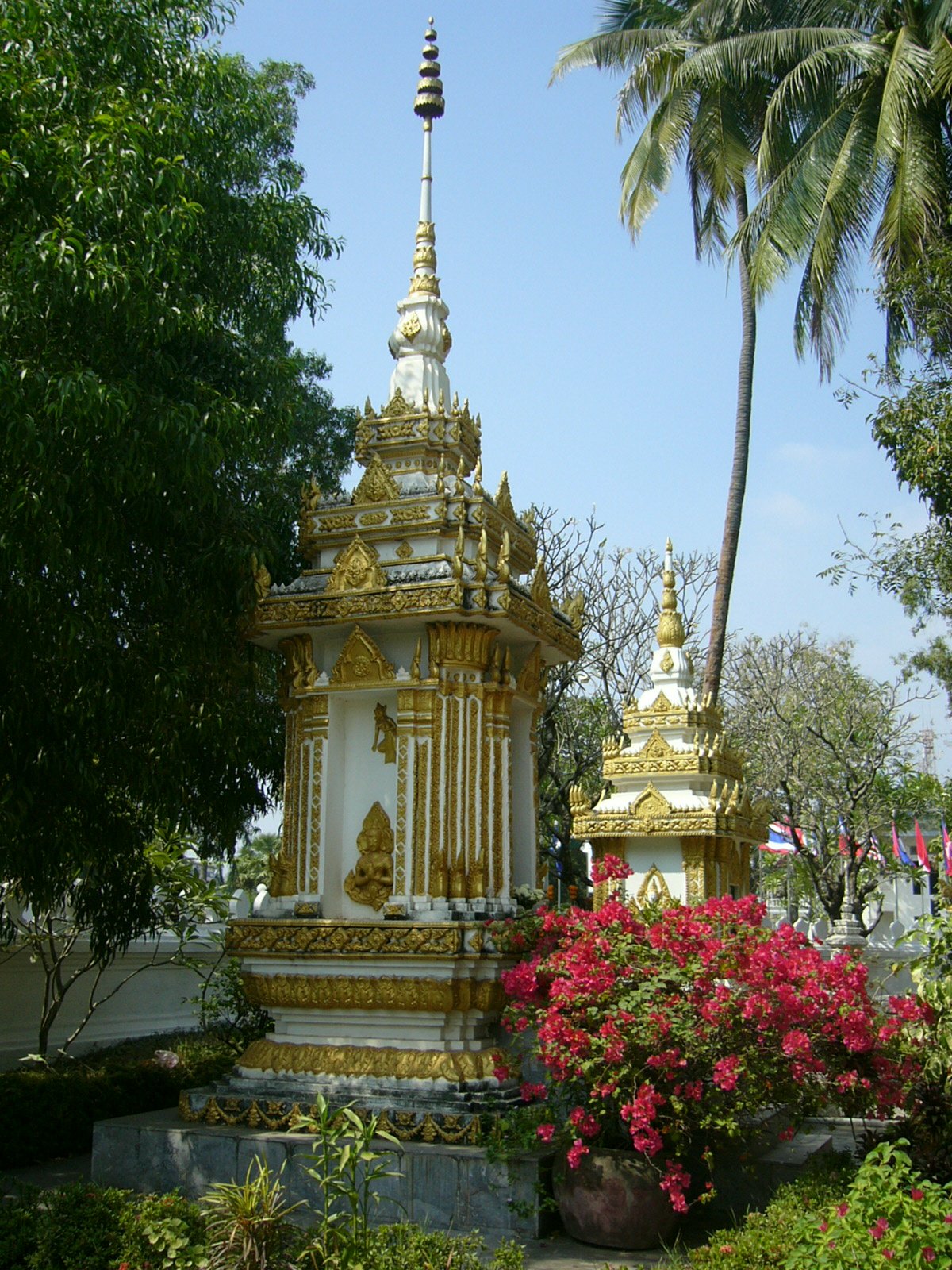
The temple grounds are a world unto themselves, a place where the pace of life slows to a near standstill. Old trees provide shade, their branches stretching over small pavilions and altars. One of these is dedicated to Nang Thorani, the earth goddess often depicted with long hair wringing water from the earth. According to legend, she protected the Buddha during his meditation, shielding him from the temptations of Mara. In Laos, she is deeply revered, and it’s not uncommon to see locals leaving offerings of flowers or rice cakes at her shrine. The atmosphere here is one of quiet reverence, a place where even the most hurried visitor can’t help but pause.
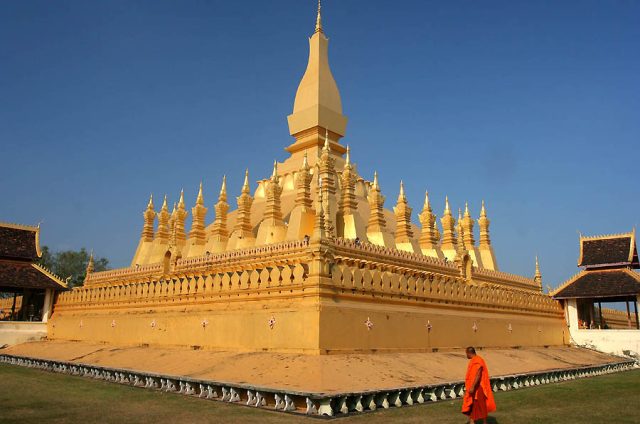
What makes Wat Si Saket different from other temples in Vientiane is its lack of grandeur. There are no towering golden stupas, no dazzling mosaics, no colossal statues. Instead, there’s a sense of authenticity, of a place that has simply endured. The temple hasn’t been heavily restored, and its walls bear the patina of age—peeling paint, darkened wood, and statues that look as though they’ve just been unearthed. This imperfection is part of its charm. It doesn’t feel like a museum exhibit; it feels alive, as if the temple is still breathing, still part of the city’s rhythm despite the modern buildings and bustling streets that now surround it.
For those trying to understand Laos, Wat Si Saket offers a quiet introduction. It won’t tell you everything about the country, but it will give you a sense of its pace, its relationship with time, and its reverence for tradition. There are no crowds here, no pushy guides, no sense of urgency. Just the murmur of leaves, the soft light filtering through the trees, and the occasional sound of a monk’s footsteps. You could spend an hour here or half a day—no one will rush you. Vientiane is a city that moves slowly, and Wat Si Saket embodies that slowness more than most places.
If you visit in the late afternoon, when the heat begins to fade and the shadows grow long, you might see locals arriving with offerings. They leave flowers, light incense, and pray quietly, undisturbed by the presence of strangers. In these moments, the temple feels truly alive—not as a tourist attraction, but as a place where people come to find solace, connection, and a sense of something greater than themselves. That’s why Wat Si Saket isn’t just a historical monument; it’s a living part of the city, a place where the past and present coexist without fanfare.
There’s something deeply human about this temple. It doesn’t demand attention or awe; it simply exists, a quiet witness to the passage of time. Whether you come for the history, the architecture, or just a moment of peace, Wat Si Saket offers a glimpse of Vientiane as it once was—and, in many ways, still is.