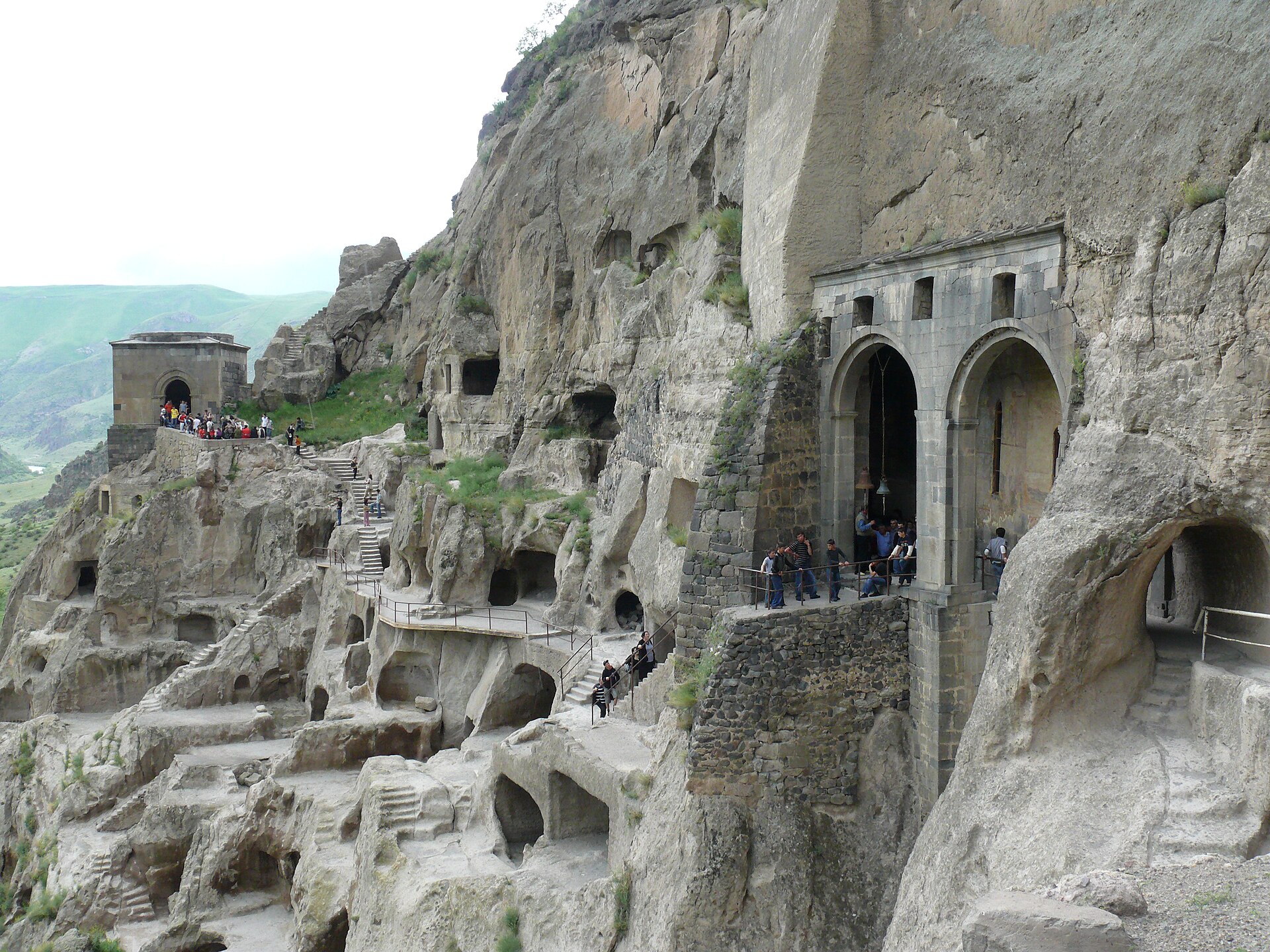
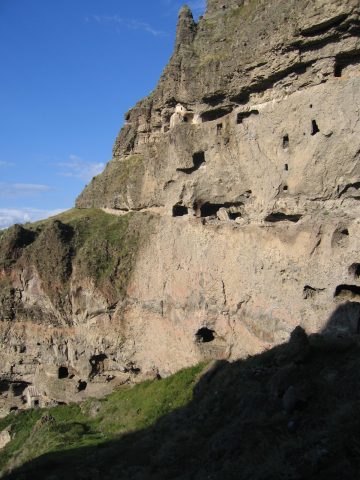
Vardzia is a place where history and nature merge into something far greater than a mere landmark. Carved into the cliffs above the Mtkvari River in southern Georgia’s Samtskhe-Javaheti region, this cave city dates back to the 12th century, when King George III ordered its construction as a fortified settlement. His daughter, Queen Tamar, later expanded it into a spiritual and cultural hub, transforming it into a self-sustaining complex that housed living quarters, churches, storerooms, baths, and even an intricate water supply system. Vardzia was never just a fortress or a monastery—it was an entire world hidden within the rock.
The sheer scale of the site is staggering. The multi-tiered caves stretch for hundreds of meters along the cliff face, forming a labyrinth of over six hundred chambers. In its prime, this was a thriving community of monks, soldiers, artisans, and farmers, all living in a city designed to remain unseen. Entrances were concealed, narrow paths and staircases led to secret passages, and the layout was so deliberate that even today, what remains offers a glimpse into the ingenuity of its creators. Time and earthquakes have taken their toll, but the ruins still convey the careful planning that went into every tunnel and terrace.
At the heart of Vardzia lies the Church of the Dormition, its walls adorned with 13th-century frescoes that have darkened with age but retain their power. The dim light filtering through narrow openings casts an ethereal glow over the images of Queen Tamar, King George III, and biblical scenes. This was more than a place of worship—it was a sanctuary that safeguarded relics and treasures, its central location underscoring its importance to the entire complex.
Life in the cave city was far from easy. Summers brought scorching heat, winters bitter cold, and water had to be channeled through a network of stone-carved aqueducts. Excavations have revealed not just living spaces but also wine cellars, workshops, and even a prison. Defense was a priority: narrow corridors and traps made the city nearly impregnable. In the 13th century, Mongol invaders failed to breach its walls despite repeated attempts.
Vardzia’s significance waned over time. A devastating earthquake in 1283 destroyed parts of the complex, and after the Ottoman conquest in the 16th century, the site was abandoned. For centuries, it lay forgotten until travelers rediscovered it in the 19th century. Today, it’s one of Georgia’s most visited destinations, yet the steady stream of visitors hasn’t erased its quiet, timeless atmosphere. The silence, broken only by the murmur of the river below, the coolness of the stone, and the sense that something unexpected might lurk around the next bend all contribute to the feeling that this place exists outside of ordinary time.
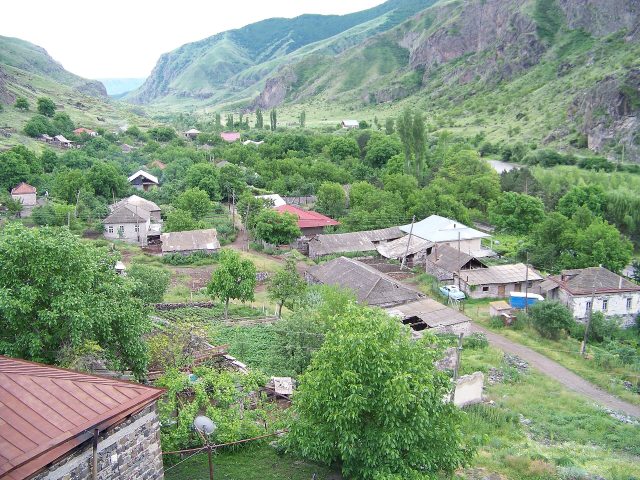
Reaching Vardzia is an experience in itself. The journey from Akhaltsikhe or Aspindza winds along the Mtkvari River, offering sweeping views of the rugged landscape. Nearby villages provide a chance to stay overnight, sample local cuisine, and hear stories of the people who once called these mountains home. Summers here are hot, but the caves remain cool, while winters lend the site an eerie beauty, with snow-dusted cliffs and empty paths that make it feel like stepping into another era.
Vardzia is more than an open-air museum. It’s a place where the past feels tangible, where the echoes of history linger in the stillness. You can wander through the caves for hours, imagining monks chanting by the flicker of oil lamps or soldiers standing guard at hidden entrances. Or you can sit on the edge of the cliff, watching the river curve below, and wonder how many travelers over the centuries have stood in the same spot. Time moves differently here, and perhaps that’s why Vardzia continues to draw those who seek something deeper than a postcard-worthy view. It’s a place that doesn’t just tell a story—it lets you step inside it.