Perched on a jagged cliff where two river gorges meet, the fortress of Khertvisi watches over the southern reaches of Georgia like a silent sentinel. Its weathered stones rise above the confluence of the Kura and Paravani rivers, a place where the land folds into deep valleys and the horizon stretches toward the borders of Armenia and Turkey. The fortress has stood here for over a thousand years, its walls bearing the marks of empires, wars, and the slow passage of time. From a distance, it looks almost like part of the mountain itself, as if the rock had simply grown into the shape of towers and battlements.
The earliest records of Khertvisi date back to the 10th century, when it was already a vital stronghold on the trade routes connecting Georgia with Persia and Armenia. Back then, it wasn’t just a military outpost but a small, bustling world of its own. Merchants, soldiers, and craftsmen lived within its walls, and the clink of coins from the local mint mingled with the sounds of daily life. By the 12th century, under the reign of Queen Tamar, Khertvisi had become one of the most important fortresses in the Georgian kingdom. Some say the queen herself stayed here during her campaigns, though the stories are as much legend as history now.
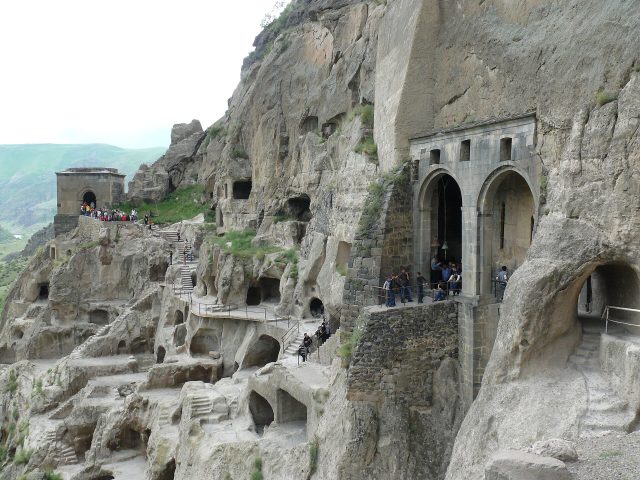
The architecture tells its own story of survival and adaptation. The citadel, built at the highest point of the cliff, is the oldest part, with thick walls and round towers that once bristled with defenders. Inside, the ruins of the Church of St. George still stand, its small dome and faded frescoes hinting at the faith and artistry of the people who built it. The lower levels of the fortress, where houses and workshops once stood, are now a maze of crumbling walls and staircases that lead nowhere. Time has worn them down, but the layout remains, offering a glimpse into how life was organized within these walls.
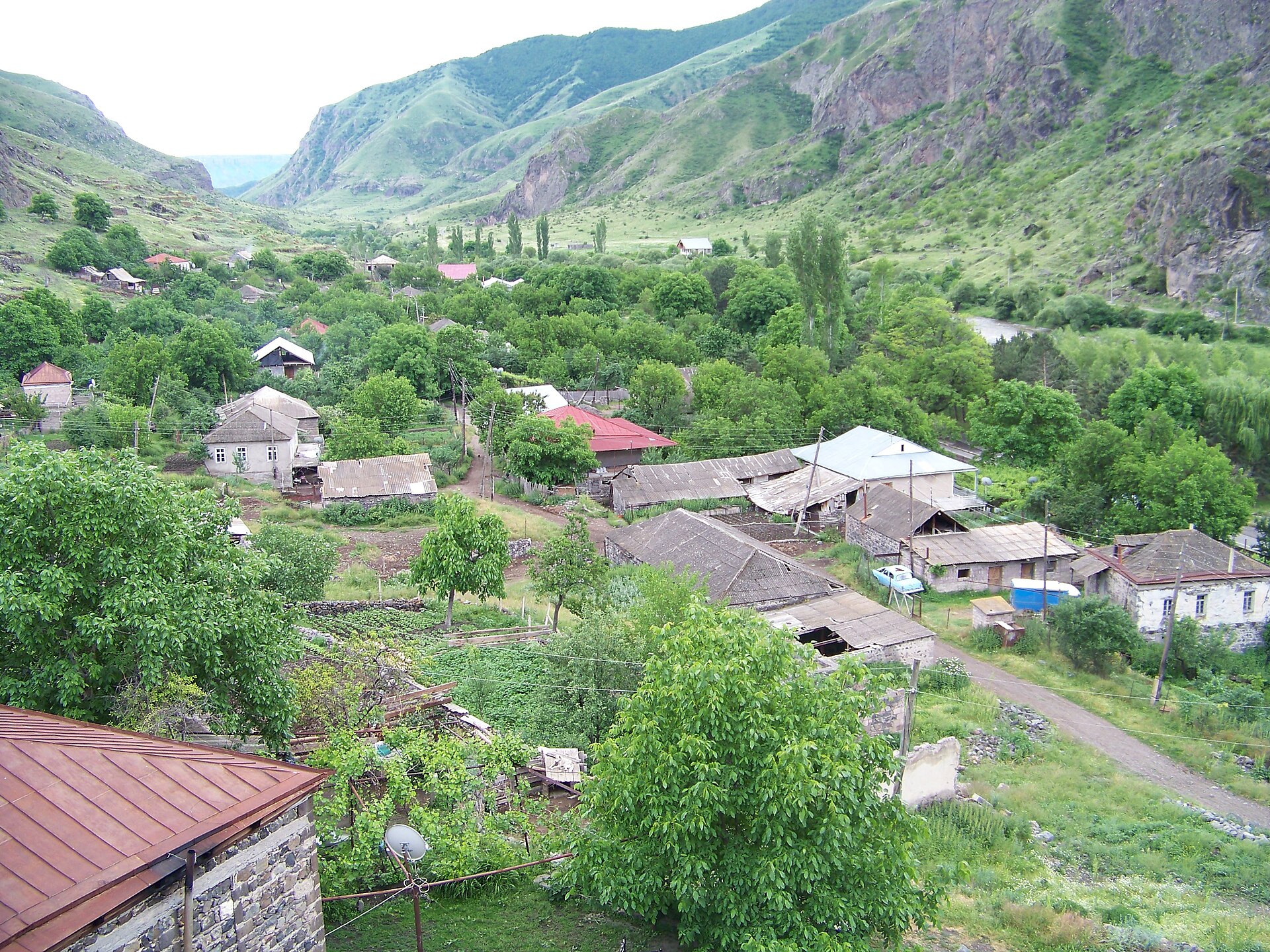
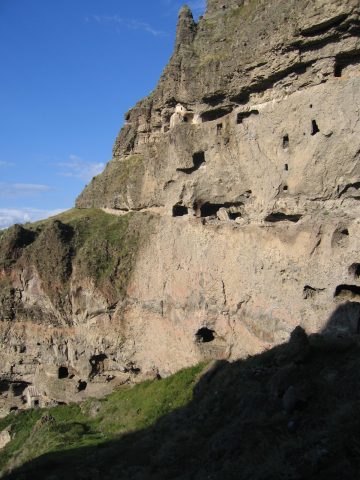
What makes Khertvisi truly striking is its setting. The fortress sits at the edge of a dramatic landscape, where the Kura River carves its way through narrow gorges and the surrounding mountains rise in sharp ridges. From the top of the walls, the view is vast and wild—rocky slopes dotted with sparse shrubs, the green waters of the river below, and the endless expanse of the Meskheti Range stretching into the distance. On clear days, the horizon seems to go on forever, and in the evening, the sunlight turns the stones golden, casting long shadows that deepen the sense of age and mystery.
Khertvisi has seen its share of conflict. In the 16th century, the Ottomans seized it, turning the fortress into a key outpost for controlling the region. Later, it was reclaimed by Georgian kings, but by then its strategic importance had faded. Earthquakes and neglect took their toll, collapsing parts of the walls and reducing the once-mighty towers to ruins. Yet even in decay, the fortress holds a certain power. It doesn’t impress with grandeur so much as with its raw, unpolished presence—a place that has outlasted the empires that built and fought over it.
Today, Khertvisi draws visitors who come for history, but also for the quiet it offers. There are no crowds here, no souvenir stalls, no guided tours with loudspeakers. The road leading to it winds along the Kura, narrow and uneven, before giving way to a steep path up the cliff. Once inside, there are no signs or explanations, just the wind rustling through the grass and the occasional cry of a bird circling the gorge. Locals rarely venture up to the ruins, preferring to speak of the fortress as something distant, almost mythical. That might be why it still feels like a place where time has paused.
For those who make the journey, Khertvisi is more than just an old fortress. It’s a reminder of how landscapes shape history, and how history, in turn, becomes part of the land. The stones here have absorbed centuries of stories—of battles, trade, faith, and daily life—and now they stand as silent witnesses to it all. There’s no need for grand narratives or dramatic reconstructions. The fortress speaks for itself, in the way the light falls on its walls, in the way the wind moves through its empty courtyards. It doesn’t give up its secrets easily, and perhaps that’s why it still feels alive.