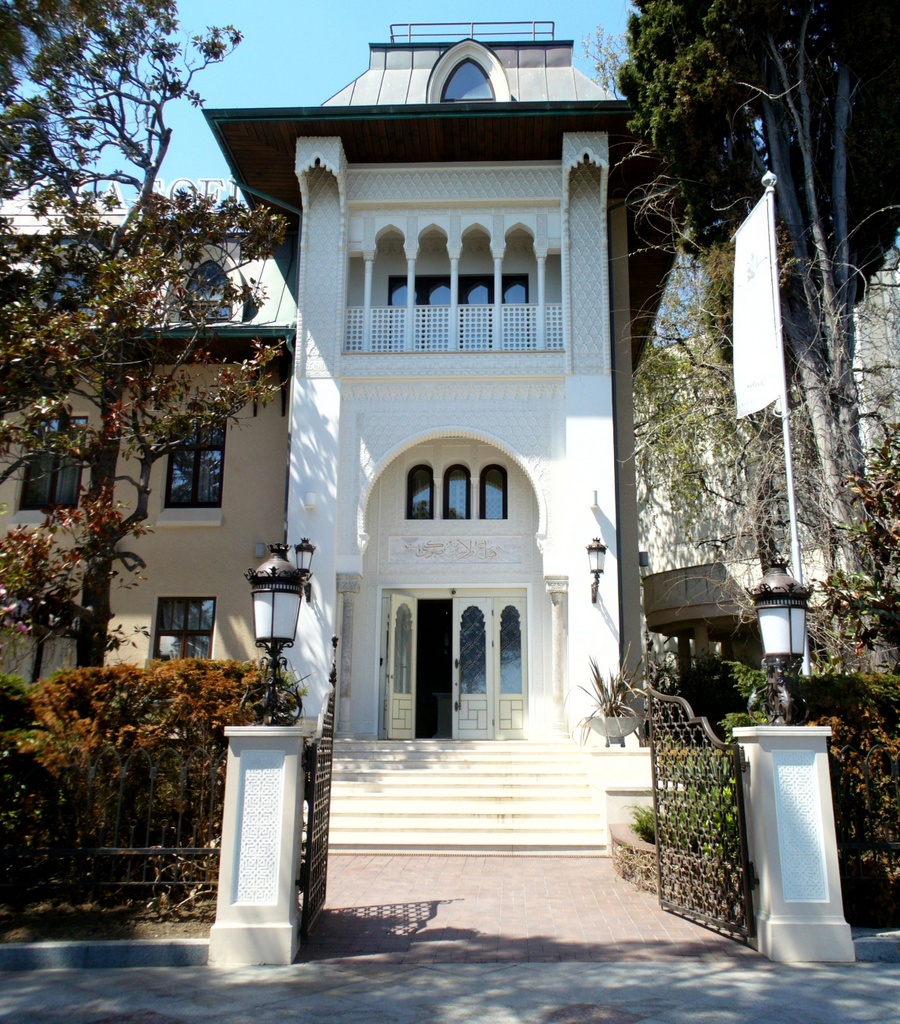
The building at 31 Lenin Embankment in Yalta is where the past lingers in the details. Constructed in the late 19th century, it was part of the city’s transformation into a seaside resort for those who sought leisure and healing in the mild Crimean climate. Today, it stands almost unchanged, its modest facade blending into the streetscape.
The architecture reflects the eclectic style of Yalta at the time—classical elements softened by subtle Eastern influences. The two-story structure has delicate stucco work, its windows framed by simple moldings. Inside, halls were lined with marble baths, wood paneling, and ceramic tiles, designed for comfort rather than display.
The establishment was named after A. I. Rofe, an investor who contributed to Yalta’s rise as a health destination. The late 1800s saw the city’s rapid growth, with new hotels, restaurants, and sanatoriums opening for those who believed in the restorative powers of sea bathing. Rofe’s bathhouse offered a place to unwind, soak in the quiet, and watch resort life through large windows.
By the early 20th century, the popularity of sea baths as a medical treatment had faded, and the building’s purpose changed. During the Soviet era, it housed various institutions, though its exterior remained intact. Today, it serves as a municipal office, its original function forgotten by most passersby. Yet the structure still holds traces of its past—the sound of water filling marble tubs, the scent of salt and eucalyptus, the murmur of conversations about health and travel.
Yalta in those days attracted cultural figures. Chekhov, Bunin, and Gorky all spent time in the city, drawn by its reputation as a place of inspiration and recovery. While there’s no record of them visiting this bathhouse, they may have strolled along the embankment, stopping for a moment of respite after a walk. The resort culture of the time was built on such rituals—leisurely afternoons, social gatherings, and the belief that the sea could heal.
The building now reminds us how perceptions of health and relaxation have changed. What was once a medical necessity is now a luxury. The interiors have been altered, leaving little trace of the marble baths or the atmosphere they once held. But the exterior still invites questions—what hopes did those who came here carry? What conversations unfolded within these walls?
Yalta today is a city of contrasts, where grand old villas stand beside modern hotels. The Rofe Bathhouse is one of those unassuming landmarks that help tell the city’s story. It doesn’t demand attention, and that’s part of its charm. A pause here, and you might catch an echo of the Yalta that once was—a place where time moved differently, where the sea was both a cure and a companion.