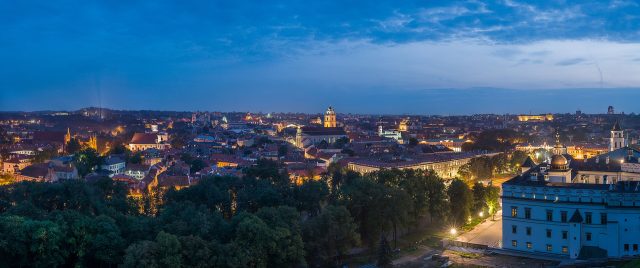
Užupis is a quiet corner of Vilnius that feels like a world apart. Tucked behind the Vilnia River, it was once the city’s overlooked edge—a place of mills, workshops, and modest homes where few bothered to linger. That changed in the 1990s when artists began moving in, drawn by cheap rent and the freedom of a neighborhood that didn’t much care what you did with your time. In 1997, they took it a step further and declared Užupis an independent republic, complete with its own constitution, flag, and even a president. The joke stuck, and over time, it grew into something more than a stunt.
The heart of the district’s identity is its constitution, displayed on metal plaques along Paupio Street in over twenty languages. Forty-one articles long, it reads like a manifesto for a gentler way of living. Some rules are playful—*a dog has the right to be a dog*—while others carry unexpected weight: *a person has the right to be happy, a person has the right to be unhappy, a person has the right to be idle.* The final three lines distill it all: *don’t give up, don’t fight back, don’t take revenge.* It’s the kind of document that makes you pause, even if you’re just passing through.
The republic’s unofficial emblem stands in the middle of the main square—a bronze angel blowing a trumpet, installed in 2002. Locals call it the Angel of Užupis, and it’s hard not to see it as a quiet guardian of the neighborhood’s spirit. Around it, the streets unfold in a mix of old and new: crumbling facades next to freshly painted galleries, cafés with mismatched chairs, and walls covered in murals that change with the seasons. Small sculptures pop up in unexpected places—a mermaid in a riverside niche, a pair of swings dangling over the water, stone figures perched on a bridge. It’s the kind of place where you might turn a corner and find something you didn’t expect.
The artists who started it all are still here, though the neighborhood has changed. What was once a refuge for those who couldn’t afford anywhere else is now one of the most expensive parts of Vilnius. The shift happened gradually, as galleries and studios gave way to boutiques and wine bars, and the old workshops were converted into lofts. But the republic’s founding principles haven’t been entirely lost. There’s still a sense of playfulness in the air, a resistance to taking things too seriously.
The border of Užupis is marked by the river, crossed by a handful of small bridges. One of them is covered in padlocks, left by couples and visitors over the years. A sign at the entrance, styled like a road warning, lists the rules for entering the republic—mostly tongue-in-cheek, but with just enough sincerity to make you smile. Walking the entire district takes about an hour, and there’s no fee to enter, though on April 1st, the mood changes. That’s when the republic celebrates its independence day with a makeshift border checkpoint, passport stamps, and street performances. The rest of the year, it’s much quieter, a place where time seems to move at its own pace.
Most of the galleries and studios open in the afternoons, and many close on Mondays. There’s no grand schedule to follow, no must-see checklist. The best way to experience Užupis is to wander without a plan, letting the streets guide you. You might stumble into a courtyard where someone is playing the guitar, or find a café where the barista knows everyone by name. The neighborhood has a way of making you feel like you’ve stepped into a story, even if you’re just there for an afternoon.
It’s easy to dismiss Užupis as a gimmick, a quirky tourist attraction with a clever backstory. But spend enough time there, and you start to notice the details—the way the light hits the river in the late afternoon, the sound of laughter spilling out of a gallery opening, the way the old buildings seem to lean into each other like old friends. There’s a warmth here that isn’t manufactured, a sense of belonging that has nothing to do with borders or constitutions. It’s just a neighborhood that decided to do things its own way, and somehow, that was enough.