Uzhhorod Castle sits on a hill in the city center, looking down at the streets below. Its walls, built from stone and brick, show layers of history—each one a record of survival and change. The fortress has seen fires, sieges, and years of neglect, but it still stands as a symbol of the region’s past.
The first written mention of a stronghold here is from the 13th century, though some believe earlier fortifications existed. Back then, the area belonged to the Kingdom of Hungary, and the castle guarded trade routes through the Carpathians. Its location made it valuable, and over time, it passed between Hungarian kings, Transylvanian princes, and Austrian emperors.
The Drugeth family, Italian nobles serving the Hungarian crown, took control in the 14th century. They turned Uzhhorod into their power base, expanding the fortress into the structure we see today. They added thick defensive walls, a courtyard with living quarters, and a central keep—the last defense during attacks. The Drugeths also shaped the city around it, making Uzhhorod a center of trade and governance.
The 17th century was harsh. During Ferenc Rákóczi’s uprising against the Habsburgs, the castle was fought over and badly damaged. It took decades to restore, and by the 18th century, it was no longer a military stronghold. It became an administrative building before slowly falling into disrepair.
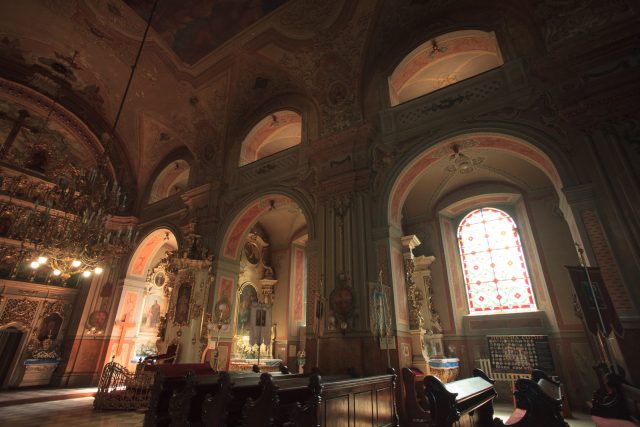
The 19th century brought restoration. The castle was rebuilt in the romantic style of the time, with neo-Gothic details still visible inside. A museum opened within its walls, one of the first in the region, preserving Transcarpathia’s history. During the Soviet era, the exhibits often focused on the working class’s role in the past.
Now, the castle is more than a museum. In summer, its courtyard hosts film screenings and concerts. In winter, it turns into an ice rink. Inside, you can see original wooden ceilings, medieval weapons, and exhibits on local history. The archaeological section shows pottery, tools, and coins found on the grounds—everyday objects from centuries ago.
The architecture mixes medieval strength with later elegance. The central keep, once a watchtower, now offers views of Uzhhorod and the hills beyond. The courtyard is paved with stone, surrounded by galleries leading to museum rooms. A deep well, carved into the rock, reminds visitors how the castle survived long sieges.
Walking through the castle feels like stepping into the past. From the top, you can see Uzhhorod along the Uzh River, its streets a mix of Austro-Hungarian, Czech, and Soviet styles. The castle, despite all its changes, still feels medieval. On quiet days, the place seems frozen in time.
Uzhhorod Castle is part of the city’s life. It reminds us of the region’s history—shifting borders, different rulers, and the identity that remains. Spend an hour here, and you’ll feel connected to the past. Sometimes, events like concerts or festivals bring the fortress to life, showing it still has stories to tell.