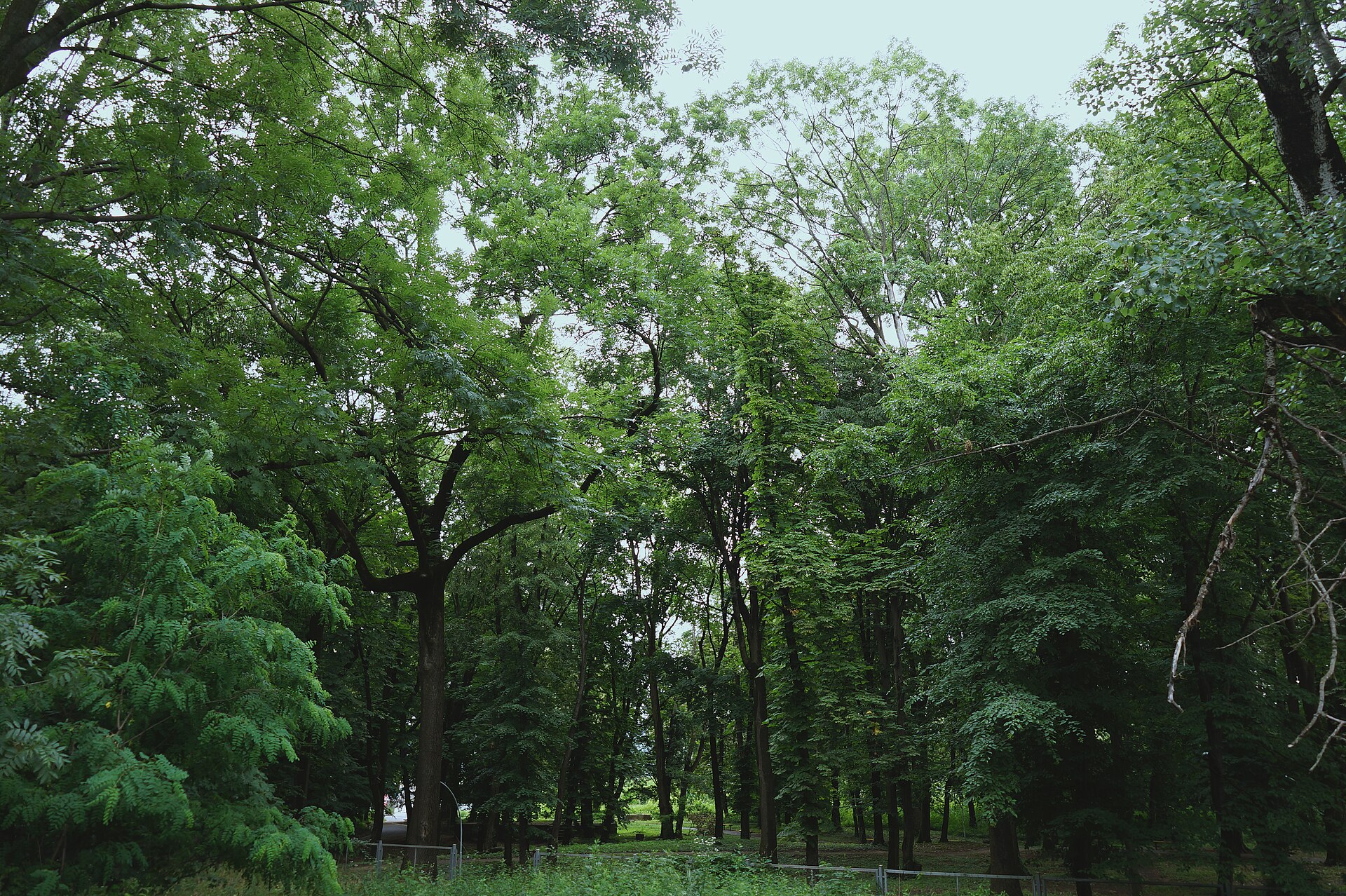
Tucked away in the western reaches of Ukraine, where the Carpathian foothills begin to soften into the plains, Uzhhorod feels like a city that has quietly gathered its own rhythm over centuries. At its heart lies Shevchenko Park—a place where daily life unfolds beneath the shade of old trees. Named after Taras Shevchenko, Ukraine’s poet and artist, the park carries his legacy without fanfare, as if greatness can be found in stillness.
The park dates back to the late 19th century, when Uzhhorod was part of the Austro-Hungarian Empire. Originally called the People’s Garden, it was designed for leisure, with wide promenades and flowerbeds that once followed strict geometric lines. Over time, nature softened those edges. Some of the oldest trees here have witnessed the city’s shifts—from imperial rule to Czechoslovak administration, from Soviet times to today. Their gnarled trunks seem to hold these changes, offering continuity amid upheaval.
What makes Shevchenko Park feel alive is how people use it.
On an ordinary afternoon, elderly men play chess on benches smoothed by decades of use. Nearby, mothers push strollers along gravel paths. Teenagers gather in small groups, their laughter mixing with the rustle of leaves. In warmer months, the park becomes a stage for street musicians, poets reciting verses, or children darting around the central fountain. There’s no spectacle here—just the quiet rhythm of a place where people come to exist, not to perform.
The park’s architecture is understated. The most noticeable structure is a small neoclassical pavilion near the entrance, a remnant of the Austro-Hungarian era that once housed a café. Its weathered columns and arched windows still hold a quiet dignity. A modest statue of Taras Shevchenko stands nearby, his back to the trees, gazing toward the city. Unlike towering monuments elsewhere, this one feels approachable—no pedestal separates him from passersby. He’s simply part of the park, another presence among the oaks and lindens.
The Uzh River flows just beyond the park’s eastern edge. A narrow path leads down to the water, where willows dip their branches into the current. In the past, this stretch was popular for boating and swimming. Now, people sit on the banks, watching the river slip by. On misty mornings, when fog drapes the trees, the park feels suspended in time.
Shevchenko Park doesn’t demand attention. It’s not a manicured garden or a dramatic overlook. Instead, it offers something rarer: a sense of belonging. For locals, it’s where birthdays are celebrated, first kisses stolen, and seasons observed from a familiar bench. For visitors, it’s a glimpse into Uzhhorod’s soul—a city at the crossroads of cultures and histories. The park doesn’t try to impress. It simply exists, revealing the beauty of a place where life is lived, not staged.
Winter changes the park. Snow dusts the branches, and the paths grow quiet. The fountain’s basin fills with ice, and the pavilion stands empty. Yet even in the cold, the park feels warm. Children build snowmen near Shevchenko’s statue. Couples walk arm in arm, their breath visible in the crisp air. The park doesn’t hibernate. It adapts, offering refuge when the world outside is still.
Late afternoon, just before sunset, the light slants through the trees, turning everything golden. The air smells of earth and leaves. Shadows stretch long across the grass. Shevchenko Park doesn’t need to be extraordinary. It’s enough that it’s here—a green oasis in a city that has seen so much. For those who wander its paths, it offers a quiet reminder: what matters is time spent with others, the comfort of a well-worn bench, the simple joy of a place that feels like home.