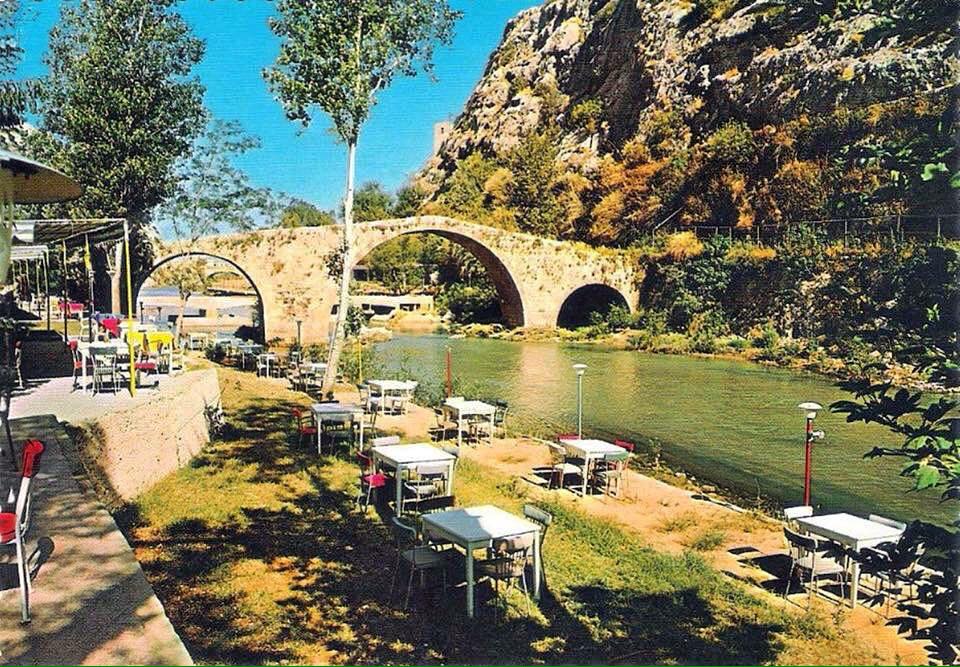
Nahr al-Kalb Gorge is one of those rare places in Lebanon where the past doesn’t just linger—it feels alive. Carved by the slow, patient work of the river over millennia, this narrow canyon cuts through the coastal cliffs near Zouk al Khrab, its limestone walls rising sharply on either side. The river itself is modest, more of a steady stream than a rushing torrent, but its journey to the Mediterranean has shaped not just the landscape, but the history of the region. Here, the air carries the weight of centuries, from ancient armies to modern travelers, all drawn to this quiet corner where time seems to move at its own pace.
The gorge takes its name from the river that flows through it, and while Nahr al-Kalb may not be wide or deep, its significance runs far deeper. For thousands of years, it marked a natural boundary, a threshold between empires and civilizations. Pharaohs, Assyrians, Persians, Romans, Arabs, and Crusaders all passed through these parts, their armies marching along its banks. Each left something behind—not just in the land, but in the very stones. The gorge is less a museum than a living archive, where history isn’t displayed behind glass but etched into the rock itself.
The most striking reminders of that history are the steles carved into the cliffs, monuments commissioned by conquerors to commemorate their victories. The oldest of these dates back to the 13th century BCE, when Ramses II of Egypt ordered its creation after a successful campaign in the region. Over the centuries, others followed—inscriptions in Assyrian, Babylonian, Greek, and Arabic, each one a chapter in a story written not in ink, but in stone. Standing beneath them, it’s impossible not to feel the weight of the past pressing in, as if the voices of those who came before are still carried on the wind.
Yet the gorge isn’t frozen in time. In the 19th century, a railway bridge was built across the river, its arched stone and metal structure spanning the gap between the cliffs. At the time, it was an engineering marvel, part of a network that connected Beirut to the rest of the country. Trains no longer run along its tracks, but the bridge remains, a silent witness to a different era. From below, it looks almost delicate against the rugged backdrop of the gorge, a reminder that even in a place shaped by ancient forces, human ingenuity has left its mark.
Walking through Nahr al-Kalb is like stepping into a different rhythm. The path winds along the river, shaded by Mediterranean shrubs and wild herbs that thrive in the damp, cool air. In summer, the gorge offers respite from the heat, the sound of water a constant murmur beneath the rustling leaves. Locals sometimes call it the "Switzerland of Lebanon," not for its mountains, but for the way it feels set apart from the world—a pocket of tranquility just beyond the reach of the coastal cities. The comparison might be exaggerated, but there’s truth in it: this is a place where the noise of the present fades, and the past feels closer than ever.
For much of its history, the gorge was more than just a scenic spot—it was a crossroads. The ancient Pharaonic Road, which linked Egypt to Mesopotamia, passed through here, and later, under Ottoman rule, it became part of a vital trade route connecting Beirut to the interior. Even today, when modern highways bypass the cliffs, the gorge remains a reminder of how geography shapes destiny. It’s easy to imagine merchants and soldiers moving through this narrow passage, their footsteps long since worn away by time, but their presence still lingering in the air.
Hiking here is less about endurance and more about slowing down. The most popular route follows the river from the railway bridge down to where it meets the sea, a descent that takes you past the steles and through patches of dense vegetation. The path isn’t difficult, but it demands attention—loose stones and narrow ledges require care. The reward at the end is worth it: a quiet beach of black volcanic sand, where the river spills into the Mediterranean. On clear days, the view stretches all the way to Beirut, a hazy outline of the city in the distance.
Despite its historical importance, Nahr al-Kalb hasn’t become a tourist trap. There are no crowds, no souvenir stalls, no cafes blasting music. Just the river, the cliffs, and the occasional sound of a bird or the rustle of leaves. Some visitors come for the history, others for the solitude, but almost everyone leaves with the same impression—that this is a place where the past and present coexist without conflict. It doesn’t demand attention; it simply offers itself, a quiet corner of Lebanon where the weight of history feels less like a burden and more like a conversation.
In recent years, more people have begun to seek out the gorge, but it hasn’t lost its sense of stillness. There’s something almost defiant in the way it resists the noise of the modern world, as if the river and the rocks have decided to keep their secrets a little longer. For those who come here, it’s not just a destination—it’s a pause, a chance to step out of time and into a landscape that has seen empires rise and fall, yet remains unchanged. It doesn’t need to shout its importance. The stones speak for themselves.