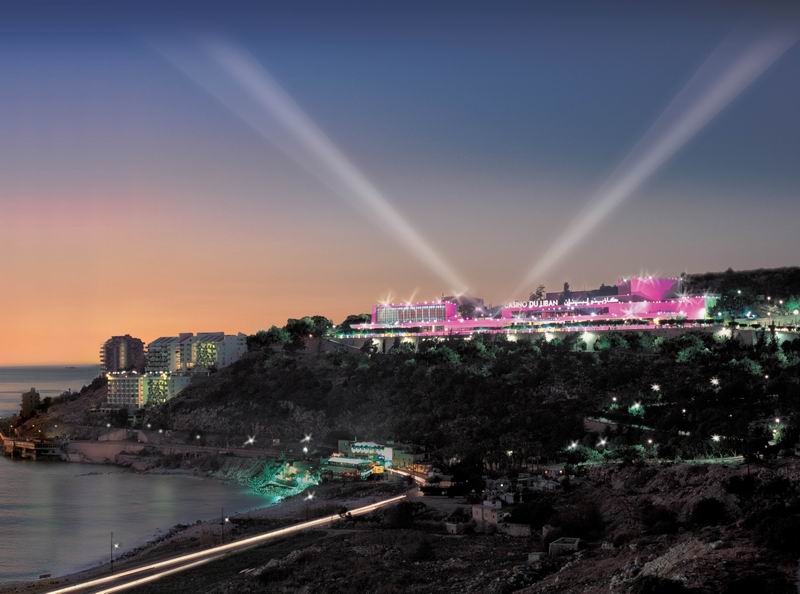
Perched on the Mediterranean coast just north of Beirut, the Casino du Liban is a relic of an era when Lebanon stood as the glittering playground of the Middle East. Its grand, weathered facade still carries the echoes of a time when the country was a beacon of prosperity, drawing the wealthy and famous from across the region. Though its golden age has long faded, the building retains a quiet dignity, its once-opulent halls now standing as a testament to both ambition and resilience.
The architecture of the Casino du Liban is a striking blend of Eastern opulence and mid-century modernism. Designed to impress, the structure resembles a palatial estate, with sweeping marble columns, intricate stained-glass windows, and expansive terraces that overlook the sea. Inside, the decor remains frozen in the 1950s and 60s—crystal chandeliers cast a soft glow over gilded moldings, velvet sofas invite lingering, and oversized mirrors reflect the ghosts of past glamour. Even in its current state of disrepair, the building exudes a certain magic, as if time itself has paused within its walls.
During its heyday, the casino was far more than a gambling hub; it was a cultural landmark where the worlds of entertainment, politics, and high society collided. Legendary performers like Frank Sinatra and Charles Aznavour graced its stages, while its restaurants served cuisine that rivaled the finest in Europe. The casino was a place where deals were struck, alliances formed, and reputations made. For a brief, brilliant moment, Lebanon was the crossroads of East and West, and the Casino du Liban was its most dazzling symbol.
Yet the casino’s story is also one of loss. During Lebanon’s civil war, it found itself on the front lines, its once-elegant halls scarred by conflict. Though attempts were made to restore it in the years that followed, the casino never regained its former glory. It changed hands, reopened briefly, and then faded once more, leaving behind a building that is neither fully abandoned nor fully alive. Today, it stands as a haunting reminder of what was—and what might have been.
Visitors who wander its empty corridors can still sense the energy of its past. The grand ballrooms, now silent, once pulsed with music and laughter. The terraces, now quiet, once offered sweeping views of the Mediterranean, where on clear days the distant outline of Cyprus served as a reminder of Lebanon’s place at the heart of ancient trade routes. Some say the casino is haunted by the spirits of those who once frequented it, though such stories are likely just the natural myths that cling to any place with a storied past.
For those with an interest in Lebanon’s history, the Casino du Liban is more than a curiosity—it’s a living artifact of a country that has seen dramatic shifts in fortune. It stands as a poignant reminder of how quickly prosperity can slip away, and how fragile the legacies of even the most vibrant eras can be. In the 1960s, Lebanon was a jewel of the Middle East; today, many of its symbols exist only in memory. The casino is one of the few places where that memory feels tangible.
Beyond the casino, the coastline of Zouk al Khrab tells its own story. Once lined with luxury hotels and villas, the area now bears the marks of time, with crumbling facades and overgrown gardens. The casino is part of this larger narrative, a piece of a puzzle that no longer quite fits into modern Lebanon. There are no crowds here, no tourist traps—just the quiet hum of the sea and the weight of history.
Perhaps that’s why the place holds such appeal. In a world that moves too fast, the Casino du Liban offers a rare chance to pause, to reflect on the fleeting nature of fame and the enduring power of memory. It doesn’t ask for attention; it simply exists, a silent witness to the rise and fall of an era that once seemed unstoppable. For those who take the time to visit, it’s a reminder that some stories are best told in whispers.