Perched on a quiet hillside above Zouk al Khrab, Deir Mar Elias feels like a place where time has settled into stillness. This monastery, dedicated to the prophet Elijah—a figure revered in both Christianity and Islam—is more than just an ancient religious site. It’s a living fragment of Lebanon’s layered past, where faith, history, and architecture have intertwined for centuries without fanfare. Unlike the country’s more famous landmarks, it doesn’t draw crowds or offer grand spectacles. Instead, it offers something rarer: the chance to step into a space that has remained largely unchanged, where the weight of tradition is palpable in the cool stone underfoot and the hush of the olive groves beyond the walls.
The origins of Deir Mar Elias are shrouded in the kind of ambiguity that often surrounds places with deep histories. Some scholars suggest its foundations date back to the Byzantine era, when Christianity was taking root across the Levant. Others point to the Crusader period, when the monastery may have served as a spiritual waypoint for pilgrims traveling toward Jerusalem. What is certain is that it endured through Ottoman rule, surviving not as a relic but as an active place of worship. The walls bear the marks of these different eras—faded frescoes, uneven stonework, and later additions that tell a story of adaptation rather than conquest. Each layer speaks to the monastery’s resilience, its ability to remain a sanctuary even as empires rose and fell around it.
The architecture here is unassuming but deliberate. The main church is a modest structure of local stone, its thick walls and low vaults built to withstand both time and the elements. Inside, there is no gilded opulence, only the quiet dignity of a space shaped by devotion. The iconostasis is simple wood, the icons unadorned, the floor worn smooth by generations of footsteps. The most striking feature is the altar, where fragments of Byzantine-style frescoes depict saints in muted tones, their faces softened by centuries of candlelight and incense. Nearby, the monks’ cells—small, austere rooms of the same stone—hint at the monastery’s true purpose: not display, but retreat. This was never meant to be a monument to grandeur, but a place where the sacred could be lived, not just observed.
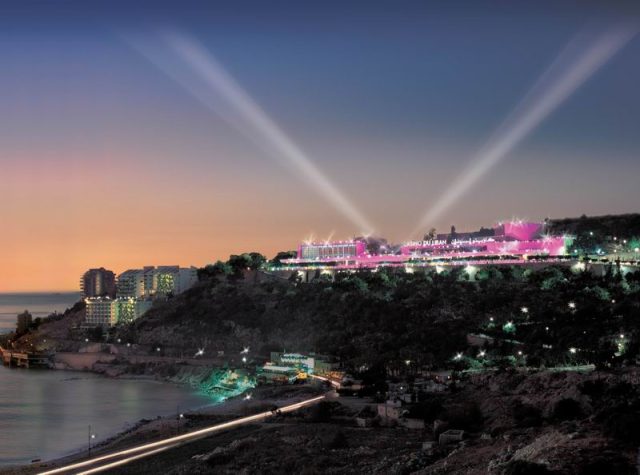
The landscape around Deir Mar Elias has changed little over the centuries. Olive trees and vineyards spill down the hillside, their gnarled trunks and orderly rows a testament to the patience of those who tended them. The air carries the scent of wild thyme and sun-warmed stone, and the only sounds are the occasional rustle of leaves or the distant chime of the monastery bell. On clear days, the view stretches to the Mediterranean, though the monastery itself remains tucked away from the well-trodden paths of Lebanon’s coastal cities. It’s as if the place has deliberately avoided the spotlight, preserving its solitude like a secret.
For those who make the journey, Deir Mar Elias offers more than a glimpse into Lebanon’s religious heritage. It’s a rare opportunity to experience history not as a series of dates or artifacts, but as something tangible and alive. The monastery is still active, home to a small community of monks who maintain the rhythms of prayer and work established by their predecessors. Visitors are welcome to attend services, though the monks themselves are reserved, their lives centered on contemplation rather than hospitality. Even a brief visit leaves an impression—not of spectacle, but of quiet continuity. The stones here have witnessed countless prayers, and the silence feels like an echo of them.
Zouk al Khrab, the town below, is a world away from the bustle of Beirut or the polished charm of Byblos. There are no luxury hotels or tourist traps here, just the unhurried pace of a place where life has carried on much the same for generations. The town’s residents, a mix of Christians and Muslims, coexist with an ease that reflects Lebanon’s complex but enduring pluralism. For them, Deir Mar Elias is more than a historical site; it’s a part of their identity, a place where faith and memory intersect. The streets are narrow and winding, lined with red-tiled houses and small shops selling fresh bread, labneh, and the kind of strong coffee that’s meant to be sipped slowly. Children play in the squares, and the occasional stray cat dozes in the sun. It’s the kind of place where time moves at its own rhythm, unhurried and unconcerned with the outside world.
Visiting Deir Mar Elias isn’t an experience that can be neatly packaged or rushed. There are no guided tours reciting rehearsed facts, no plaques explaining every detail. Instead, the monastery invites you to wander, to sit on a bench beneath the olive trees, or to stand in the church and listen to the silence. It doesn’t demand attention; it simply exists, as the hills and the sea exist, indifferent to the passage of visitors. That lack of pretense is perhaps its greatest strength. In a world where so many places are curated for consumption, Deir Mar Elias remains stubbornly itself—a place where the past isn’t just remembered, but still felt.
The journey to the monastery isn’t the easiest. The road winds up from the main highway, a narrow path that requires patience and a bit of determination. But the effort is part of the experience. By the time you reach the top, the noise of the world below has faded, replaced by the kind of stillness that makes even an hour feel like a pause in time. It’s the kind of place that lingers in memory not because of what you saw, but because of how it made you feel—the coolness of the stone, the scent of incense, the way the light slants through the trees. In a country often defined by its contrasts, Deir Mar Elias offers something simpler: a reminder that some places are meant to be not just seen, but quietly absorbed.