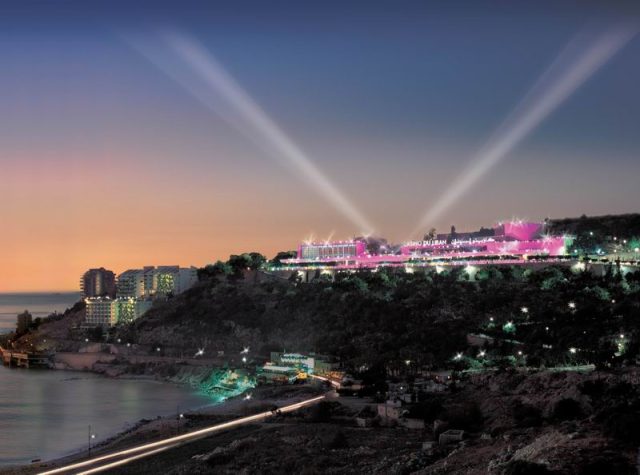
Zouk Mosbeh Beach is one of those rare spots along Lebanon’s coast where the sea and mountains seem to lean into each other, as if engaged in a quiet, unhurried conversation. Unlike the crowded resorts of Beirut or Jounieh, where sunbeds line the shore and music blares from beach clubs, this place feels untouched by the noise of modern tourism. Instead, a narrow strip of pebbles and sand stretches between rocky cliffs and the water, which shifts from pale turquoise near the shore to deep indigo where the horizon begins. On clear days, the light plays across the surface in a way that makes the sea look almost alive.
This stretch of coastline wasn’t always a destination for relaxation. A few decades ago, it was home to small fishing villages, where the shoreline was part of everyday life rather than a tourist attraction. As Lebanon opened up to visitors and Beirut grew into a bustling capital, Zouk Mosbeh remained a quiet corner, a place where locals escaped the city’s chaos. Today, it still carries that same unassuming atmosphere. There are no crowds here, just a handful of visitors—mostly Lebanese families or small groups—who come for the solitude. The beach isn’t large, and that’s part of its charm. The shoreline runs for only a few hundred meters, but the way the cliffs frame the water makes it feel like a private cove. On one side, the rocks drop steeply into the sea, where the bravest swimmers sometimes leap from the heights. On the other, a small headland marks the boundary before the coast curves away. The water is usually clear, though storms can wash up seaweed and debris, a common sight along the Mediterranean. The swimming season runs from May to October, with the best months being June and September—warm enough for a dip but without the peak summer heat or crowds.
There’s no grand architecture here, just a few old fishing huts repurposed into simple seaside cafés. Built from stone and wood, with flat roofs perfect for sitting on as the sun sets, they offer shade even in the midday heat. Inside, the menu is straightforward: grilled fish fresh from the sea, classic Lebanese mezze like falafel and hummus, and cold local beer. Nothing fancy, just good food that tastes even better when eaten by the water. The cafés aren’t always open, so it’s worth bringing your own snacks if you plan to stay long.
Zouk Mosbeh is tied to the history of Lebanon’s coastal communities in ways that aren’t immediately obvious. The area around the beach holds traces of ancient settlements, though they’re far less famous than the Phoenician ruins found elsewhere in the country. Locals say this stretch of shore was once part of trade routes, and in the Middle Ages, small boats would land here. Today, the only reminders of that past are the crumbling stone docks and the names of nearby villages, where descendants of fishermen and sailors still live. The beach itself has no monuments or plaques, but there’s a sense of continuity here—a place where the rhythm of life has changed little over generations.
The mood shifts with the time of day. Mornings are quiet, with only the sound of waves and the occasional cry of a seagull. By midday, a few visitors arrive—parents with children, people stretching out on towels with books. As evening falls, the beach empties, but those who stay linger until dark. If the conditions are right, the water sometimes glows with bioluminescent plankton, a faint blue shimmer in the waves. It’s not as dramatic as the displays in tropical seas, but there’s something magical about seeing the Mediterranean come alive in the dark.
This isn’t a place for sightseeing or entertainment. There are no museums, no historical landmarks, not even proper beach facilities like showers or changing rooms. What makes Zouk Mosbeh special is precisely what it lacks. It’s a beach for those who appreciate the simple things: warm water, silence, the chance to sit by the sea with a coffee or a glass of wine without the distraction of crowds. Lebanon has plenty of spots with whiter sand and better infrastructure, but few where time feels as though it moves at its own pace.
If you decide to visit, driving is the easiest option. Public transport in this area is unreliable, and a taxi from Beirut can be expensive. The trip takes about half an hour, though traffic jams are common. There’s parking near the beach, but spaces fill up quickly on weekends. Weekdays are quieter, with hardly anyone around. Bring your own water, food, and a towel—there aren’t many shops nearby, and the few cafés don’t always have consistent hours.
Zouk Mosbeh won’t change to accommodate tourists. It remains stubbornly itself: modest, quiet, a little wild. That’s its appeal. You could spend an entire day here doing nothing in particular and still feel as though the time was well spent. Because sometimes the best kind of rest is the kind where you don’t have to rush, don’t have to think, don’t have to prove anything to anyone. You just sit by the water and listen to the sea tell its stories.