Ulu Temburong isn’t just a place on a map—it’s a world unto itself, tucked deep within Brunei’s rainforests. Here, the jungle remains almost untouched, a rare pocket of wilderness where the only sounds are the rustle of leaves and the calls of birds. There are no highways, no crowds, no hum of modern life, just an expanse of green so dense it feels like stepping into another era. Over seventy percent of the district is protected forest, much of it part of Ulu Temburong National Park, often called Brunei’s green heart. The name fits. This is a landscape that has resisted change, where the rhythm of life still follows the flow of rivers and the cycle of the seasons.
For centuries, Temburong was cut off from the rest of Brunei, accessible only by river or on foot through thick jungle. That isolation preserved not just the land but the way of life of the indigenous communities who call it home. The Iban and Murut people, among others, have lived here for generations, their traditions shaped by the forest and the water. Some villages still stand on stilts, their wooden houses raised above the floodwaters, their walls carved with patterns passed down through families. Longhouses, or *rumah betang*, stretch along the riverbanks, home to multiple families under one roof—a living symbol of community. Even today, you might find a village where fishing nets dry in the sun and children play along the riverbanks, much as they have for hundreds of years. Modernity hasn’t left Temburong untouched, but it arrives slowly, and in some places, it barely registers at all.
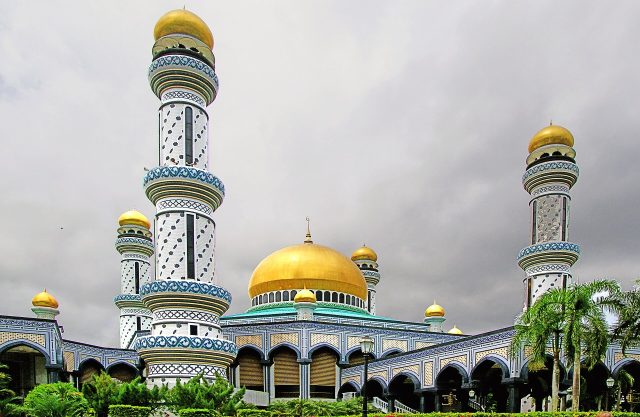
The architecture here is simple, built for practicality rather than grandeur. Houses are made of wood and bamboo, their high stilts keeping them safe from floods and wildlife. Roofs are thatched with palm leaves or patched with corrugated metal, their edges worn smooth by time. Inside, the air is cool and dim, the walls sometimes adorned with intricate carvings that tell stories of the past. There are no grand mosques or colonial-era buildings like in Brunei’s capital, just structures that have evolved to suit the land. The longhouses, in particular, are a marvel—some stretching over a hundred feet, their wide verandas overlooking the river, where life unfolds in full view. They’re not just homes but gathering places, where decisions are made, stories are shared, and festivals are celebrated.
The real draw of Temburong, though, is Ulu Temburong National Park. It’s one of the last places in Southeast Asia where the rainforest remains largely undisturbed, a living museum of biodiversity. The park is famous for its canopy walkways, a network of suspension bridges strung between towering trees. Walking them is an exercise in trust—the wooden planks sway gently underfoot, the forest stretching out in every direction. From above, the jungle looks endless, a sea of green broken only by the winding rivers below. There are lookout points where the trees thin just enough to watch the sunrise or sunset paint the sky in gold and pink. The air is thick with the scent of damp earth and foliage, and if you’re lucky, you might spot a hornbill gliding between the branches or hear the distant whoop of a gibbon.
Rivers are the lifeblood of Temburong. They’re the roads, the highways, the veins that connect the scattered villages to one another and to the outside world. Most travel here is by boat—long, narrow *perahu* that skim over the dark water, their hulls cutting through the current. The rivers themselves are striking, their waters stained dark by peat, the banks lined with tangled roots and overhanging branches. In the dry season, the water runs clear enough to see fish darting beneath the surface; in the wet season, it swells, turning the jungle into an impassable maze. Along the way, you might catch sight of a crocodile basking on a sandbank or a troop of macaques leaping through the trees. The journey is as much a part of the experience as the destination.
Staying in Temburong means stepping away from the usual comforts of travel. There are no luxury resorts here, just eco-lodges and campsites that blend into the landscape. Sleeping in the jungle is an experience in itself—the nights are alive with the chirp of insects and the occasional cry of a night bird, the air thick with humidity. Morning comes early, the forest waking with the first light, the calls of birds replacing the silence of the night. Local guides lead treks through the undergrowth, pointing out medicinal plants or teaching how to read the signs of the jungle. Meals are simple but satisfying—fish fresh from the river, rice steamed in bamboo, fruits plucked from the trees. There’s no rush, no schedule, just the slow unspooling of days spent in a place where time moves differently.
Getting to Temburong isn’t easy. It starts with a flight to Bandar Seri Begawan, followed by a boat or a long drive through winding roads. The journey itself is part of the adventure, a reminder of how remote this place really is. But once you arrive, the effort fades into the background. There’s something about Temburong that makes the rest of the world feel distant. It’s a place where you can sit by the river, watch the water flow, and realize how little it takes to feel content. The jungle doesn’t care about deadlines or notifications; it moves at its own pace, and for a while, you can too.
Tourism in Temburong is growing, but carefully. There’s an understanding here that the land and its people are fragile, that too much change too quickly could unravel what makes this place special. Visitors are welcomed, but not in overwhelming numbers. The communities here are proud of their home, protective of it in a way that feels rare in a world where so much is for sale. For them, Temburong isn’t just a destination—it’s a way of life, one that’s worth preserving. That’s why the jungle still feels wild, why the rivers run clear, and why, even as the rest of the world rushes forward, this corner of Brunei remains a place where the past lingers in the present.