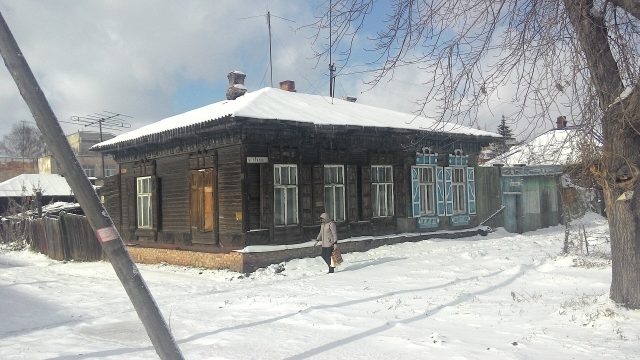
Lenin Street in Omsk is one of those rare urban spaces where history isn’t confined to museums but lingers in the very fabric of the city. Stretching through the heart of Omsk, it bridges different eras—from the modest wooden houses of the 19th century to the imposing Soviet-era buildings that still stand today. Walking its sidewalks, you tread the same paths once frequented by exiled Decembrists, wealthy merchants, and revolutionaries. The street has a way of slowing time, allowing you to notice details that usually slip past in the rush of modern life.
The origins of Lenin Street trace back to the 18th century, when Omsk was little more than a fortress on the southern frontier of the Russian Empire. Back then, it was known as Bolshaya Street, later renamed Lyubinskaya in honor of Lyubov Gubert, a governor’s wife who played a key role in the city’s development. In those days, it served as Omsk’s commercial and administrative spine, lined with shops, inns, and the homes of prosperous townspeople. Some fragments of that era survive today, like the two-story merchant houses with intricate wooden carvings, their facades now sharing the street with later constructions.
The early 20th century left a particularly striking mark on Lenin Street, with buildings in Art Nouveau and neoclassical styles that once housed banks, trading firms, and public institutions. One of the most notable is the former home of merchant Batyushkin, now a city museum. Its facade is adorned with stucco ornaments and large windows, while inside, original interiors with oak paneling and stained glass still remain. Nearby stands the former Siberian Commercial Bank, now home to the regional administration. Its massive columns and austere lines reflect the influence of St. Petersburg architecture, a nod to the fact that many of Omsk’s buildings were designed by architects from the capital.
The Soviet period reshaped Lenin Street with monumental structures meant to embody the ideals of a new era. Government buildings, cinemas, and department stores sprang up, serving both practical and ideological purposes. One such example is the House of Culture, built in the 1950s, its facade decorated with bas-reliefs of workers and collective farmers. Inside, concerts and exhibitions still take place, preserving its role as a cultural hub. Not far away is the former department store, once a place where everything from fabrics to radios could be bought. Though it now feels a bit dated, it still carries the unmistakable atmosphere of Soviet daily life.
Beyond its architecture, Lenin Street is a place where the city’s pulse is strongest. Cafes, bookshops, small galleries, and offices line the sidewalks, while in summer, outdoor seating spills onto the pavement. In winter, the street transforms with Christmas markets and ice sculptures. Rows of linden and poplar trees provide shade in the heat and fill the air with the scent of blossoms in spring. As evening falls, streetlights cast a warm glow over the cobblestones, turning the street into a perfect place for a leisurely stroll.
What makes Lenin Street truly special are the small details—the wrought-iron balcony railings, the old shop signs that have survived since pre-revolutionary times, and the modest memorial plaques commemorating those who once lived or worked here. One such plaque honors Decembrist Gavriil Batenkov, who spent years in exile in Omsk. These little touches turn a walk down the street into more than just sightseeing; it becomes a journey through time.
Unlike the crowded thoroughfares of Moscow or St. Petersburg, Lenin Street retains a sense of calm, free from the crush of tourists. This makes it easy to explore at your own pace, whether you’re stepping into one of the historic buildings now housing museums or simply sitting in a quiet courtyard with a cup of coffee. The street changes character as you walk its length—from quiet lanes with wooden houses to broad avenues lined with Soviet-era apartment blocks.
Lenin Street is more than just a route from one part of the city to another; it’s a living history book written in stone and wood. It tells the story of Omsk’s growth, the people who shaped it, and the ideas that moved them. Walking here, you can almost picture the early 20th-century workers’ demonstrations, the battles of the Civil War, and the post-war efforts to build a new society. Though many buildings no longer serve their original purposes, they still carry the echoes of the past.
Today, Lenin Street remains one of Omsk’s most beloved places for locals. It’s where people meet, families stroll, and visitors pose for photos against historic facades. The street has woven itself into the city’s folklore, appearing in songs, poems, and local legends. While its appearance continues to evolve—new buildings rise, old ones are restored—it remains a living entity, breathing with both history and the present.