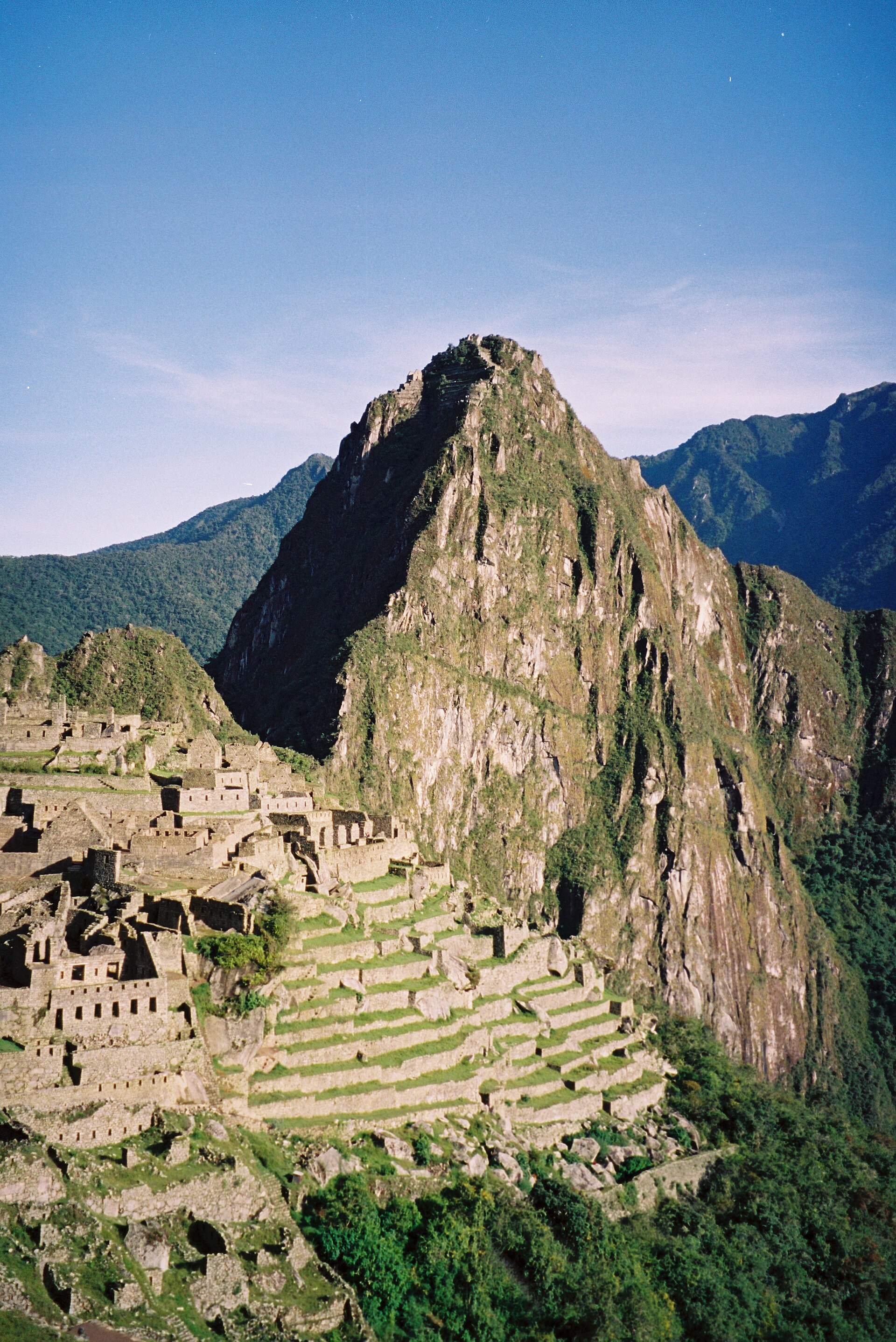
Huayna Picchu isn’t just a mountain looming over Machu Picchu—it’s where the past and the landscape become inseparable. Translated from Quechua as "Young Peak," it may not match the height of its older sibling, but the views from its summit are the ones that linger. The climb isn’t just a physical challenge; it’s a slow unraveling of how the Inca once saw the world, step by ancient step.
The trail begins at the edge of Machu Picchu, but within minutes, the ruins vanish behind a bend. What remains are sheer rock faces draped in moss, ferns clinging to crevices, and the occasional tree gripping the stone like it’s afraid to let go. The path follows Inca-built steps, some carved directly into the cliffside, others reinforced with dry-stone walls. These same steps lead to the Temple of the Moon, a small cave halfway up where the walls are lined with meticulously shaped niches. Archaeologists believe this was a place of ritual, where priests once called on the earth and sky. Standing inside, it’s easy to imagine the flicker of torchlight against the stone, the murmur of prayers rising into the damp air.
The ascent takes about an hour and a half, though the time slips away unnoticed. The trail twists sharply, sometimes rising almost vertically, other times cutting back to reveal dizzying drops over the Urubamba Valley. On clear days, the river winds below like a ribbon of mercury, its banks a patchwork of green against the jagged Andes. Even when clouds swallow the summit, the sense of solitude remains—an awareness of something larger than the view itself. The air is thin and cool, carrying the scent of wet earth and wild herbs, the silence broken only by the rustle of leaves and the distant cry of a bird.
For years, Huayna Picchu was off-limits, its fragile paths deemed too risky for visitors. Today, access is tightly controlled, with permits required in advance. The restrictions aren’t arbitrary—the trail is narrow, exposed in places, and treacherous when wet. But that’s part of what makes the climb feel like a privilege. There are no crowds here, no jostling for space, just the weight of history underfoot and the vastness of the mountains around you.
The summit itself holds no grand ruins, and that’s the point. What it offers is perspective. From here, Machu Picchu unfolds below like a living map: the terraces stepping down the slope, the temples and plazas arranged with deliberate precision, the Intihuatana stone catching the light like a sundial. As the sun dips lower, the stones glow amber, and for a moment, it’s possible to believe time has paused. It’s no wonder this view is often called one of the most breathtaking on earth.
But Huayna Picchu is more than a vantage point. At over 2,600 meters, the modern world feels distant. No traffic, no billboards, no noise—just wind, sky, and the quiet hum of the mountains. Some visitors come for the photos, but many stay to sit on a rock, listening to the silence. There’s a clarity here, a sense of scale that puts everything else into place. It’s easy to see why the Inca chose this spot for their shrines. The air feels lighter, the mind sharper.
The descent is quicker, but no less absorbing. Now, the details missed on the way up come into focus: the moss creeping over old walls, the narrow paths branching off into nothing, the odd stone formations that still puzzle archaeologists. Below, Machu Picchu reappears, but it’s different now. After standing on Huayna Picchu, the ruins don’t feel like a museum. They feel alive, woven into the land itself.
This isn’t a climb for everyone. There’s no comfort, no easy route, and even seasoned hikers may find it demanding. But those who make the effort leave with something deeper than a photograph. They carry away the quiet certainty of having touched something enduring—a thread connecting past and present. And when they glance back one last time at the peak disappearing into the clouds, it’s not just a mountain they’re seeing. It’s a place where history still breathes.