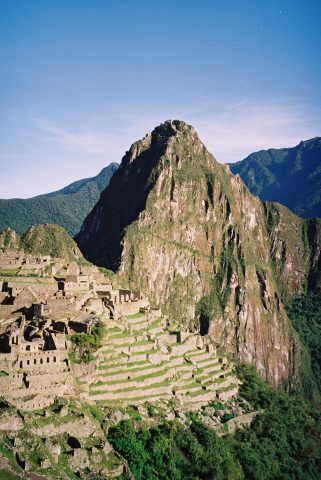
Nestled in the quiet town of Aguascalientes, just a stone’s throw from the towering peaks that cradle Machu Picchu, Casa Concha offers a different kind of journey into the past. This unassuming museum doesn’t compete with the grandeur of the ruins above, nor does it try to. Instead, it invites visitors to slow down, to look closer, and to piece together the fragments of a civilization that once thrived in these mountains. For those who arrive in Aguascalientes after a long trek or a winding train ride, the museum serves as a quiet prelude—or a thoughtful epilogue—to the spectacle of Machu Picchu itself.
The building itself is easy to miss. A modest two-story structure, it blends into the town’s fabric, more like a well-loved home than a museum. The name, Casa Concha, translates to "House of the Shell," though its origins are as layered as the history it preserves. Some say it refers to the seashells once traded here, prized by the Inca for rituals or adornment. Others whisper that it’s a nod to the shape of the valley itself, curling around the town like a protective embrace. Whatever the truth, the name adds a touch of mystery, a hint that this place holds more than meets the eye.
Inside, the museum feels intimate, almost personal. The artifacts on display aren’t just relics behind glass; they’re whispers of daily life in Machu Picchu. Ceramic vessels, worn tools, delicate jewelry, and fragments of textiles tell stories of the people who once called this mountain home. How did they farm on steep terraces? What did they eat? How did they weave the vibrant fabrics that still dazzle centuries later? The exhibits don’t just answer these questions—they make you ask them, turning a visit into a conversation with the past.
One of the most striking sections is dedicated to the human remains found near Machu Picchu. Unlike the dramatic displays in some museums, these are presented with quiet reverence. The mummies aren’t sensationalized; they’re treated as individuals, their stories intertwined with the larger narrative of the Inca. It’s a reminder that history isn’t just about empires and monuments—it’s about the people who lived, worked, and died within them.
The museum’s strength lies in its ability to contextualize. Before diving into the specifics of Machu Picchu, it lays the groundwork: the Inca’s mastery of agriculture, their astronomical knowledge, their engineering feats. Then, step by step, it zooms in—why was Machu Picchu built? How did it function? Why was it abandoned? The answers aren’t always clear, but the questions linger, making the ruins above feel even more alive. Scale models and reconstructions help bridge the gap between past and present, showing how the city might have looked in its prime. The terraces, temples, and water channels aren’t just static structures; they’re part of a living system, one that the Inca shaped with remarkable precision.
Casa Concha isn’t just about looking back. It’s also a place where the past meets the present. Workshops and demonstrations bring traditional crafts to life—weaving, pottery, even the intricate art of Inca stonework. Visitors can try their hand at these skills, gaining a deeper appreciation for the ingenuity of a culture that built an empire without wheels or written language. It’s one thing to admire a piece of pottery in a case; it’s another to feel the weight of clay in your hands, to understand the patience and skill required to shape it.
Aguascalientes itself is a town of contrasts. Born as a railway stop for tourists, it still hums with the rhythm of arriving and departing trains. There are no towering hotels or bustling plazas here—just narrow streets, thermal baths (the town’s namesake), and the constant murmur of the Urubamba River. For many, it’s a place to catch their breath after the climb to Machu Picchu, to soak in the hot springs and let the day’s impressions settle. Casa Concha fits seamlessly into this rhythm. It’s not a grand finale, but a quiet space to reflect, to connect the dots between what you’ve seen and what you’ve yet to understand.
The museum doesn’t claim to replace the experience of walking among the ruins. Instead, it enhances it. When you stand in Machu Picchu, the sheer scale can be overwhelming. The terraces blur into the mountainside, the temples feel distant, almost abstract. But here, in this small house of shells, the details come into focus. The patterns on a piece of pottery, the wear on a stone tool, the delicate stitches of a textile—these are the threads that weave the bigger picture together. They remind you that Machu Picchu wasn’t just a city of stone; it was a city of people.
There’s no rush here. You can linger over a display of ceremonial knives, tracing the craftsmanship with your eyes. You can sit in the courtyard, listening to the river below, letting the weight of history settle around you. Casa Concha doesn’t dazzle with spectacle, and that’s precisely its charm. It offers something rarer: the chance to pause, to think, to feel the echoes of a civilization that still shapes the land—and the imagination—of those who visit.