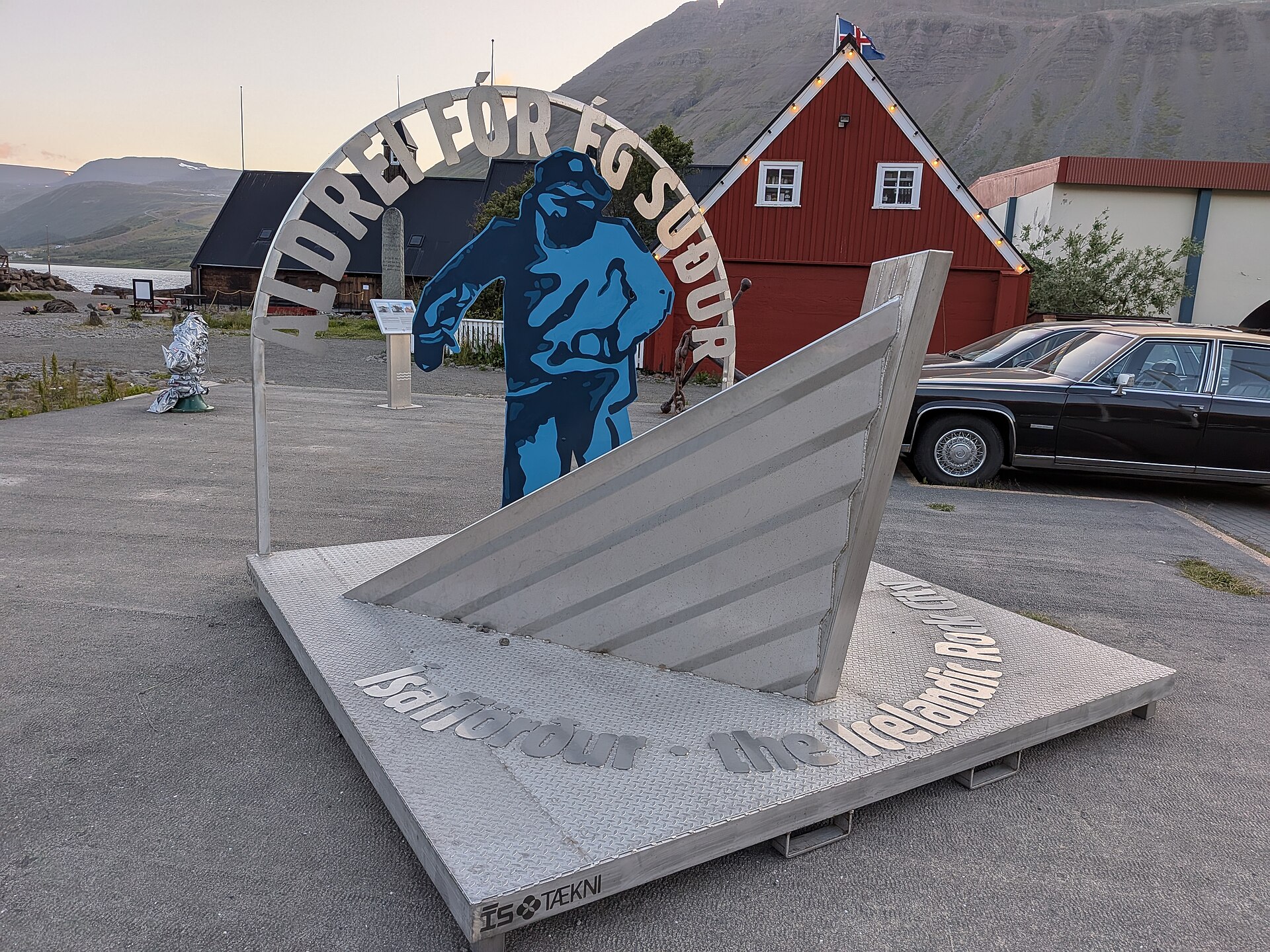
Tjöruhúsið sits on a quiet street in Ísafjörður, where the past lingers in the salt-stained air. The building itself is older than most in this fishing town, its timber frame weathered by decades of Arctic winds. It was once a storage shed for nets and salted fish, a place where men would unload their catch after days at sea. The walls still hold the echoes of those times—low ceilings that force you to duck slightly, wooden beams darkened by smoke and age, the faint scent of dried cod clinging to the air. Even now, when the wind blows in from the fjord, it carries the same briny sharpness that once filled these rooms.
The restaurant opened in the 1980s, when Iceland was just beginning to welcome outsiders. Back then, few travelers made it this far north, and those who did were often surprised to find a place where food wasn’t just fuel but a story. Tjöruhúsið became one of the first spots in the Westfjords to serve dishes the way they’d always been eaten here—simple, unadorned, made from what the sea provided. There’s no fusion cuisine, no molecular gastronomy, just the same meals that sustained generations of fishermen: smoked herring, creamy cod stew, pan-fried halibut, and the infamous hákarl, fermented shark that’s been a part of Icelandic diets for centuries. The food isn’t meant to impress; it’s meant to nourish, the way it always has.
Inside, the space feels like stepping into a well-worn photograph. The tables are scarred from years of use, their surfaces marked by countless knives and forks. The chairs, with their high backs, look like they’ve been here since the building was a warehouse. Black-and-white photos line the walls—fishermen in oilskins, women mending nets, children playing on the docks. In the corner, an old stove still crackles to life on chilly evenings, its warmth cutting through the damp. The lighting is soft, almost hesitant, as if the lamps themselves are reluctant to disturb the quiet. It’s easy to imagine the place as it was a hundred years ago, when the men who worked these waters would gather here after a long day, their voices low, their laughter rough.
The menu changes with the seasons, dictated by what the sea yields. In summer, when the fishing is good, the tables fill with fresh cod, haddock, and monkfish, grilled or poached with little more than butter and herbs. Come autumn, the focus shifts to preserved foods—smoked fish, pickled herring, salted cod—dishes meant to last through the long winter. The fish soup is a constant, though, a thick, hearty broth loaded with potatoes, carrots, and whatever fish was caught that morning. It’s served with dense, dark rye bread, baked the way it’s been for generations. Locals often pair it with a glass of brennivín, the caraway-flavored schnapps that’s been warming Icelanders since the Viking age.
Beyond the restaurant, Ísafjörður moves at its own unhurried pace. A small boatyard sits nearby, where wooden fishing vessels are still repaired by hand. Further down the shore, old fishermen’s cottages stand half-abandoned, their paint peeling, their windows dark. On clear days, the fjord stretches out like a sheet of hammered silver, dotted with boats returning from the sea. In winter, when the water freezes and the northern lights ripple overhead, the town feels suspended in time. The only sounds are the wind, the occasional creak of a ship’s hull, and the distant hum of a car on the narrow streets.
For the people who live here, Tjöruhúsið is more than just a place to eat. It’s a piece of their history, a reminder of how things used to be. Fishermen still stop by after a day at sea, their faces windburned, their hands rough from work. Families gather here for birthdays and holidays, passing down stories along with the plates of food. Tourists, when they come, are often struck by how unassuming it all is—no grand decor, no elaborate presentations, just the quiet rhythm of a place that has always been this way.
Ísafjörður has started to appear on more travel itineraries in recent years, as visitors seek out experiences that feel real rather than staged. Tjöruhúsið fits that desire perfectly. There are no crowds here, no servers rushing between tables, no attempt to cater to every whim. Instead, there’s the slow ticking of a clock, the murmur of conversation, the way the light slants through the windows in the late afternoon. It’s the kind of place that makes you want to linger, to sit with a second cup of coffee and watch the fjord darken as the sun dips below the mountains.
If you find yourself here, don’t rush off after the meal. Stay awhile. Listen to the fire pop in the stove, feel the weight of the past in the wooden beams above. Look out at the water, where the boats rock gently at their moorings. It’s in these quiet moments that Iceland reveals itself—not in the dramatic landscapes or the famous hot springs, but in the small, unchanging things. The way the air smells of salt and woodsmoke. The way the light never quite fades in summer, or how it lingers just a little too long in winter. The way a place like Tjöruhúsið can make you feel, for a little while, like you’ve slipped into another time.