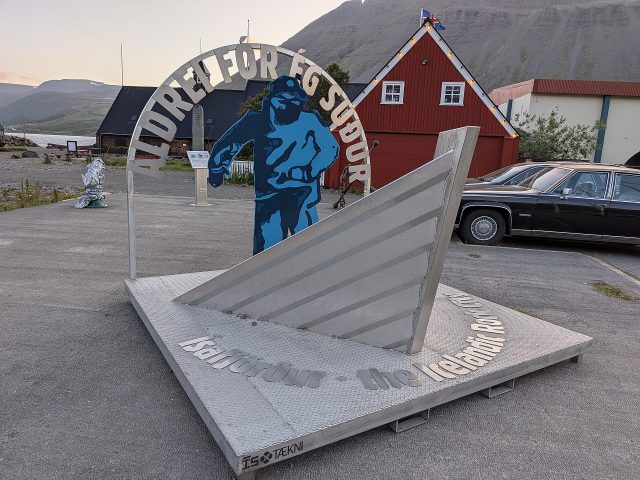
Ísafjörður’s Fisheries Museum isn’t just a collection of artifacts—it’s an attempt to tell the story of what has shaped Iceland more profoundly than its sagas or volcanoes. This town sits on the edge of one of the country’s most unforgiving fjords, where the sea has always been both provider and peril, the only road to the outside world. Far from Reykjavík and the usual tourist trails, fishing here isn’t just an industry; it’s a way of life passed down through generations. The museum preserves the memory of that life, one that built not just an economy but the character of the people who lived it.
The museum occupies an old fish processing plant from the early 20th century, a building that’s as much a part of the story as the exhibits inside. The heavy wooden beams, the scent of salt and machine oil embedded in the walls, the rusted gears still in place—all of it speaks to the harsh, unrelenting work that once took place here. Visitors can see what fishing looked like a century ago, from the hand-cutting of cod to the mending of nets by kerosene lamp. The boats on display range from traditional Icelandic fishing skiffs to the first motorized vessels, each one a testament to how far fishermen could venture and how long they could stay at sea. These aren’t just relics; they’re evidence of the labor that kept Iceland alive.
One of the most compelling sections of the museum focuses on the women who worked in the fish processing plants. While men were at sea, women stayed behind, salting, drying, and packing the catch. Their work was just as grueling, though history often overlooks it. The museum corrects that imbalance, displaying photographs, tools, and personal items that belonged to these workers. It also traces how their conditions changed over time—from manual labor to early assembly lines, from cramped barracks to proper housing. The exhibits make it clear that without these women, the industry wouldn’t have functioned.
Another hall is dedicated to the history of Iceland’s fishing fleet. Models of ships from different eras—sailboats, steam trawlers, modern vessels—line the walls, alongside navigational instruments, maps, and documents. The evolution of fishing routes is particularly fascinating: once confined to Iceland’s coastal waters, fishermen later ventured to Greenland and even Newfoundland as technology advanced. The museum doesn’t shy away from the political struggles either, like the Cod Wars with Britain, when Icelandic fishermen fought to protect their exclusive economic zone.
Despite its serious subject matter, the museum avoids feeling dry or academic. Interactive elements let visitors try their hand at tying nautical knots, hoisting an anchor, or even steering an old trawler. There are areas designed for children, where they can dress up in fisherman’s gear or race to "process" a fish. These touches make the exhibits feel alive, letting visitors not just observe but experience a fraction of what it was like to work at sea.
The museum isn’t just about the past—it’s also about Iceland’s present and future. Exhibits explore the challenges the fishing industry faces today: climate change, dwindling fish stocks, and global competition. They show how Icelanders are adapting, adopting sustainable fishing methods and expanding aquaculture. One display highlights projects that turn fish waste into fertilizer or biofuel, proving that tradition and innovation can coexist.
A visit here helps explain why Ísafjörður looks the way it does. The narrow streets, the tightly packed houses, the harbor where boats dock right in the town center—all of it was shaped by centuries of fishing. Even the local cuisine, where dried fish and fermented skate take center stage, reflects the town’s dependence on the sea. The museum offers a way to see Ísafjörður not as a tourist stop but as a place where people still live much as their ancestors did.
After leaving the museum, it’s worth walking along the waterfront. The air still carries the scent of salt and seaweed, and the cries of gulls fill the sky. You might stop at a small restaurant for fresh cod or salmon, or simply stand by the water, watching boats return from the day’s catch. The museum doesn’t answer every question, but it does something more important: it reveals Iceland not just as a land of geysers and waterfalls, but as a place where the sea has always been the central character in its story.