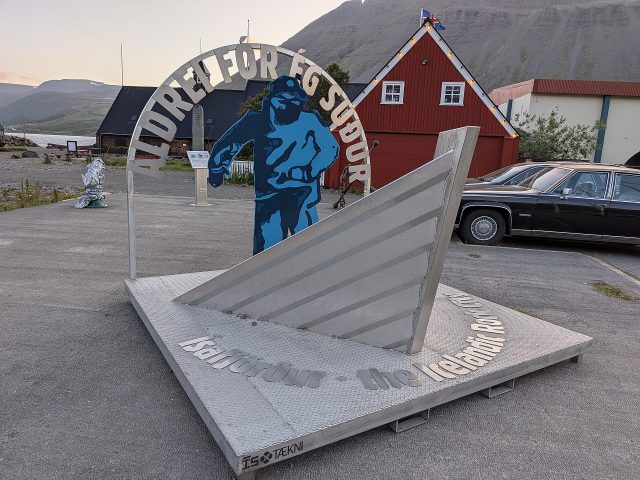
The Westfjords Heritage Museum in Ísafjörður is one of those rare places where the past doesn’t just feel preserved—it feels alive. Tucked away in a quiet corner of Iceland’s most remote region, the museum offers more than just a collection of artifacts. It’s a doorway into the soul of the Westfjords, a place where the harsh beauty of the landscape and the resilience of its people come together in a story that spans centuries.
The building itself is part of that story. Housed in a former fish warehouse from the early 1900s, it stands as a testament to Ísafjörður’s golden age as a fishing hub. The high wooden beams, weathered planks, and wide-open spaces still carry the echoes of a time when the docks buzzed with activity—fishermen unloading their catches, merchants haggling over prices, and locals gathering to share news. Even now, the faint scent of salt lingers in the air, a quiet reminder of how deeply the sea has shaped life here.
Inside, the exhibits unfold like chapters in a book, each one revealing a different layer of the region’s history. The earliest displays take you back to the days of Viking settlers, with tools and household items that speak to a life of hardship and ingenuity. As you move through the rooms, the story evolves—from medieval farming implements to the fishing gear that became the backbone of the local economy. There’s something humbling about seeing the simple objects that once meant survival: a hand-knit sweater, a wooden barrel for storing fish, a rusted harpoon. These weren’t just tools; they were lifelines in a place where every resource had to be used wisely.
One of the most compelling sections is dedicated to the sea, which has always been both a provider and a threat in the Westfjords. Models of traditional Icelandic fishing boats, including the sturdy six-oared rowboats that once dominated the waters, sit alongside navigation instruments and weathered life jackets. The stories here aren’t just about the fish that were caught but about the lives that were risked—and sometimes lost—in the process. Storms, shipwrecks, and daring rescues are recounted in matter-of-fact detail, a reminder of how precarious life could be when the ocean was your only livelihood.
The museum also does something rare: it brings the past into the present by recreating the everyday. A series of rooms show how homes evolved over the decades, from the sparse interiors of fisherman’s cottages to the slightly more comfortable houses of merchants. You can see the progression of technology—from oil lamps to early radios, from hand-spun wool to mechanized looms—all while surrounded by the furniture, dishes, and even toys that once filled these spaces. It’s the kind of detail that makes history feel tangible, as if the people who lived here might walk in at any moment.
But what makes the Westfjords Heritage Museum truly special is its ability to convey the spirit of the place. This wasn’t just a region where people survived; it was one where they built a culture rooted in cooperation and resilience. The exhibits don’t shy away from the hardships—long winters, isolation, the constant threat of the sea—but they also show how communities came together in times of crisis. Women kept households running while men were at sea, children learned to work alongside adults from a young age, and neighbors relied on one another in ways that modern life has largely forgotten. There’s no romanticizing here, just a clear-eyed look at how people made do with what they had.
Today, Ísafjörður is a different kind of place. The town has cafés, galleries, and a growing tourism industry, but the museum serves as a quiet counterpoint to all that. It’s a place where visitors can step back and consider what came before—the centuries of struggle and adaptation that shaped the Westfjords into what it is now. You could spend hours poring over the exhibits, or you could just sit for a while, listening to the wind outside and imagining the voices that once filled these walls. Either way, the experience leaves you with a deeper understanding of why this region, despite its challenges, has always been so fiercely loved by those who call it home.
In a way, the museum is also a meditation on change. The Westfjords, like many remote areas, faces its share of modern pressures—depopulation, shifting economies, the impacts of a warming climate. But walking through these exhibits, it’s hard not to feel a sense of continuity. The people who lived here before were no strangers to adversity; they adapted, endured, and passed down what they knew. That legacy isn’t just about the past—it’s a reminder that resilience is woven into the fabric of this place.
What makes the Westfjords Heritage Museum stand out isn’t its size or its flashy displays. It’s the way it tells a story without fanfare, letting the objects and the space speak for themselves. There’s no grand narrative here, just the quiet accumulation of lives lived, challenges met, and a culture that refused to be erased. In that sense, the museum isn’t just about preserving history—it’s about keeping a conversation going, one that connects the past to the present and maybe even hints at what’s to come.