Tashichho Dzong, often simply called Thimphu Dzong, stands as one of Bhutan’s most impressive architectural landmarks, a fortress-monastery that has watched over the capital for centuries. Perched on the western bank of the Wang Chhu River, it serves as both a spiritual center and the seat of Bhutan’s government, blending religious and administrative functions in a way that reflects the country’s unique governance. The dzong’s whitewashed walls and golden roofs rise against the backdrop of the Himalayan foothills, a striking contrast of man-made grandeur and natural beauty. For visitors, it’s not just a building to admire from the outside—it’s a place where Bhutan’s living traditions are still very much alive.
The history of Tashichho Dzong is intertwined with the story of Bhutan itself. The original structure was built in the 13th century by Lama Gyalwa Lhanangpa, but it was the Zhabdrung Ngawang Namgyal, the unifier of Bhutan, who expanded and fortified it in the 17th century. The dzong was later moved to its current location in 1641, though the present building is largely the result of a 20th-century reconstruction after a fire in 1951. What makes this place remarkable is how it has adapted over time—destroyed, rebuilt, and expanded—yet always retaining its core purpose as a symbol of Bhutanese identity. The dzong’s name, which translates to "Fortress of the Glorious Religion," hints at its dual role as a spiritual and political stronghold.
Walking through the massive wooden gates, you enter a world that feels both ancient and timeless. The dzong is organized around a series of courtyards, each with its own character. The central courtyard, or *dochey*, is where the most important religious festivals, like the Thimphu Tsechu, take place. During these events, masked dancers perform sacred cham dances, their movements telling stories of Buddhist deities and moral lessons. The atmosphere is electric, filled with the sound of cymbals, drums, and the murmurs of devotees. Even outside festival season, the dzong hums with quiet activity—monks in deep red robes glide between prayer halls, while government officials move through the administrative wings with a sense of purpose.
The architecture of Tashichho Dzong is a masterclass in traditional Bhutanese design, where every element has both practical and symbolic meaning. The buildings are constructed without the use of nails, relying instead on intricate wooden joinery that has been perfected over generations. The whitewashed walls, made from rammed earth and stone, are thick and sturdy, designed to withstand earthquakes—a necessity in this seismically active region. The sloping roofs, covered in golden shingles, are not just decorative; they help shed heavy snowfall during winter. Inside, the prayer halls are dimly lit, their walls adorned with vibrant murals depicting Buddhist cosmology, while the scent of butter lamps and incense lingers in the air. The dzong’s layout follows a strict hierarchy, with the most sacred spaces reserved for the highest lamas and the king.
One of the most striking features of Tashichho Dzong is the *utse*, or central tower, which dominates the skyline. This multi-storied structure houses some of the dzong’s most sacred relics, including statues of the Buddha and protective deities. The tower’s design is both imposing and elegant, with its curved eaves and tiered roofs creating a sense of upward movement. At night, when the dzong is illuminated, the utse seems to glow, casting long shadows across the courtyards below. The tower is also home to the *lhakhang*, or main temple, where monks gather for daily prayers. The acoustics inside are remarkable—the deep chants of the monks resonate through the space, creating an almost physical presence.
Beyond its religious and administrative functions, Tashichho Dzong plays a central role in Bhutan’s national life. It is here that the king is crowned, and where the annual session of the National Assembly takes place. The dzong also houses the throne room and the offices of the king and the prime minister, making it the nerve center of Bhutan’s government. This blending of the sacred and the secular is a defining feature of Bhutanese culture, where religion and state have always been closely intertwined. For visitors, this means that a walk through the dzong is not just a tour of a historic site, but a glimpse into the living heart of the country.
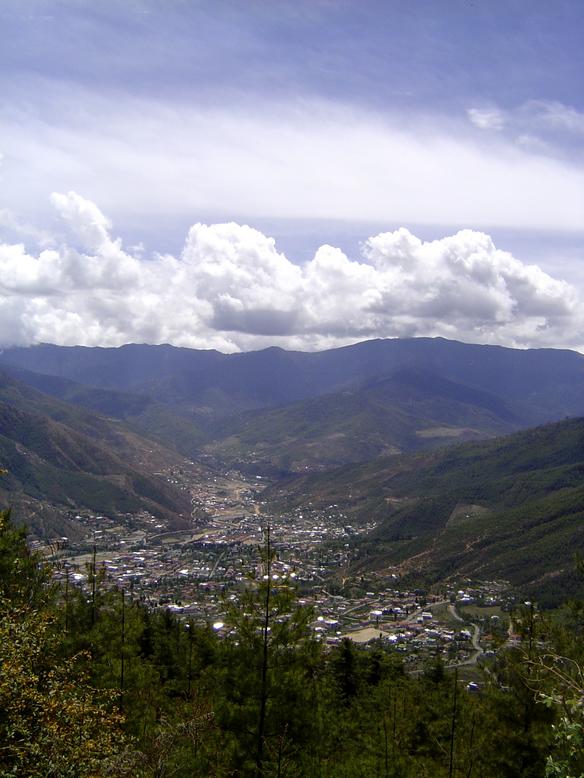
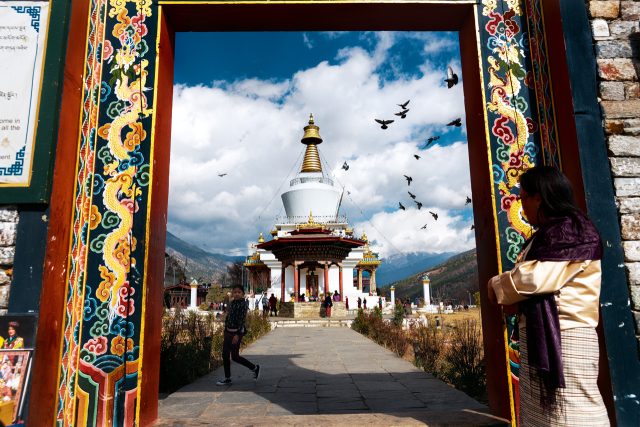
The surrounding area adds to the dzong’s allure. The Wang Chhu River flows gently beside it, its waters reflecting the fortress’s walls. On the opposite bank, the modern city of Thimphu sprawls out, a mix of traditional Bhutanese architecture and newer developments. The contrast is striking—the dzong, with its ancient stone and wood, stands as a reminder of Bhutan’s past, while the city around it represents its cautious embrace of the future. Nearby, the National Memorial Chorten and the Buddha Dordenma statue offer other points of interest, but Tashichho Dzong remains the most compelling. It’s a place where history is not just preserved, but actively lived.
Visiting Tashichho Dzong requires a bit of planning, as access is restricted to certain areas and times. The dzong is open to tourists in the afternoons, after the morning prayers and administrative work have concluded. Dress modestly—shoulders and knees should be covered—as a sign of respect. Photography is allowed in the courtyards but prohibited inside the temples. The best time to visit is during the Thimphu Tsechu festival, when the dzong comes alive with color, music, and dance. But even on a quiet day, the place has a presence that lingers. It’s not just a monument; it’s a living institution, a bridge between Bhutan’s past and its future. Standing in its shadow, you can’t help but feel the weight of history—and the quiet strength of a culture that has endured.