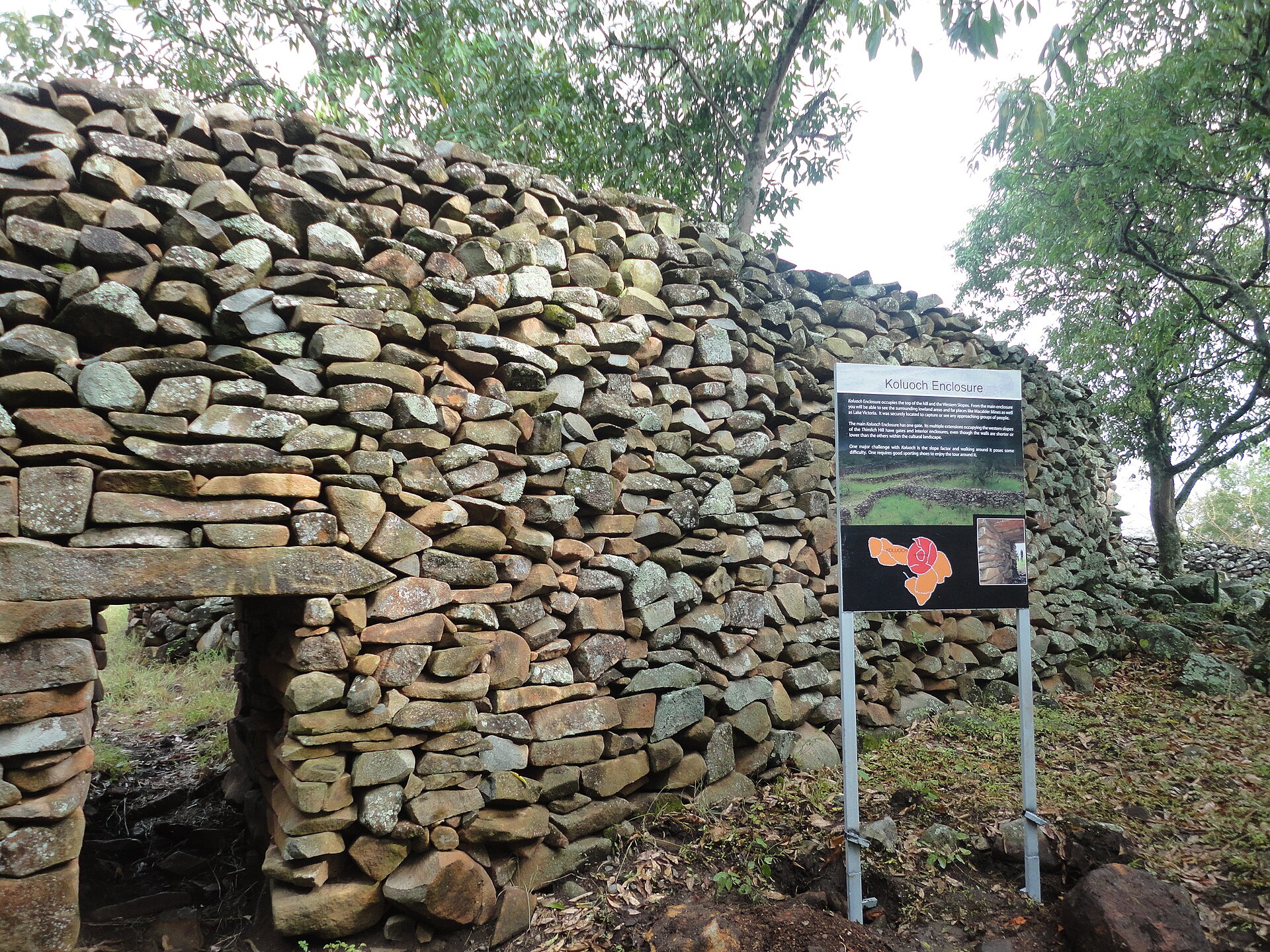
Thimlich Ohinga is one of Kenya’s quiet secrets, a place that remains largely unknown beyond its borders yet holds a story as enduring as the stones that built it. Tucked away in the southwestern part of the country, not far from the town of Migori, this ancient site is a network of dry-stone walls that have stood for centuries without mortar or modern engineering. Scholars believe the structures date back to the 16th century, though some suggest they could be even older. Who exactly built them, and why, remains a subject of debate, but their purpose is clear: these walls were meant to protect. Long before European influence reached this part of Africa, local communities relied on them for safety, shelter, and a sense of permanence in a landscape that demanded resilience.
The architecture of Thimlich Ohinga is striking in its simplicity and precision. The stones, some weighing several tons, are fitted together with remarkable accuracy, their edges interlocking without any binding material. In places, the walls rise several meters high, their thickness designed to deter intruders. Inside the enclosure, the remains of circular dwellings, storage pits, and livestock pens hint at a once-thriving settlement. What makes this site particularly fascinating is its rarity—similar structures are found nowhere else in Kenya, making Thimlich Ohinga a singular testament to the ingenuity of its builders.
Local lore attributes the construction to the Luo people, one of Kenya’s largest ethnic groups. According to oral traditions, the walls were erected to defend against raids by neighboring tribes and to control the trade routes that crisscrossed the region. In those days, this part of East Africa was a crossroads where merchants from distant lands exchanged goods, ideas, and cultures. Thimlich Ohinga, then, was more than just a fortress; it was a symbol of power, autonomy, and the ability to shape one’s own destiny in a world where survival often depended on strength and strategy.
Today, the site feels suspended in time. The walls, now softened by moss and creeping vines, stand as silent witnesses to the lives that once unfolded here. The surrounding savanna stretches out in all directions, dotted with grazing cattle and the occasional acacia tree. The air carries the scent of dry grass and earth, and the only sounds are the rustle of wind through the stones and the distant lowing of livestock. There’s a quiet melancholy to the place, as if the past lingers just beneath the surface, waiting to be noticed by those who take the time to look.
Unlike Kenya’s more famous attractions, Thimlich Ohinga has escaped the trappings of mass tourism. There are no souvenir stalls, no crowds jostling for the best photo, no guides reciting rehearsed scripts. Visitors are free to wander at their own pace, tracing the contours of the walls or sitting quietly in the shade of a baobab tree. For those who seek a deeper understanding of Africa’s history—beyond the well-trodden narratives of pyramids and colonial landmarks—this site offers a rare and unfiltered glimpse into the continent’s past.
Despite its age, the structure remains remarkably intact. While some sections have collapsed and others are overgrown with vegetation, the overall layout is still discernible. Efforts to preserve the site have been made, though resources are limited, and much of the work relies on local initiatives rather than large-scale restoration projects. Yet even in its current state, Thimlich Ohinga is compelling. Standing within its walls, it’s impossible not to wonder about the hands that placed each stone, the families that sought refuge here, and the generations that passed through its gates.
A visit to Thimlich Ohinga is less about ticking off a tourist checklist and more about connecting with the land and its stories. There are no interpretive signs or audio guides, nor is there a need for them. The site speaks for itself—through the weathered stones, the layout of the ruins, and the landscape that has changed little over the centuries. To walk here is to step into a different era, one where life was shaped by the rhythms of nature and the necessity of community.
If you find yourself in this part of Kenya, the journey to Thimlich Ohinga is well worth the time. The drive from Migori takes less than an hour, but the experience feels like a passage into another world. This is a place for those who prefer their history unvarnished, where the past isn’t confined to museums but lives on in the very ground beneath your feet. It’s not a destination for those seeking spectacle or entertainment, but for those who want to see Africa as it once was—raw, resilient, and quietly extraordinary.