Migori Stadium sits quietly on the edge of town, a place where the rhythm of daily life and the pulse of football merge into something unassuming yet deeply felt. Unlike the grand arenas of Nairobi or Mombasa, this stadium doesn’t demand attention—it simply exists, woven into the fabric of the community. Here, sport isn’t about spectacle; it’s about connection, about the way a shared passion can turn a patch of grass and concrete into a gathering place for generations.
The structure itself is unremarkable in the best sense. Low concrete stands curve around a field that’s seen countless matches, their edges softened by time and the occasional overgrown tuft of grass. The metal railings are sturdy but unpolished, the kind that have been leaned against by thousands of hands over the years. There’s no floodlighting, no VIP boxes, just a straightforward space where the focus is on the game, not the surroundings. On match days, the stands fill with a few thousand spectators, their voices carrying across the open ground, mingling with the rustle of trees that line the perimeter. Vendors set up makeshift stalls nearby, selling cold sodas, roasted maize, and mandazi, the sweet fried dough that’s a staple at Kenyan gatherings.
Football in Migori is more than a pastime—it’s a thread that runs through the town’s social life. On weekends, the stadium hums with energy as local teams take the field. The matches are competitive but never hostile; the crowd’s enthusiasm is infectious, a mix of cheers, drumming, and the occasional burst of song. Children dart between the stands, kicking balls of their own or mimicking the moves of their heroes. Elders settle onto the benches, reminiscing about legendary players or debating the tactics of the current game. There’s a sense of continuity here, of traditions passed down through decades.
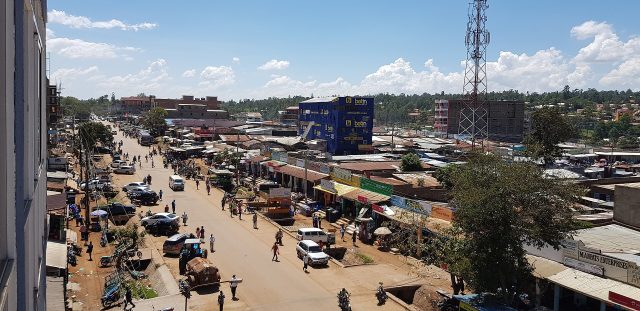
The stadium’s history mirrors that of Migori itself. The town, a trading hub near the Tanzanian border, grew steadily over the years, and with it came the need for a place where people could come together. The stadium wasn’t built all at once but evolved gradually, its expansion keeping pace with the community’s needs. It has hosted more than just football—track and field events, school sports days, even political rallies. Each event has left its mark, not in grand renovations, but in the way the space has been shaped by the people who use it. It’s a place that belongs to everyone and no one, a shared resource that adapts to whatever the town requires.
On weekdays, the stadium is quieter, but never entirely empty. Early mornings bring joggers and groups of schoolchildren, their laughter echoing across the field as they stretch or practice drills. Sometimes, the pitch is repurposed for rugby or volleyball, the lines of the different sports overlapping in a way that feels organic. The space is flexible, accommodating whatever the moment demands. Locals treat it as an extension of their neighborhood, a place to meet, exercise, or simply sit in the shade of the trees that dot the edges.
The climate in Migori is unforgiving in its own way. During the rainy season, the field turns to mud, and matches are postponed until the ground dries. Yet even then, the stadium doesn’t feel abandoned. Vendors take shelter under the overhangs, their stalls offering a brief respite from the downpour. Children play between the stands, their games undeterred by the weather, while older men gather to watch the rain fall, their conversations drifting between the past and the present. When the dry season returns, the grass is trimmed, the stands swept clean, and the cycle begins anew.
For travelers, Migori Stadium is an unexpected discovery. There are no signs pointing the way, no glossy brochures advertising its charms. That’s part of its appeal. You might stumble upon it while exploring the town, or hear about it from a local who mentions it in passing. If you visit on a match day, you can take a seat on the stands and let the atmosphere wash over you—the shouts of the crowd, the rhythm of the drums, the way the light slants across the field as the game unfolds. Even on quieter days, there’s a sense of life here, of a place that’s deeply rooted in its community.
Kenya’s sporting culture is evolving, and small-town stadiums like this one are starting to receive more attention. There’s talk of upgrades—better facilities, lighting for evening games, maybe even a roof over the stands. But for now, Migori Stadium remains a relic of an older, simpler era. It’s not about luxury or grandeur; it’s about the raw, unfiltered joy of sport and the way it brings people together. If you want to understand how football shapes lives beyond the big cities, this is where you’ll find it—not in the headlines, but in the quiet, everyday moments that make a place feel like home.