Lake Migori’s market is the kind of place where time moves differently—not slow, exactly, but unhurried, like the Nyado River winding past the edge of town. There’s no rush here, no blaring horns or crowded sidewalks, just the steady rhythm of daily life. By dawn, vendors have already laid out their goods, their voices weaving between Swahili and Luo as they call out to early shoppers. The air carries the scent of spices, fresh fish, and roasting maize, a mix that lingers long after you’ve left. This isn’t the polished, tourist-friendly market of Nairobi or Mombasa. It’s raw, unfiltered, and all the more compelling for it.
The market’s roots stretch back to when Migori was little more than a crossroads where Luo and Kuria traders met to exchange goods. Over generations, what began as a casual gathering of farmers and fishermen grew into a permanent fixture, a place where deals were struck and stories shared. The British tried to impose order during the colonial era, but the market resisted formal structure, retaining its organic, almost chaotic energy. Today, it remains the town’s beating heart, a place where farmers, fishermen, artisans, and passersby all converge, each with their own reasons for being there.
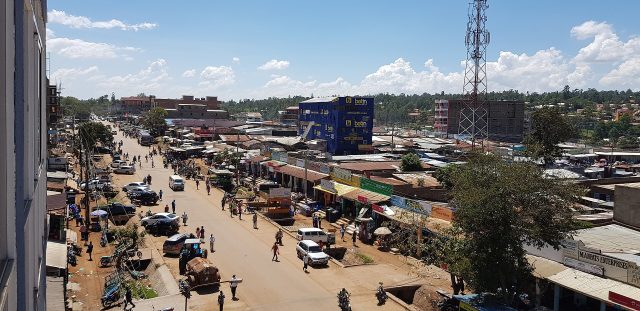
There’s nothing grand about the market’s architecture—just practical, no-nonsense stalls under corrugated iron roofs, shielding shoppers from the midday sun or sudden downpours. The aisles are narrow, packed with pyramids of tomatoes, bunches of bananas, slabs of meat, and glistening fish laid out on beds of ice. In the quieter corners, you’ll find handmade clay pots, woven baskets, and bolts of kanga fabric, their bright patterns adding splashes of color to the scene. This isn’t a place designed for aesthetics; it’s built for function, for the people who rely on it day in and day out.
Mornings here start early. By six, the market is already alive with activity. Farmers roll in with carts piled high with produce from nearby fields, while fishermen unload their catch from Lake Victoria, their boats still damp from the night’s work. Women spread out mats to display fresh chapati, fried dough balls, and *ogino*—tiny, crispy lake flies that locals snack on like popcorn. The light is soft, the colors vivid, and the air cool before the heat of the day sets in. By midday, the market reaches its peak: voices rise in a steady hum, children dart between stalls, and elders sit on benches, watching the ebb and flow with quiet amusement.
Spices take center stage here. You’ll find everything from fiery piri-piri peppers to fragrant cardamom, used in everything from stews to sweet chai. Vendors take pride in their wares, offering samples to sniff or taste, explaining the best ways to use each one. Some spices come from distant regions, while others are grown in the red soil just outside town. For many sellers, this isn’t just business—it’s a family legacy, passed down through generations. The knowledge of how to blend, dry, and sell these spices is as much a part of their identity as the languages they speak.
But the market is more than just a place to buy and sell. It’s a social hub, a place where news travels fast, where neighbors catch up over cups of milky tea, and where debates about politics or football spill out into the open. On weekends, the atmosphere shifts—musicians might set up in a corner, playing old Luo tunes on homemade instruments, or storytellers gather a crowd, their voices rising and falling with the rhythm of the tale. Sometimes, if the mood strikes, someone will start dancing, and soon others join in, clapping and laughing as the market becomes a stage for a moment.
The food here is simple but unforgettable. Prices are low, but that doesn’t mean the quality suffers. The produce is as fresh as it gets—tomatoes still warm from the sun, fish pulled from the lake just hours before. Nile perch is a local specialty, prepared in a dozen ways: grilled over charcoal, wrapped in banana leaves and steamed, or simmered in a rich, spicy sauce. There’s no pretense, no fancy plating—just bold, honest flavors that taste like the place itself.
By late afternoon, the market begins to wind down. Vendors pack up unsold goods, sweeping away the day’s debris as the last shoppers hurry home with bulging bags. The stalls empty, but the energy doesn’t fade entirely. Even in the quiet, there’s a sense that this place is always alive, always waiting for the next day to begin. And when it does, the cycle starts again—farmers returning, voices rising, the market reclaiming its role as the pulse of Migori.
For travelers, this is Kenya at its most authentic. There are no tourist traps here, no scripted performances, just the unvarnished reality of daily life. You could spend hours wandering the aisles, watching how people haggle, laugh, and move through their routines. It’s a place where small moments—an old man carefully selecting a mango, a group of women sharing a joke over a pot of tea—feel just as significant as any grand landmark. And that’s the thing about markets like this: they don’t just sell goods. They sell stories, connections, and a way of life that stays with you long after you’ve left.