Tus sits quietly on the edge of Iran’s northeastern plains, a place where the past lingers in the dust and the wind. Just twenty kilometers northwest of Mashhad, it feels worlds away from the city’s pilgrimage crowds and modern bustle. Today, it’s a sleepy town where life moves at the pace of a donkey cart, but once it was a crossroads of empires, a place where caravans laden with silk and spices paused on their way between China and the Mediterranean, and where scholars, poets, and rulers shaped the culture of an entire region.
The town’s origins stretch back to pre-Islamic times, but its golden age came in the medieval period, when it flourished as a stop on the Silk Road. Tus wasn’t just a waystation—it was a center of learning and artistry, home to figures whose names still echo through history. The most famous of them, the poet Ferdowsi, spent decades here composing the *Shahnameh*, the epic that preserved Persia’s myths and legends in verse. Less celebrated but no less influential was Nasir al-Din al-Tusi, the polymath who advanced astronomy, mathematics, and philosophy. Their presence, along with countless merchants, scribes, and artisans, turned Tus into a melting pot of Persian, Arab, and Turkic traditions, a place where ideas traveled as freely as goods.
What remains of that era is fragmentary, but even the ruins tell a story. The most prominent landmark is the mausoleum of Ferdowsi, built in the mid-20th century over what is believed to be his grave. It’s not an ancient structure, but its simple, dignified design—a square building topped with a turquoise dome—fits naturally into the landscape. Inside, a marble sarcophagus bears verses from the *Shahnameh*, and the surrounding gardens offer a quiet place to sit beneath the trees. Nearby, the crumbling walls of an old fortress hint at the town’s strategic importance. Built during the Sassanian era and later reinforced by the Seljuks and Mongols, it once guarded against nomadic raids. On the outskirts, archaeologists have uncovered the remains of a Zoroastrian fire temple, a reminder of the layers of belief that have shaped this land.
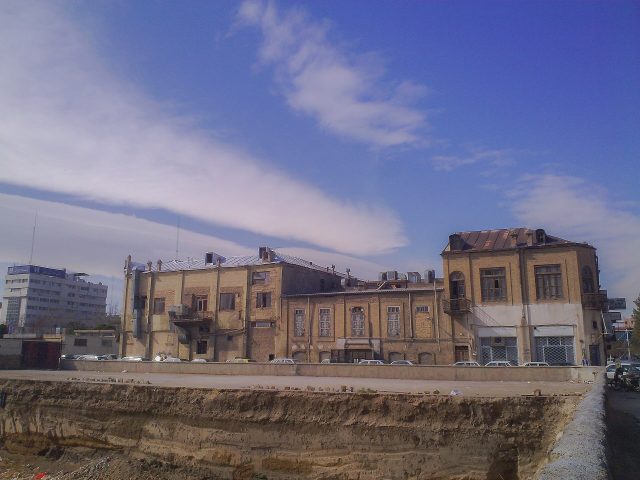
The town itself has lost much of its medieval character. Wars and time have erased most of the old architecture, though a few traditional mud-brick houses with flat roofs still stand, their walls weathered by centuries. Some are still lived in, while others have been abandoned in favor of newer buildings. In the center, a modest 19th-century mosque with a single minaret serves as a gathering place for worshippers. Next to it, a small bazaar sells dried fruits, spices, and handwoven carpets from nearby villages. There are no souvenir shops or guided tours here—just the quiet rhythm of daily life.
Tus isn’t a place for those seeking excitement or spectacle. It demands patience, a willingness to look beyond the obvious. Walking its streets, you can almost hear the echoes of the past—the haggling of merchants, the debates of scholars in madrasas, the clatter of looms in workshops. The town feels suspended in time, a place where history isn’t just remembered but still lingers in the air. For visitors, it offers a rare chance to step away from the well-trodden path and experience a side of Iran that few see.
The locals are used to the occasional traveler, though they don’t go out of their way to engage. If you stop for tea in one of the small chaikhanas, you might hear stories about the caravans that once passed through or the treasures still buried beneath the earth. But more often, the town simply lets you be, offering space to wander and reflect. The surrounding landscape reinforces this sense of timelessness—rolling hills covered in wormwood, the distant silhouette of mountains, and a sky that shifts from pale blue to gold as the sun sets.
Seasons here bring their own quiet transformations. In spring, wild tulips carpet the hillsides, their bright blooms a fleeting contrast to the muted tones of the earth. By autumn, the air carries the scent of saffron, harvested from the fields nearby. These cycles feel ancient, as if the land itself remembers the rhythms of the past. It’s easy to imagine Tus as it once was—not just a dot on a map, but a living, breathing place where cultures collided and creativity thrived.
Today, Tus exists in a kind of in-between state. It’s no longer the great city it was in the Middle Ages, but it hasn’t become a museum either. Life here is simple, unhurried. Some come for the history, others to escape the noise of modern life, and a few pass through on their way to Mashhad or the northern provinces. Yet even a brief visit leaves an impression—a sense of connection to something deeper than just another town. Tus is a reminder of how fragile history can be, and how resilient. It doesn’t shout its past; it waits, patiently, for those willing to listen.