Turov feels like a place where history hasn’t just been preserved—it’s still quietly breathing. Nestled along the banks of the Pripyat River, this small Belarusian town is one of the oldest in the country, its past woven into the very fabric of the land. The Turov Historical and Ethnographic Museum isn’t just a collection of artifacts; it’s a doorway into the lives of the people who shaped this corner of the world, from medieval princes to village craftsmen, from traders to farmers who tilled the same soil for centuries.
The museum occupies a building that itself carries the weight of time. Constructed in the early 1900s, it stands with the unassuming solidity of a structure built to last—thick wooden beams, high ceilings, and heavy doors that creak just enough to remind you of its age. Inside, the space is airy and uncluttered, with exhibits arranged not to overwhelm but to invite. There’s no grandiosity here, no attempt to compete with the polished displays of larger museums. Instead, the focus is on authenticity, on the quiet stories embedded in everyday objects.
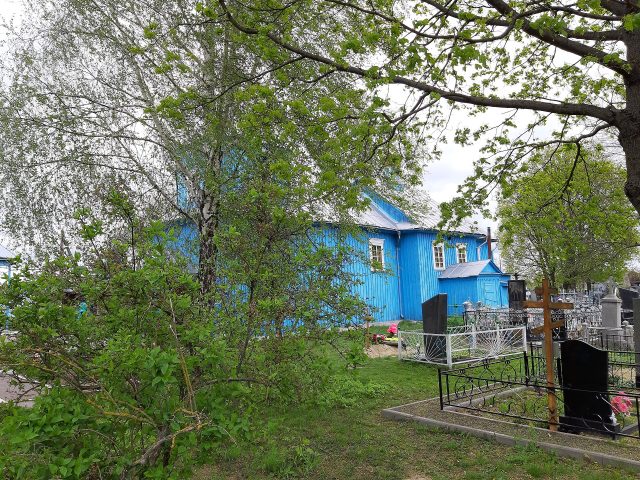
The journey through Turov’s past begins with the earliest traces of human settlement. Archaeological finds—fragments of pottery, tools, and jewelry—paint a picture of life along the Pripyat a thousand years ago. These were people who fished in the river, farmed the fertile floodplains, and built communities that would later become part of the powerful Principality of Turov. By the 11th century, the town had grown into a significant religious center, home to one of the first eparchies in the region. The museum holds remnants of that era: pieces of ancient churches, icons darkened by time, and liturgical items that once filled the air with incense and chant.
A separate section is devoted to the rhythms of rural life in the 19th century. Here, a peasant’s hut has been recreated with careful detail—a wooden table, a clay oven, a loom standing in the corner. The objects aren’t just displayed; they’re arranged as if someone just stepped out for a moment. A spinning wheel, a set of hand-carved spoons, a chest filled with linen—each item tells a story of labor and skill, of families gathering by the fire in winter or drying herbs under the summer sun. Traditional clothing, embroidered with intricate patterns, offers a glimpse into the aesthetics of the time, where beauty and practicality went hand in hand.
Turov has always been a crossroads of cultures. Belarusians, Jews, Poles—each community left its mark on the town, and the museum doesn’t shy away from this diversity. Exhibits on the Jewish population, once a vibrant part of Turov’s life, include religious texts, ritual objects, and photographs of synagogues that no longer stand. The displays don’t romanticize the past but present it as it was: a tapestry of coexisting traditions, languages, and ways of life. It’s a reminder that history isn’t just about grand events but also about the quiet, daily interactions that shape a place.
The 20th century brought turmoil that reshaped Turov forever. Wars, revolutions, and the upheavals of Soviet rule left scars that are still visible in the museum’s collection. Frontline letters, yellowed with age, sit alongside photographs of partisans who fought in the surrounding forests. There are ration cards, a soldier’s mess kit, a child’s toy salvaged from the rubble—small, human details that make the past feel immediate. The exhibits on post-war reconstruction show a town rebuilding itself, not with fanfare but with stubborn resilience, as if to say that life, no matter how hard, always finds a way to continue.
What makes the museum special is how it bridges the gap between past and present. Visitors aren’t just passive observers; they’re encouraged to engage. Workshops on pottery, weaving, and embroidery let people try their hand at the same crafts that sustained generations before them. In the summer, guided walks through Turov reveal the layers of history hidden in plain sight—crumbling churches, old merchant houses, the riverbanks where traders once unloaded their goods. In winter, locals gather to share stories, their voices filling the museum with the kind of living history no exhibit can capture.
There’s a sense of timelessness in Turov that’s hard to find elsewhere. The town moves at its own pace, untouched by the rush of modern life. The museum reflects this—it doesn’t need to shout to be heard. Its strength lies in its quiet insistence that history isn’t just about kings and battles but about the people who planted crops, mended clothes, and told stories by the fire. It’s about the way a place carries its past in its streets, its buildings, and the memories of those who still call it home.
A visit here isn’t just about learning facts; it’s about feeling the continuity of life. You leave with the sense that the people of Turov—past and present—are part of something larger, a thread in the fabric of time that stretches back centuries. The museum doesn’t offer grand conclusions or dramatic revelations. Instead, it leaves you with something simpler and more enduring: the understanding that history isn’t just something you read about. It’s something you can touch, hear, and even carry with you.