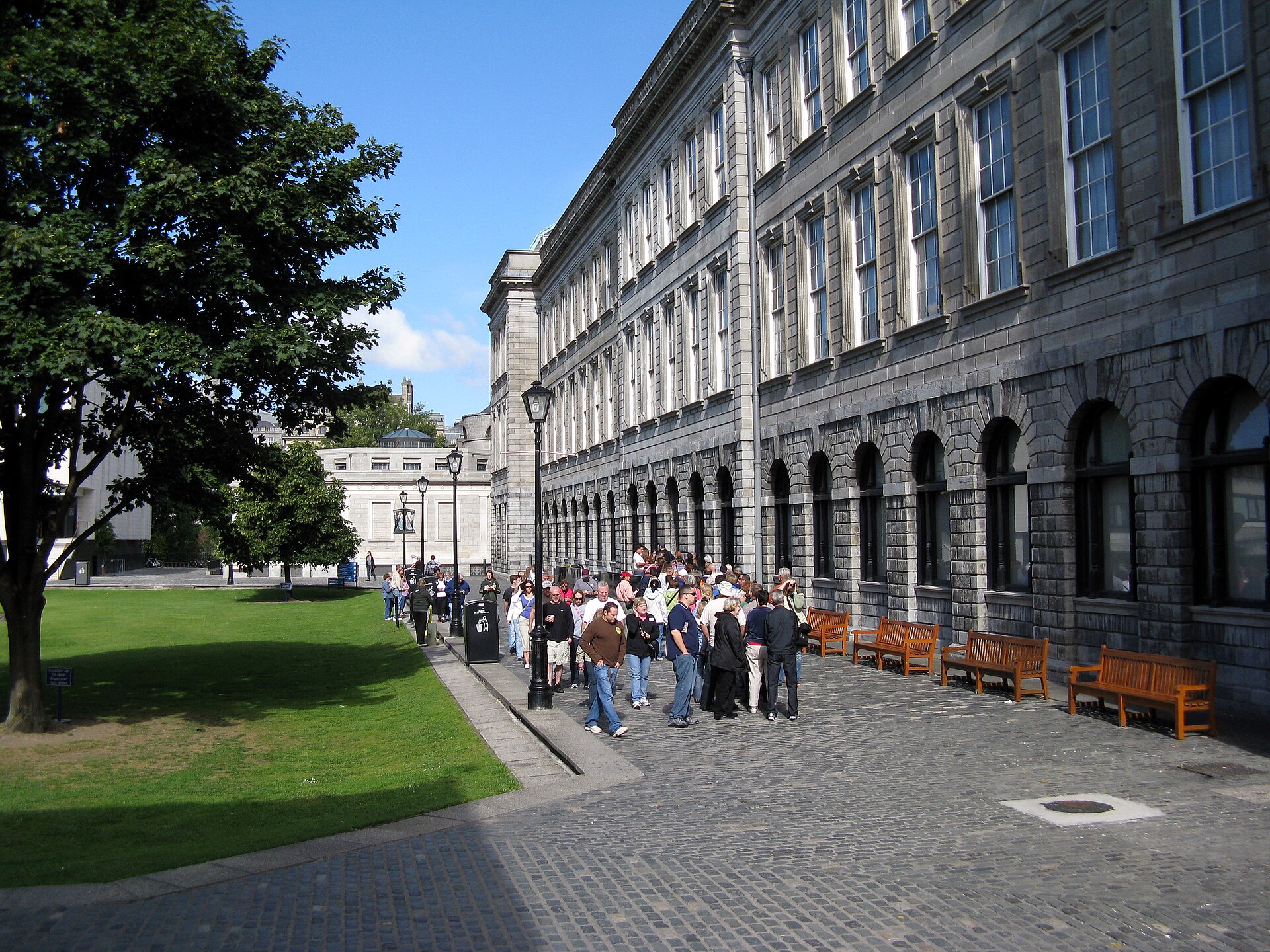
Trinity College Dublin is one of those rare places where history feels alive rather than preserved behind glass. Founded in 1592 under the reign of Elizabeth I, it was Ireland’s first university, established as a Protestant institution in a predominantly Catholic country. Over the centuries, its purpose evolved, shifting from a symbol of colonial influence to a cornerstone of Irish intellectual life. Today, the college stands as a quiet enclave in the heart of the city, where cobbled pathways wind past Gothic spires and modern lecture halls, and students in academic gowns move between classes like figures from an old etching.
The architecture of Trinity tells its own story. The oldest buildings, like the Old Library, date back to the 17th century and still carry the spirit of the Enlightenment. Their facades are adorned with coats of arms and statues, while tall windows filter soft, golden light—perfect for reading. Inside, the Long Room is one of the most breathtaking library spaces in the world. Its vaulted oak ceiling, dark wooden shelves, and rows of ancient tomes create an atmosphere where time seems to stand still. Beyond books, the library holds artifacts that trace Ireland’s cultural and scientific evolution, from medieval manuscripts to early editions of Shakespeare.
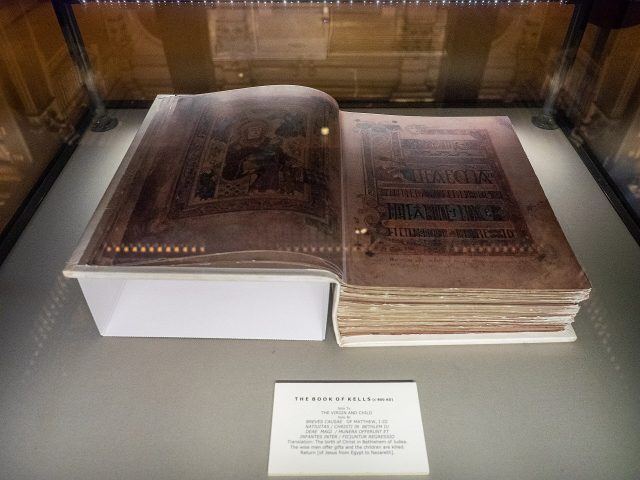
The crown jewel of Trinity is the Book of Kells, a ninth-century illuminated manuscript considered the pinnacle of Celtic art. Created by monks on the island of Iona before being moved to Kells for safekeeping, the book survived Viking raids and religious upheavals before finding its way to Dublin in the 17th century. Today, it’s displayed in a dedicated exhibition, its pages a dazzling mix of intricate knotwork, vibrant miniatures, and meticulous calligraphy. The colors remain remarkably vivid, blending Christian imagery with traditional Celtic motifs in a way that feels both sacred and deeply human.
Visiting Trinity isn’t just about history—it’s about stepping into a living academic community. The campus is open to all, and you’ll find as many locals lounging on the lawns as tourists snapping photos. In summer, the grassy squares become impromptu picnic spots; in winter, the quiet is broken only by the occasional footsteps of a student hurrying to class. The college’s location adds to its charm—just minutes from Dublin’s busiest streets, yet it feels like a world apart, where the pace slows and the past lingers in the air.
Trinity has shaped—and been shaped by—some of Ireland’s most influential figures. Jonathan Swift, Oscar Wilde, and physicist Ernest Walton all walked these halls, as did former Irish president Mary Robinson. The campus itself is a patchwork of eras: the 18th-century chapel still hosts services, while modern labs and lecture theaters hum with contemporary research. Statues dot the courtyards, like the monument to mathematician George Salmon, or the playful sculpture of Molly Malone, a nod to Dublin’s folk traditions.
Beyond the Book of Kells, the college holds other treasures. The Brian Boru harp, one of Ireland’s oldest, inspired the national emblem. The museum’s collection of medieval maps reveals how human understanding of the world has shifted over centuries. Scientific instruments—telescopes, anatomical models—hint at Trinity’s long-standing role in advancing both the arts and sciences.
A walk through Trinity is like flipping through the pages of a history book. You might start in the hushed grandeur of the Long Room, then step outside to find students debating under the trees or grabbing coffee between lectures. The blend of old and new is seamless: a 17th-century library door might lead to a cutting-edge research lab, and a centuries-old statue stands just steps from a bustling café.
What makes Trinity special isn’t just its age or its artifacts, but the way it balances reverence for the past with the energy of the present. Some visitors come for the Book of Kells, others to soak in the atmosphere of an ancient university. Many simply wander in to escape the city’s hustle, finding a quiet bench or a hidden courtyard. In an era where everything moves at breakneck speed, places like Trinity remind us that certain things—knowledge, art, the pursuit of ideas—endure. The stones may be old, but the curiosity they inspire is timeless.