Trinity College stands at the heart of Dublin, a place where history feels alive in the quiet courtyards and the worn cobblestones underfoot. Founded in 1592 by royal charter, it remains Ireland’s oldest university, its presence shaping the city for over four centuries. The campus is a mix of old and older—eighteenth-century buildings with their grand facades, the towering campanile that has become a city landmark, and the sense of continuity in a place where generations of students have walked the same paths.
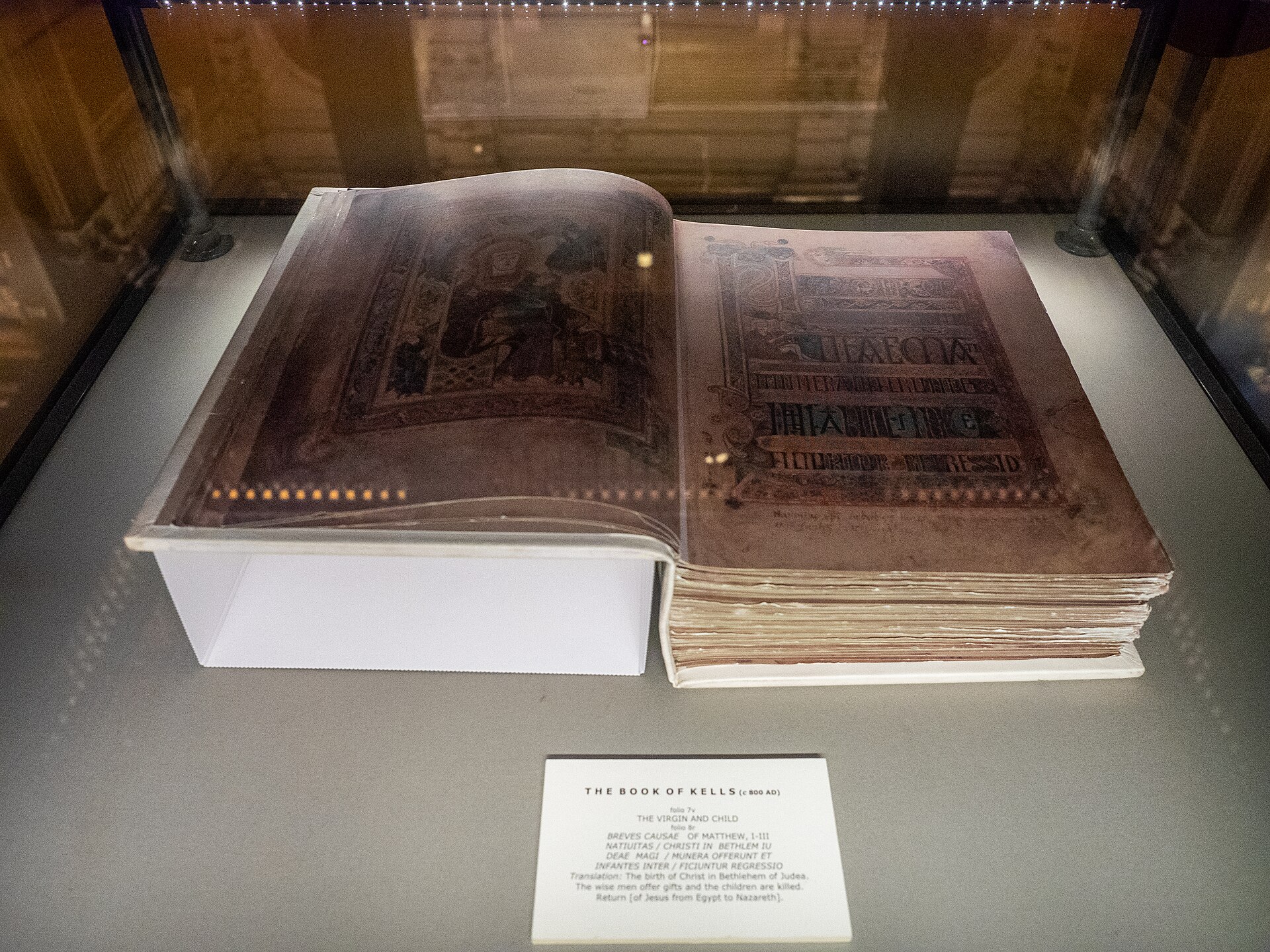
The real draw for many visitors is the Book of Kells, a manuscript so intricate it feels like a bridge to another time. Created around the year 800, it’s a masterpiece of medieval art, its pages filled with swirling patterns and vibrant illustrations that blend Christian symbolism with the distinctive style of Celtic knotwork. The detail is astonishing—some designs are so fine that they’re best appreciated with a magnifying glass. Scholars believe it was made by monks, possibly on the remote island of Iona, before being moved to Kells for safekeeping after Viking raids. Centuries later, it found its way to Trinity College, where it has been preserved ever since.
Seeing the book in person is a quiet experience. Only two of its four volumes are displayed at a time, opened to different pages, and the lighting is kept low to protect the delicate vellum. The pages are turned regularly, so no two visits are quite the same. Photography isn’t allowed, which makes the moment feel more personal—there’s no rush, no need to capture it, just the chance to stand in front of something that has survived for over a thousand years.
Above the exhibition hall is the Long Room, a space that feels like stepping into a story. Stretching sixty-five meters, it’s lined with towering oak bookshelves filled with ancient volumes, their spines a testament to centuries of knowledge. The barrel-vaulted ceiling and the rows of marble busts—philosophers, writers, and scholars—add to the sense of grandeur. It’s no wonder this room has inspired so many, from filmmakers to writers; its atmosphere is unforgettable, even if parts of it are currently under restoration.
The college itself is more than just a museum. The courtyards are open to the public, and wandering through them feels like a small escape from the city’s bustle. Student-led tours offer a different perspective, sharing stories of the college’s past and present. Nearby, the campus bookshop sells reproductions of the Book of Kells’ pages, along with books that delve deeper into its history—small but meaningful souvenirs for those who want to take a piece of the experience home.
Trinity College sits in the middle of Dublin, making it easy to combine with other sights. A short walk leads to Grafton Street, with its lively shops and cafes, or to Temple Bar, where the city’s cultural side comes to life. The college is also part of Dublin’s museum network, and combined tickets can offer a way to explore more of the city’s history without the hassle of separate bookings.
Visiting requires a bit of planning. Tickets are timed, and it’s worth booking in advance, especially during peak seasons. The restoration work in the Long Room means that some areas might be closed or altered, so checking ahead ensures there are no surprises. But even with these practicalities, the experience remains one of those rare moments where the past feels tangible, where the weight of history isn’t just something you read about, but something you can almost touch.