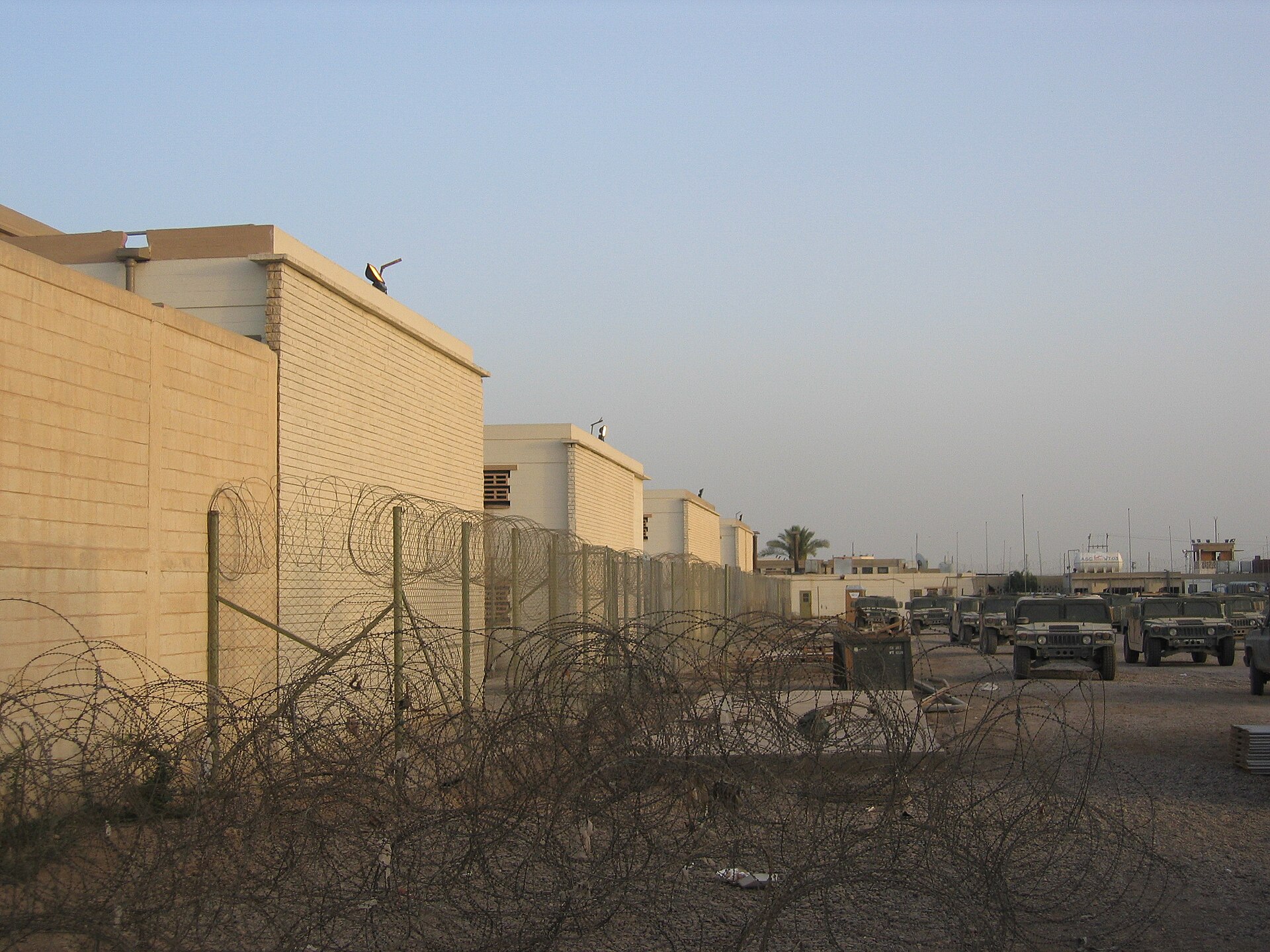
Abu Ghraib Prison stands on the outskirts of Baghdad, a short drive west of the city center, in a district that shares its name. The place became infamous far beyond Iraq’s borders in the mid-2000s, when reports of brutal treatment of detainees under American occupation shocked the world. But the prison’s story began long before that, woven into the turbulent recent history of the country.
Built in the 1980s under Saddam Hussein’s regime, Abu Ghraib was designed as a modern penitentiary complex, capable of holding thousands of inmates. Its architecture followed the standard model of large prisons from that era—thick concrete walls, barbed wire fences, and watchtowers looming over the compound. Inside, there were cells, administrative offices, a medical unit, and even a small mosque. Yet even then, the prison became a place where human rights were routinely violated. Political prisoners were held here, subjected to torture and humiliation, their suffering hidden behind the facility’s imposing walls.
When Saddam’s regime fell in 2003, control of Abu Ghraib passed to American military forces. The prison became a key site for the occupying power, housing not only common criminals but also those suspected of ties to insurgent groups. It was during this period that Abu Ghraib gained its grim reputation. In 2004, photographs emerged in the global media, documenting abuse of detainees by American soldiers. The images sparked international outrage, becoming a symbol of unchecked power and cruelty. The name Abu Ghraib itself entered the lexicon as shorthand for the darker side of the war on terror.
After control of Iraq was handed back to local authorities, the prison continued to operate as a correctional facility under the Iraqi government. But its troubled history didn’t end there. Over the years, Abu Ghraib became a target for militants seeking to free their allies. In 2014, as ISIS advanced across the country, the prison was partially destroyed. Many inmates escaped or were transferred elsewhere, leaving the complex largely abandoned. Officially, it remains under government control, though in reality, it stands as a hollowed-out relic of the past.
Today, Abu Ghraib is a haunting monument to recent history. The ruins of its concrete buildings, charred walls, and rusted bars tell a story of suffering that spanned decades. The site is guarded, but access is nearly impossible—locals avoid it, and authorities have little interest in drawing attention to it. Still, for historians, journalists, and researchers, the prison remains a crucial piece of evidence, a physical manifestation of Iraq’s darker chapters.
The atmosphere around Abu Ghraib is heavy, almost suffocating. From a distance, the prison looms over the flat, desert landscape, a stark reminder of what took place within its walls. The surrounding area is mostly empty, with few signs of life. The homes that remain look abandoned, as if the land itself has been drained of vitality. Locals rarely speak of the place, but if pressed, some will share stories—whispers of ghosts, of screams heard in the night. Whether true or not, these tales reflect how deeply the trauma of the prison has taken root in the collective memory.
For Iraq, Abu Ghraib is more than just a prison. It is a symbol of the pain and humiliation the country has endured over the past few decades. The stories of those who suffered here—political prisoners under Saddam, ordinary Iraqis caught in the chaos of occupation—intersect in this one place. It stands as a reminder of how easily power can become an instrument of violence, and how quickly ordinary people can become its victims. Yet the prison’s history is also part of a broader struggle, one in which Iraq continues to grapple with its past while trying to shape a different future.
Abu Ghraib is closed to visitors, and it’s unlikely to ever become a tourist site. But its legacy lives on in documents, testimonies, and academic research. For those studying the modern history of the Middle East, the prison offers a stark lesson in how war, politics, and violence reshape lives. Someday, there may be a memorial or museum here, a place to acknowledge the suffering that took place. For now, it remains abandoned, its walls holding the weight of memories that are better left in the past.